China's centralised model a structural weakness, not edge: Analysis
Synopsis
A new analysis turns a long-held assumption on its head: China's centralised economic model — often cited as its greatest competitive weapon — is increasingly the source of its deepest vulnerabilities. From the Evergrande-led property collapse to overcapacity in EVs and semiconductors, the structural cracks are widening, and Beijing's usual fix — more directed investment — may be making things worse.
Key Takeaways
An analysis by The National Interest argues that China's centralised economic model is a source of structural weakness, not competitive strength.
China's property sector has been in crisis since 2021 , triggered by the 'three red lines' policy tightening in 2020 that caused defaults including at Evergrande .
The 'Made in China 2025' industrial push created excess supply, falling prices, and rising export dependence in sectors like EVs , semiconductors , and AI .
Declining exports to the United States and growing trade restrictions from Europe are adding external pressure to China's growth model.
China's dominance in rare earth processing is reportedly eroding as global diversification efforts reduce dependence on Chinese supply chains.
China's centrally planned economic model is generating deep structural vulnerabilities that are becoming increasingly difficult to conceal, according to an analysis by The National Interest. The report challenges the widely held assumption that Beijing's tight grip over political and economic levers gives it a competitive edge over market-driven economies — arguing instead that centralisation is now a liability.
The Case Against Central Control
While China's system allows state authorities to direct resources across industries and regions at scale, the analysis contends this comes at a steep cost: reduced efficiency, diminished flexibility, and long-term economic instability. Industrial policy remains heavily centralised, with the state exerting influence over both demand and supply across sectors spanning manufacturing to services.
This top-down approach has delivered rapid expansion in targeted industries, but it has also entrenched economic imbalances and systematic misallocation of capital — problems that compound over time.
Property Sector: The Most Visible Fault Line
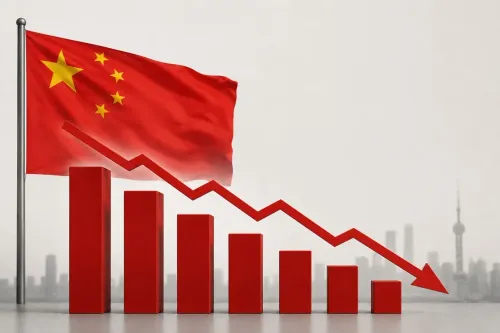
Nowhere is the strain more visible than in China's property sector, which has been in crisis since 2021. Years of state-backed expansion — fuelled by low interest rates, government subsidies, and coordinated support from local administrations — made real estate a cornerstone of GDP growth.
The reversal came swiftly. Policy tightening in 2020 under the 'three red lines' framework — designed to curb developer leverage — triggered a cascade of defaults across major property groups, most notably Evergrande. What was once a growth engine became a drag on the broader economy, and the sector has yet to fully stabilise.
Industrial Overreach and Export Dependence
In response to the property downturn, Beijing doubled down on its industrial strategy through initiatives such as 'Made in China 2025', channelling large-scale investment into electric vehicles, semiconductors, and artificial intelligence. The results have been mixed.
While production capacity surged, the report notes that this drove excess supply, falling domestic prices, and a growing dependence on export markets to absorb output. This structural shift is now colliding with mounting external headwinds, including declining exports to the United States and escalating trade restrictions from Europe and other regions.
Rare Earths: Strategic Strength Under Pressure
Supporters of China's model often point to its dominance in rare earth processing as evidence of enduring strategic leverage. The analysis, however, argues that this advantage is eroding as global diversification efforts gather pace. Multiple economies are actively investing in alternative supply chains, gradually reducing their dependence on Chinese processing capacity.
What This Means for the Global Economic Order
Taken together, the findings suggest that China's growth model — effective in an era of globalisation and rising demand — is increasingly ill-suited to a world of trade fragmentation, technological competition, and geopolitical realignment. The report stops short of predicting an imminent crisis, but the structural pressures it identifies are unlikely to resolve without significant reform. How Beijing responds — and whether it can reconcile political control with economic adaptability — will be one of the defining questions for the global economy in the years ahead.
Point of View
Not for correction. The property crisis wasn't a market failure; it was a policy-induced boom followed by a policy-induced bust, with the bill now falling on local governments and households. The Made in China 2025 pivot compounds the problem by exporting the imbalance — flooding global markets with subsidised goods and inviting the trade restrictions that now constrain Chinese growth. Rare earth leverage, the last card in Beijing's strategic deck, is being systematically neutralised. The deeper question is whether China can reform its incentive structures without loosening political control — and that is a contradiction the Communist Party has so far refused to confront.
NationPress
15 Oct 2026
Frequently Asked Questions
Why is China's centralised economic model considered a structural weakness?
According to an analysis by The National Interest, China's centralised model reduces economic efficiency, limits flexibility, and causes long-term instability by misallocating resources across industries. While it enables rapid state-directed expansion, it also entrenches imbalances that are difficult to correct without political reform.
What triggered China's property sector crisis?
China's property crisis began after policy tightening in 2020 under the 'three red lines' framework, which capped developer borrowing ratios and triggered a wave of defaults, most notably at Evergrande. The sector had been artificially inflated for years through low interest rates, subsidies, and local government coordination, making the eventual correction severe.
How has Beijing responded to the economic slowdown?
Beijing has expanded its industrial strategy through initiatives like 'Made in China 2025', directing large-scale investment into electric vehicles, semiconductors, and artificial intelligence. However, this has led to excess production capacity, falling domestic prices, and increased dependence on export markets — which are now facing trade restrictions from the US and Europe.
Is China's dominance in rare earths still a strategic advantage?
China's rare earth processing dominance is increasingly under pressure, according to the analysis. Global economies are actively diversifying their supply chains, and ongoing investment in alternative sources is gradually reducing Beijing's leverage in this area.
What are the broader global implications of China's economic model weaknesses?
The structural pressures identified in the report — overcapacity, export dependence, a fragile property sector, and eroding rare earth leverage — suggest China's growth model is poorly suited to an era of trade fragmentation and geopolitical competition. How Beijing balances political control with economic adaptability will have significant consequences for the global economic order.