Shenzhen slowdown questions China's CCP-led growth model
Synopsis
Shenzhen — once the crown jewel of China's economic miracle — is showing cracks that go well beyond a cyclical dip. Factory closures, a battered property market, and an exodus of foreign capital are converging to expose structural fault lines in the CCP's growth model, with global supply chains and investor confidence hanging in the balance.
Key Takeaways
Shenzhen , often called China's Silicon Valley , is experiencing a sharp economic slowdown marked by factory closures and weakening demand.
The real estate sector has been particularly hard hit, with stalled projects and falling property prices eroding middle-class household wealth.
Rising geopolitical tensions , regulatory pressure, and policy uncertainty have dented investor confidence and private enterprise.
Some foreign companies are reportedly diversifying operations to India and Vietnam as alternatives to China .
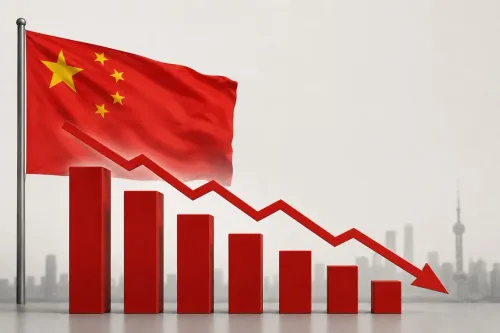
Analysts warn the slowdown reflects deeper structural challenges in balancing state control with market dynamism under the CCP .
Shenzhen, long celebrated as the crown jewel of China's economic transformation, is facing a sharp and unsettling slowdown that raises serious questions about the durability of the country's growth model under the Chinese Communist Party (CCP), according to a PML Daily report. Once a symbol of relentless industrial ambition, the city is now grappling with factory closures, falling property prices, and dwindling job opportunities.
From Silicon Valley of China to Economic Flashpoint
For decades, Shenzhen embodied the promise of China's reform and opening-up era — an industrial powerhouse where global supply chains converged and millions arrived seeking prosperity. Often dubbed China's Silicon Valley, the city was a showcase of rapid urbanisation and economic ambition. Today, however, that image is increasingly at odds with ground realities, the report noted.
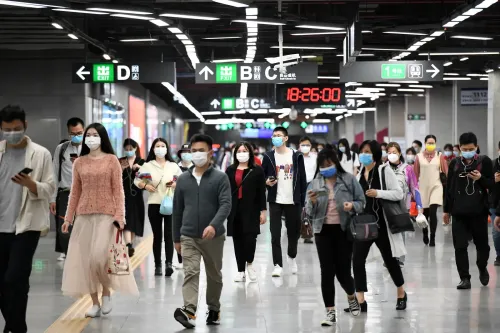
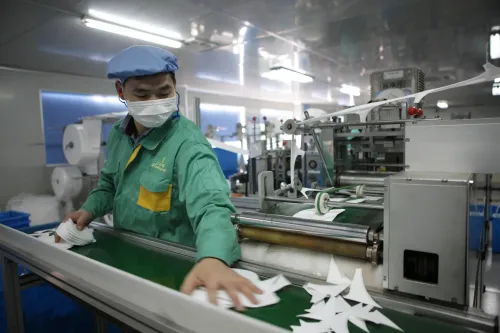
Across the city, signs of economic distress are becoming difficult to ignore. Once-bustling industrial zones are witnessing factory closures, while small businesses struggle under high operating costs and weakening demand. Markets that once thrived on dense worker populations have thinned out, and job seekers report dwindling opportunities, with some informal accounts describing precarious living conditions, according to the report.
Structural Cracks Behind the Slowdown
Analysts point to a combination of slowing global demand, rising geopolitical tensions, and tighter domestic controls that have weighed heavily on private enterprise. Regulatory pressures and policy uncertainty have also dented investor confidence, with some foreign companies reportedly diversifying operations to other Asian economies, including India and Vietnam, the report stated.
This comes amid a broader pattern of capital reallocation away from China, a trend that has accelerated since 2022 as geopolitical friction between Beijing and Western governments intensified. Notably, this is not the first time Shenzhen has been at the centre of concerns about China's economic resilience — the city was also among the hardest hit during the COVID-19 lockdowns of 2022.
Real Estate Sector Takes a Heavy Blow
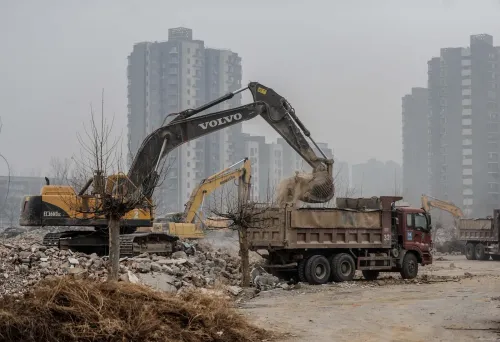
The real estate sector, historically a key engine of Shenzhen's growth, has been particularly hard hit. Several high-profile projects have stalled, and falling property prices have eroded household wealth. For many middle-class families who invested heavily in housing, the decline has created significant financial strain and limited mobility, compounding broader economic anxieties, according to the report.
The real estate crisis in Shenzhen mirrors the wider distress seen across China's property market, where major developers including Evergrande and Country Garden have faced severe financial difficulties in recent years, raising systemic concerns.
State Narrative vs Ground Reality
While official state narratives continue to emphasise stability and resilience, the slowdown in Shenzhen underscores broader concerns about China's economic trajectory, the report observed. The city's struggles highlight the mounting challenge of balancing state control with market dynamism — an issue that has come into sharper focus as growth moderates and structural reforms remain incomplete.
As Shenzhen goes, analysts argue, so may go a significant part of China's broader economic story — making the city's recovery, or lack thereof, a closely watched indicator for global markets in the months ahead.
Point of View
Regulatory unpredictability, and geopolitical exposure — are not new, but they are now compounding simultaneously. The more pressing question is whether the CCP's instinct for state intervention will accelerate the recovery or deepen the distortion.
NationPress
25 Sept 2026
Frequently Asked Questions
Why is Shenzhen's economy slowing down?
Shenzhen's slowdown is attributed to a combination of slowing global demand, rising geopolitical tensions, tighter domestic regulatory controls, and a collapsing real estate sector. These structural pressures have weighed on private enterprise, eroded household wealth, and pushed some foreign companies to relocate operations to India and Vietnam.
How has the real estate crisis affected Shenzhen?
Several high-profile real estate projects in Shenzhen have stalled, and falling property prices have significantly eroded household wealth. Middle-class families who invested heavily in housing are facing financial strain and reduced economic mobility, according to the PML Daily report.
Are foreign companies leaving Shenzhen?
According to the report, some foreign companies have begun diversifying their operations away from Shenzhen and China more broadly, relocating to other Asian economies such as India and Vietnam amid regulatory uncertainty and geopolitical tensions.
What does Shenzhen's slowdown mean for China's broader economy?
Shenzhen has historically been a bellwether for China's economic health and the success of its reform-era growth model. Its current struggles highlight systemic challenges — including the tension between state control and market dynamism — that analysts say could weigh on China's broader economic trajectory.
What is the CCP's response to the Shenzhen slowdown?
Official state narratives continue to emphasise stability and resilience, according to the report. However, analysts argue that the ground realities in Shenzhen increasingly contradict the official position, raising questions about the durability of the CCP-led growth model.