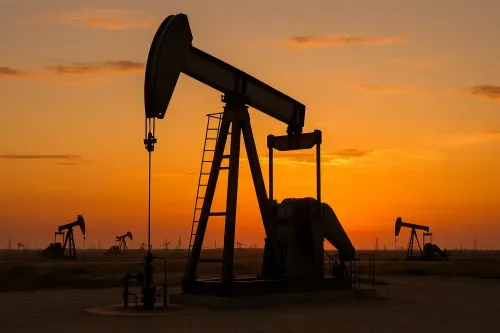
Crude oil prices fall on easing Middle East tensions, Brent at $91.33
Synopsis
Crude oil extended a sharp two-session retreat after Trump signalled a pause on fresh Iran strikes, cutting Brent to $91.33 and WTI to $85.54. But with the Strait of Hormuz blockade still in place, Iran denying any talks, and Russia-Ukraine negotiations just beginning, the diplomatic calm is fragile — and the next EIA, OPEC, and IEA reports could quickly reset the narrative.
Key Takeaways
Brent crude fell $1.24 (1.33%) to $91.33 per barrel on 10 November 2026 ; WTI dropped 1.5% to $85.54 per barrel .
Brent had already plunged 5.85% in the previous session, hitting its lowest since 31 August .
President Trump signalled a pause on further military strikes against Iran after meeting Qatar's Prime Minister at the White House .
The Strait of Hormuz naval blockade remains in place, keeping supply-route concerns alive.
Iran's Mohsen Rezaei rejected reports of US-Iran negotiations, calling them 'fake news about imaginary talks.' Investors are awaiting oil demand-supply reports from the EIA , OPEC , and IEA for the next directional cue.
Global crude oil prices fell more than 1% on Tuesday, 10 November 2026, extending a sharp retreat from the previous session after US President Donald Trump signalled that Washington would hold off on fresh military strikes against Iran, easing near-term fears of prolonged energy supply disruptions from the Middle East.
Brent crude futures declined $1.24, or 1.33%, to settle at $91.33 per barrel, while US West Texas Intermediate (WTI) crude futures fell 1.5%, or $1.31, to $85.54 per barrel. This follows a steep 5.85% slide in Brent in the previous session, when prices touched their lowest level since 31 August.
What Triggered the Decline
According to reports, President Trump indicated he planned to hold off on further military action against Iran following appeals from regional allies, including Qatar. He made the remarks after a meeting with Qatar's Prime Minister at the White House. The diplomatic signal was enough to trim the geopolitical risk premium that had been built into oil prices in recent sessions.
However, the American President also indicated that a naval blockade in the Strait of Hormuz — a critical chokepoint through which roughly one-fifth of the world's traded oil passes — would remain in place for now, keeping a residual layer of supply-route anxiety intact.
Contradictions on the Diplomatic Front
Despite the apparent softening in Washington's tone, the picture on Iran-US relations remains far from clear. Senior US and Gulf officials have reportedly expressed doubts over the prospect of an imminent peace deal between Washington and Tehran. Iran's security council chief Mohsen Rezaei rejected any suggestion of ongoing negotiations outright, saying the US should 'stop spreading what he described as fake news about imaginary talks.' The competing signals are likely to keep oil traders on edge even as prices ease.
Russia-Ukraine Talks Add Another Variable
Adding to the complex geopolitical backdrop, Russian and Ukrainian officials are scheduled to meet on Tuesday for two days of US-brokered talks — their first such engagement since February. Any signs of progress could reduce broader energy market uncertainty, since the conflict has been a persistent driver of European supply concerns since early 2022.
What Markets Are Watching Next
Market experts noted that investors are now awaiting monthly oil supply and demand reports from three key agencies: the US Energy Information Administration (EIA), the Organisation of the Petroleum Exporting Countries (OPEC), and the International Energy Agency (IEA). These reports are expected to provide fresh direction on the global demand-supply balance and could either confirm or challenge the current retreat in prices.
Meanwhile, gold prices also edged lower on Tuesday, trading around $4,120 per ounce, as investors awaited a key US inflation report that could shape the Federal Reserve's near-term monetary policy stance. The dual retreat in oil and gold reflects a broader de-risking mood, even as geopolitical flashpoints persist.
Point of View
Iran is publicly denying any negotiations, and senior Gulf officials are skeptical of a near-term deal. Markets may be pricing in a resolution that does not yet exist. With EIA, OPEC, and IEA demand reports all due imminently, traders face a classic 'sell the rumour, buy the fact' setup where any supply disruption surprise could snap prices sharply back upward. India, as one of the world's largest oil importers, has the most riding on whether this diplomatic de-escalation holds — or unravels.
NationPress
10 Nov 2026
Frequently Asked Questions
Why did crude oil prices fall on 10 November 2026?
Crude oil prices fell on 10 November 2026 after US President Donald Trump signalled that Washington would pause further military strikes against Iran, reducing immediate fears of a supply disruption. Brent dropped 1.33% to $91.33 and WTI fell 1.5% to $85.54 per barrel.
What is the current status of the Strait of Hormuz blockade?
The US naval blockade of the Strait of Hormuz remains in place despite the broader diplomatic softening, according to reports. The strait is a critical chokepoint for global oil trade, and its continued closure keeps supply-route risks alive even as prices ease.
Has Iran confirmed any negotiations with the United States?
No. Iran's security council chief Mohsen Rezaei rejected reports of ongoing US-Iran negotiations, calling them 'fake news about imaginary talks.' Senior US and Gulf officials have also reportedly expressed doubts over an imminent peace deal.
What oil reports are markets waiting for?
Markets are awaiting monthly oil supply and demand outlooks from three major agencies: the US Energy Information Administration (EIA), OPEC, and the International Energy Agency (IEA). These reports will provide the next key signal on global oil demand and supply direction.
How does the Russia-Ukraine talks factor into oil prices?
Russian and Ukrainian officials are scheduled to hold two days of US-brokered talks starting Tuesday — their first formal meeting since February. Progress could ease European energy supply concerns and add further downward pressure on oil prices, while a breakdown could do the opposite.