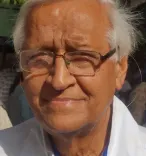
Tharoor mourns Bunker Roy, Barefoot College founder
Synopsis
Congress MP Dr. Shashi Tharoor paid tribute to Sanjit 'Bunker' Roy, founder of the Barefoot College in Tilonia, Rajasthan, whose programme training illiterate rural women as solar engineers illuminated off-grid homes across India and the developing world.
Key Takeaways
Sanjit 'Bunker' Roy , founder of Barefoot College in Tilonia, Rajasthan , has passed away, as mourned by Congress MP Dr.
Shashi Tharoor on November 10, 2026 .
Roy founded Barefoot College in 1972 to train illiterate and semi-literate rural villagers, especially women, in sustainable technologies without formal credentials.
His 'Barefoot Solar Engineers' programme trained rural grandmothers to install solar lighting, bringing electricity to thousands of off-grid homes in India and beyond.
The model extended to villages across Africa, Asia, and Latin America through international partnerships, becoming a globally recognised approach to energy access.
Roy was an alumnus of St.
Stephen's College, Delhi , a former national squash champion , and the husband of rights activist Aruna Roy .
Barefoot College's approach blended Gandhian self-reliance principles with renewable energy training, forming a distinctive strand of Indian civil society development work.
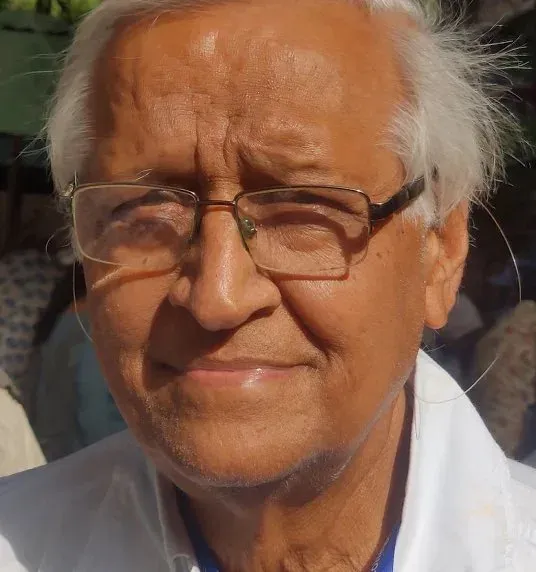
A light that burned for rural India's most overlooked communities has gone out. Congress MP Dr. Shashi Tharoor on Tuesday, November 10, 2026, expressed deep grief at the passing of Sanjit 'Bunker' Roy — social activist, educator, national squash champion, and the visionary founder of the Barefoot College in Tilonia, Rajasthan.
Tharoor, who knew Roy as a senior from their shared alma mater St. Stephen's College, Delhi, described him as 'a visionary social activist, pioneer, and educator' who 'dedicated his life to empowering rural India through self-reliance, sustainable development, and grassroots innovation.' He extended heartfelt condolences to Roy's wife, fellow activist Aruna Roy, and the global community of changemakers Roy had inspired.
What Barefoot College built in Tilonia — and beyond
In 1972, Bunker Roy founded the Barefoot College in the small village of Tilonia in Rajasthan's Ajmer district with a proposition that upended conventional development thinking: that illiterate and semi-literate villagers — particularly women — already possessed the wisdom and capability to build, innovate, and lead. No degrees required. No formal credentials. Just practical knowledge, community trust, and determination.
The institution grew into one of India's most distinctive experiments in non-formal education, blending Gandhian self-reliance principles with hands-on training in solar technology, water management, and handicrafts. Its programmes were deliberately designed to keep trained individuals rooted in their communities rather than pulled toward urban centres — reversing the brain-drain logic that has long hollowed out rural India.
The 'Barefoot Solar Engineers' who lit up the dark
Roy's most celebrated legacy is the 'Barefoot Solar Engineers' programme — a scheme that trained rural grandmothers, many of them illiterate, to design, install, and maintain solar lighting systems in off-grid homes. The simplicity of the idea belies its scale: thousands of homes across India and across the developing world gained electricity for the first time through the hands of women who had never held a formal qualification.
The model spread through international partnerships to villages in Africa, Asia, and Latin America, demonstrating that sustainable energy access does not begin in a corporate lab — it begins in a village courtyard. For a world still grappling with energy poverty and gender exclusion, that proof of concept remains alive and urgent.
A Stephanian, a squash champion, an unlikely revolutionary
Roy's biography defied easy categorisation. Educated at St. Stephen's College and a former national squash champion, he could have followed any number of elite career paths. Instead, he moved to Tilonia in the early 1970s and spent the next five decades there — a choice that itself became a statement about where India's real work needed to happen.
His wife Aruna Roy became a towering figure in her own right, anchoring the right-to-information movement and rural labour rights campaigns. Together, they represented a generation of Indian civil society leaders who built lasting institutions from the ground up, far from the corridors of power.
Tharoor closed his tribute with the Sanskrit invocation '🕉️ शांति 🙏🏼' — a prayer for peace — a small gesture that carried the full weight of a life's work now complete. The Barefoot College carries on. The solar lamps it lit are still burning.
Point of View
A principle that has gained renewed relevance as India pushes large-scale rural electrification and skilling programmes. Roy's solar engineer model also quietly pre-empted the global conversation on energy justice by decades, proving that gender inclusion and clean energy access are not competing priorities. For Indian civil society, the question now is whether institutions like Barefoot College can sustain their founding ethos without their founding personalities at the helm.
NationPress
10 Nov 2026
Frequently Asked Questions
Who was Bunker Roy and what is Barefoot College?
Sanjit 'Bunker' Roy was a social activist and educator who founded Barefoot College in Tilonia, Rajasthan in 1972 . The institution trained illiterate and semi-literate rural villagers, especially women, in practical skills such as solar engineering, water management, and handicrafts — without requiring formal educational qualifications.
What were the Barefoot Solar Engineers and what did they achieve?
The Barefoot Solar Engineers were rural grandmothers, many of them illiterate, trained by Barefoot College to install and maintain solar lighting systems. The programme brought electricity to thousands of off-grid homes across India and was later extended to developing countries in Africa, Asia, and Latin America.
What was Shashi Tharoor's connection to Bunker Roy?
Congress MP Dr. Shashi Tharoor and Bunker Roy were both alumni of St. Stephen's College, Delhi , with Roy being Tharoor's senior. Tharoor described having had the privilege of meeting Roy a few times and paid tribute to him as a visionary social activist and pioneer.
Who is Aruna Roy and what is her connection to Bunker Roy?
Aruna Roy is a prominent Indian social activist and the wife of Bunker Roy. She is independently celebrated for her foundational role in India's right-to-information movement and in campaigns for rural labour rights. Tharoor specifically extended condolences to her following Roy's passing.
Where is Barefoot College located and is it still active?
Barefoot College is based in Tilonia , a village in the Ajmer district of Rajasthan . Founded in 1972, it continues to run training programmes in solar engineering and other sustainable technologies, and maintains international partnerships to replicate its model in off-grid regions worldwide.