Tharoor Visits Bangkok's Thai-Bharat Cultural Lodge, INA Precursor
Synopsis
Congress MP Dr. Shashi Tharoor visited the Thai-Bharat Cultural Lodge in Bangkok, established in 1940, which gave rise to the Indian National Council — a precursor to the Indian National Army. The visit spotlights the Lodge's enduring role in preserving the memory of India's freedom struggle and its significance to India-Thailand diaspora ties.
Key Takeaways
Shashi Tharoor visited the Thai-Bharat Cultural Lodge in Bangkok on 30 May 2026 .
The Lodge was established in 1940 by Indian expatriates in Bangkok to foster India-Thailand cultural ties.
It served as the birthplace of the Indian National Council , a precursor to the Indian National Army (INA) .
The INA , formally constituted in 1942 , was reorganised by Subhas Chandra Bose in 1943 under the Provisional Government of Azad Hind .
The Lodge remains active within the Indian diaspora community in Thailand and is a site of historical significance for the freedom struggle.
The visit connects to India's broader Act East Policy and the people-to-people dimensions of India-Thailand bilateral relations .
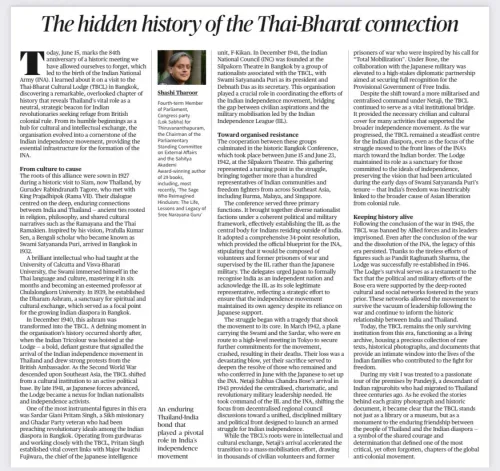
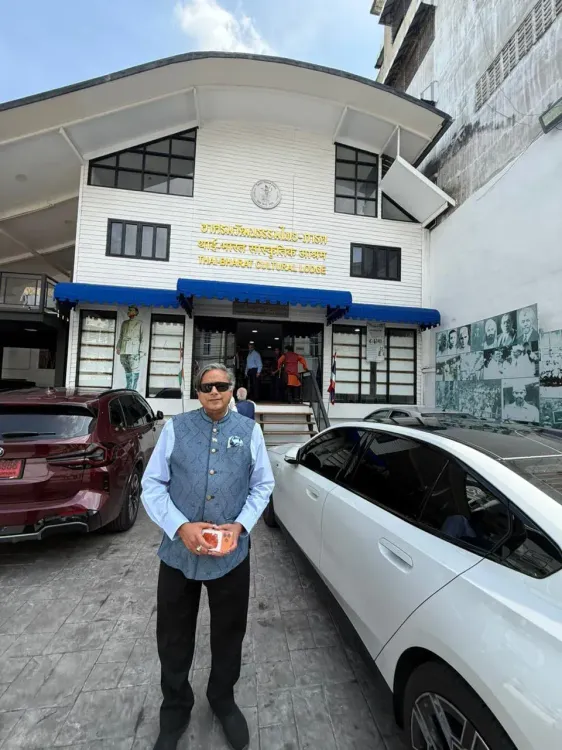
Congress MP Dr. Shashi Tharoor visited the Thai-Bharat Cultural Lodge in Bangkok on 30 May 2026, describing the 1940-founded institution as the birthplace of the Indian National Council — a precursor to the Indian National Army (INA) — and praising its role in sustaining the memory of India's freedom struggle.
Context
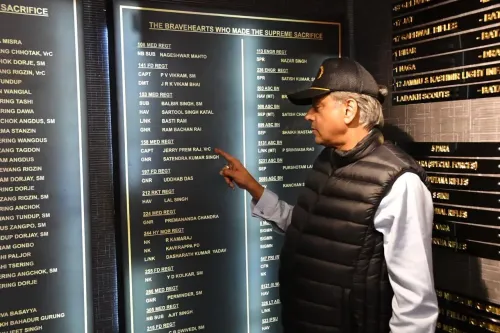
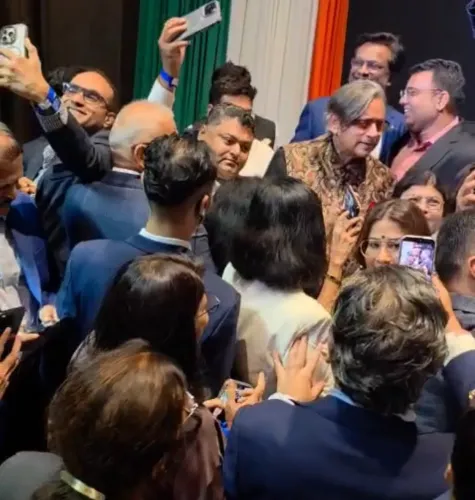
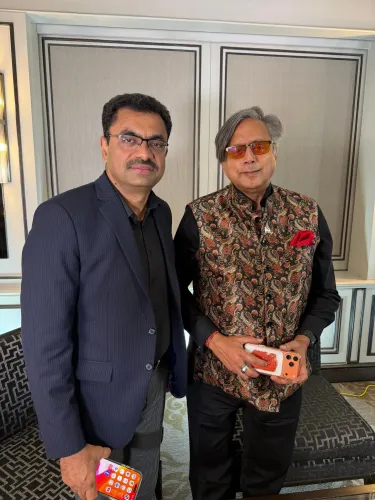
Tharoor called the visit 'amazing' and took a tour of the Lodge's premises, sharing photographs from the site. The Thai-Bharat Cultural Lodge was established in 1940 by Indian expatriates in Bangkok to foster cultural ties between India and Thailand while serving as an organisational hub for the Indian diaspora community.
In his post, Tharoor noted that the Lodge 'gave birth to the Indian National Council, a precursor of the Indian National Army, during the freedom struggle and has sustained its memory all these years' — underscoring the institution's dual identity as both a cultural body and a site of anti-colonial historical significance.
Policy Backdrop
The Indian National Council, formed in Bangkok in the early 1940s by Indian residents in Thailand, served as an organisational base for mobilising diaspora resources in support of India's independence movement. Its activities fed directly into the formation of the Indian Independence League and the broader INA structures that took shape in 1942.
The INA was formally constituted in 1942 in Southeast Asia, drawing on Indian prisoners of war and diaspora volunteers. Subhas Chandra Bose assumed command in 1943 and proclaimed the Provisional Government of Azad Hind, building on the earlier mobilisation networks in Thailand and Malaya that the Thai-Bharat Lodge had helped nurture. Post-independence, successive Indian governments recognised INA veterans through pensions and memorials from the 1950s onward, acknowledging the pivotal contributions of Southeast Asian diaspora networks.
Stakeholders and Impact
The Thai-Bharat Cultural Lodge remains a living institution for the Indian diaspora in Thailand, connecting present-day community members to a chapter of history that unfolded far from India's shores. Historians of the freedom struggle regard Bangkok-based organisations of this era as critical nodes in a transnational independence network that stretched across Southeast Asia.
Tharoor's visit highlights how the Act East Policy framework, which successive Indian governments have championed to deepen engagement with ASEAN nations, carries a historical dimension rooted in shared anti-colonial struggle. Diaspora institutions like the Thai-Bharat Lodge illustrate the depth of people-to-people ties that predate formal diplomatic relations between India and Thailand.
What's Next
Tharoor's visit may prompt renewed attention to the Lodge's preservation and its role in India-Thailand bilateral cultural diplomacy. Commemorative or archival initiatives linked to sites of INA history in Southeast Asia have periodically surfaced during high-level bilateral meetings, and the Lodge could feature in future such engagements.
As India continues to commemorate the 75th and beyond anniversaries of independence, diaspora-held institutions in ASEAN countries that directly contributed to the freedom struggle represent an underexplored dimension of that national memory — one that visits like Tharoor's help bring back into public discourse.
Point of View
Drawing public attention to the transnational scaffolding that underpinned India's independence movement. By foregrounding the Lodge's role as the seedbed of the Indian National Council and, by extension, the INA, Tharoor situates the Southeast Asian diaspora within the mainstream freedom struggle narrative, a framing that aligns with his long-standing advocacy for a more inclusive telling of colonial-era history. The visit also carries a soft-diplomacy dimension: spotlighting such institutions reinforces the cultural and historical depth of India-Thailand ties at a moment when New Delhi is actively deepening its Act East engagement. Politically, the Congress MP's engagement with INA memory — strongly associated with Subhas Chandra Bose — signals a cross-ideological claim to that legacy that transcends party lines.
NationPress
14 Sept 2026
Frequently Asked Questions
What is the Thai-Bharat Cultural Lodge in Bangkok?
The Thai-Bharat Cultural Lodge is an institution established in 1940 in Bangkok by Indian expatriates to foster cultural links between India and Thailand. It also served as the organisational base for the Indian National Council , which was a precursor to the Indian National Army (INA) during India's freedom struggle.
What is the connection between the Thai-Bharat Lodge and the Indian National Army?
The Lodge gave birth to the Indian National Council in the early 1940s , which directly fed into the formation of the INA in 1942 . Subhas Chandra Bose later reorganised the INA in 1943 and proclaimed the Provisional Government of Azad Hind , building on these Bangkok-based networks.
Why did Shashi Tharoor visit Bangkok in May 2026?
Dr. Shashi Tharoor visited the Thai-Bharat Cultural Lodge in Bangkok on 30 May 2026 , touring its premises and highlighting its historical significance as the institution that gave rise to the Indian National Council and, ultimately, the INA during India's freedom struggle.
What role did the Indian diaspora in Thailand play in India's independence movement?
Indian residents in Thailand established organisations like the Thai-Bharat Cultural Lodge and the Indian National Council in the early 1940s, mobilising diaspora resources and providing institutional support for anti-colonial activities that fed into the broader INA movement across Southeast Asia .
What is India's Act East Policy and how does it relate to sites like the Thai-Bharat Lodge?
India's Act East Policy seeks to deepen engagement with ASEAN nations through diplomatic, economic, and cultural channels. Sites like the Thai-Bharat Cultural Lodge illustrate the historical depth of India-Thailand people-to-people ties, rooted in shared anti-colonial history, which successive Indian governments have highlighted within this policy framework.