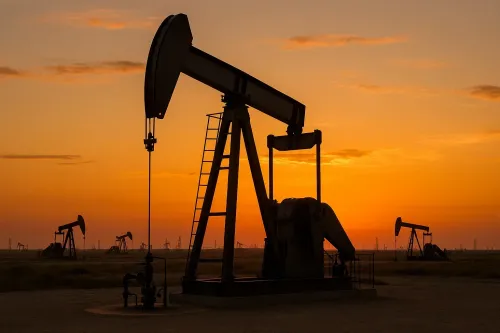
Crude oil prices plunge 6% to 2-week lows on US-Iran deal hopes
Synopsis
Brent crude has shed nearly 15% from its May peak of $115.30 in just three weeks — and the trigger is diplomatic, not economic. Trump's signal that a US-Iran peace understanding is 'largely negotiated' has done what months of demand data could not: push prices back below $100. The catch: critical issues remain unresolved, and the Strait of Hormuz is still not fully open.
Key Takeaways
Brent crude fell 6% to trade below $100 per barrel on 25 May — its lowest in two weeks.
WTI crude dropped more than 6% to $90.33 during early trade.
Brent had peaked at $115.30 per barrel earlier in May, marking a nearly 15% decline from peak to 25 May .
US President Donald Trump said the US and Iran had 'largely negotiated' a peace understanding aimed at reopening the Strait of Hormuz .
Trump cautioned that several critical issues remain unresolved and the US is not rushing to finalise a deal.
The Strait of Hormuz previously handled around one-fifth of global oil and LNG shipments before conflict disrupted flows.
Global crude oil prices tumbled to their lowest levels in two weeks on Monday, 25 May, as optimism over a potential breakthrough in US-Iran negotiations eased fears of prolonged supply disruptions in West Asia. Both major benchmarks fell sharply, with Brent crude slipping below the closely watched $100-per-barrel threshold for the first time in weeks.
How Far Prices Fell
International benchmark Brent crude dropped 6% to trade below $100 per barrel, while US West Texas Intermediate (WTI) crude declined more than 6% to $90.33 during early trade. Both benchmarks touched their weakest levels since early May.
Notably, Brent had surged to a peak of $115.30 per barrel earlier this month as markets priced in supply risks and tightening global inventories. From 4 May to 25 May, the benchmark declined by nearly 15% — a sharp reversal that analysts are watching closely.
What Triggered the Selloff
The slide followed remarks by US President Donald Trump, who indicated that Washington and Tehran had made significant progress toward a possible peace understanding aimed at easing regional tensions and reopening the Strait of Hormuz. Trump said the two sides had 'largely negotiated' the contours of a deal.
Oil prices had surged sharply in preceding months after tensions escalated between the US, Israel, and Iran, disrupting flows through one of the world's most critical energy chokepoints. This latest diplomatic signal marks a potential turning point, though uncertainty persists.
Critical Issues Still Unresolved
Despite the optimism, Trump acknowledged that several critical issues remain unresolved and indicated that Washington was not rushing to finalise an agreement. Analysts noted that while prices have slipped below the $100 mark on deal expectations, the market remains fragile.
Leading global brokerages warned that the oil market stays vulnerable if disruptions in the Strait of Hormuz continue for an extended period. The strait previously carried around one-fifth of global oil and liquefied natural gas shipments before the conflict disrupted supplies earlier this year.
Why the Strait of Hormuz Matters
The Strait of Hormuz is one of the world's most strategically important energy routes, serving as the primary export corridor for crude oil from the Persian Gulf. Any sustained closure or disruption directly impacts global supply chains, energy costs, and inflation trajectories — particularly for import-dependent economies like India.
This is the first time since early May that Brent has traded below $100, and if the diplomatic momentum holds, analysts suggest it could emerge as a structural shift in near-term energy markets. All eyes are now on the next round of US-Iran talks.
Point of View
Even though the president himself flagged unresolved issues. That is a fragile foundation. If talks stall or collapse, the $115 peak is not a ceiling — it could be a floor. India, which imports over 85% of its crude, has the most to gain from a sustained price fall, but also the most to lose if the diplomatic window closes without a deal.
NationPress
27 Sept 2026
Frequently Asked Questions
Why did crude oil prices fall on 25 May 2025?
Crude oil prices fell sharply on 25 May after US President Donald Trump signalled significant progress in US-Iran negotiations, raising hopes of a peace deal that could reopen the Strait of Hormuz and ease global supply disruptions. Brent crude dropped 6% below $100 per barrel and WTI fell to $90.33.
How much has Brent crude fallen from its May peak?
Brent crude declined by nearly 15% between 4 May and 25 May, falling from a peak of $115.30 per barrel to below $100. This is its lowest level in two weeks.
What is the Strait of Hormuz and why does it matter for oil prices?
The Strait of Hormuz is a critical maritime chokepoint through which around one-fifth of global oil and liquefied natural gas shipments pass. Disruptions to this route directly impact global energy supply and prices, making any diplomatic progress on reopening it a major market catalyst.
Is the US-Iran deal finalised?
No. While US President Donald Trump said the two sides had 'largely negotiated' a peace understanding, he acknowledged that several critical issues remain unresolved and that Washington is not rushing to finalise an agreement. Uncertainty around the negotiations continues to persist.
What is the risk if the US-Iran talks fail?
Leading global brokerages have warned that the oil market remains vulnerable if disruptions in the Strait of Hormuz continue for an extended period. A breakdown in talks could push Brent crude back toward or beyond its recent peak of $115.30 per barrel.