Oil prices plunge 10% on US-Iran peace deal hopes, WTI hits $94

Synopsis
Oil markets recorded one of their sharpest single-session drops in recent memory — a 10% plunge in WTI — after reports that Washington and Tehran are within 48 hours of a one-page peace memorandum. With the Strait of Hormuz still technically blocked and Iran's Revolutionary Guard issuing fresh warnings, the rally may be pricing in a deal that isn't signed yet.
Key Takeaways
WTI crude dropped as much as 10 per cent to around $94.32 a barrel on 6 May .
Brent crude fell 7 per cent to approximately $102.14 a barrel .
Axios reported that the US and Iran are close to a one-page memorandum of understanding, with major progress possible within 48 hours .
President Trump paused naval operation
Oil prices plunged as much as 10 per cent on Wednesday, 6 May after reports emerged that the United States and Iran were nearing a possible agreement to end the Gulf conflict, easing fears of prolonged disruption in the critical Strait of Hormuz shipping lane.
Market Reaction
West Texas Intermediate (WTI), the US benchmark crude, dropped as much as 10 per cent in early trading before recovering slightly to trade around $94.32 a barrel, according to Business Insider. Brent crude, the international benchmark, fell 7 per cent to approximately $102.14 a barrel. The New York Times later reported that Brent traded around $103 a barrel, while WTI hovered near $96 a barrel as investors reacted to signs that Gulf tensions may be easing. The dual-benchmark slide marks one of the sharpest single-session drops in oil prices in recent months.
The Diplomatic Breakthrough
The market rally followed a report by Axios that Washington and Tehran are reportedly close to agreeing on a one-page memorandum of understanding aimed at ending the conflict, which began in late February. According to the report, major progress could be made within the next 48 hours.
President Donald Trump announced that the US was pausing
Point of View
By all accounts, is not yet signed. Iran's Revolutionary Guard was still issuing Hormuz blockade warnings on the same day traders were pricing in peace — a contradiction that mainstream coverage has glossed over. President Trump's Truth Social post, while market-moving, came with a pointed caveat: 'perhaps a big assumption.' China's simultaneous diplomatic intervention via Foreign Minister Wang Yi adds another layer — Beijing has a direct economic stake in Iranian crude and is unlikely to be a passive observer. The real test is whether the reported one-page memorandum translates into verifiable access through Hormuz, or whether this is another false dawn in a conflict that has already sent US gasoline prices to $4.54 a gallon.
NationPress
27 Sept 2026
Frequently Asked Questions
Why did oil prices fall 10% on 6 May 2025?
Oil prices fell sharply after reports by Axios suggested the US and Iran were close to a one-page memorandum of understanding to end the Gulf conflict, easing fears of a prolonged blockade of the Strait of Hormuz. WTI dropped to around $94.32 a barrel and Brent fell to approximately $102.14 a barrel.
What is the Strait of Hormuz and why does it matter for oil prices?
The Strait of Hormuz is a narrow waterway between Iran and Oman through which a significant share of the world's seaborne oil passes. Any disruption to shipping there directly impacts global crude supply and prices, making it one of the most strategically critical chokepoints in energy markets.
What did President Trump say about the US-Iran situation?
President Trump announced a pause in 'Project Freedom', a US naval operation to escort commercial ships through the Strait of Hormuz, and posted on Truth Social that if Iran agrees to the terms, the conflict would end and the strait would reopen. He also warned that if Iran does not agree, 'the bombing starts, and it will be, sadly, at a much higher level and intensity than it was before.'
Is the Strait of Hormuz actually open following the peace reports?
Not fully, according to reports. The Wall Street Journal reported that Iran's Revolutionary Guard navy was still issuing warnings to ships attempting to cross the strait on Wednesday, indicating the waterway remained blocked despite the diplomatic optimism in markets.
How has the Gulf conflict affected fuel prices?
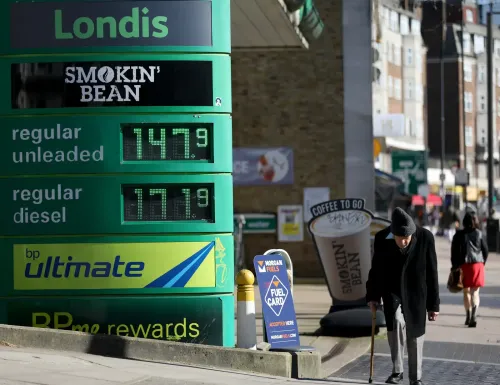
The New York Times reported that average gasoline prices in the United States rose to $4.54 a gallon and diesel prices climbed to $5.67 a gallon since the conflict began in late February, reflecting the market impact of the Hormuz disruption on global fuel supply chains.