Are Shared Taxis and EVs Central to Pollution Control in Delhi?

Synopsis
Discover how Delhi's Chief Minister Rekha Gupta is spearheading an innovative pollution control strategy involving shared taxis and electric vehicles. The revival of shared taxi services could transform urban transport, ensuring affordability and convenience while combating air pollution. Explore the government's multifaceted approach to a sustainable transport model.
Key Takeaways
Shared taxis are being revived to improve transportation in Delhi.
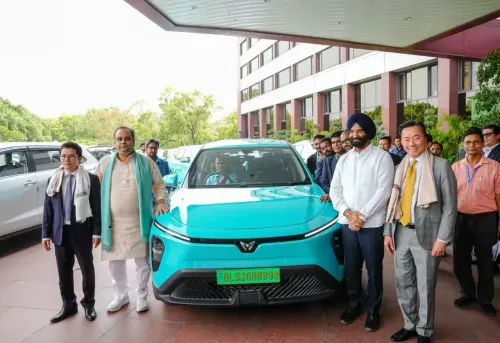
The government is focusing on electric vehicles to combat pollution.
Automated fitness testing stations for vehicles are being increased.
Collaboration with companies like Ola and Uber is key to promoting shared rides.
Long-term plans for a sustainable transport model are in place.
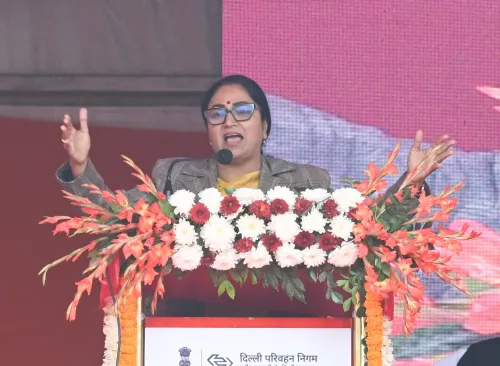
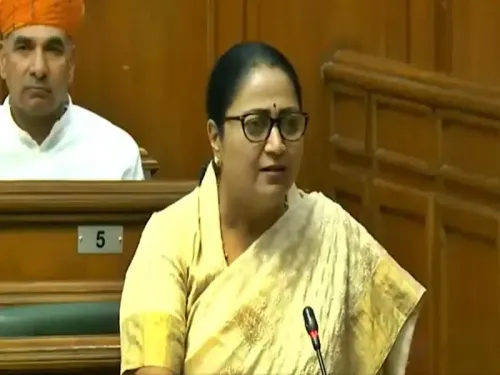
In New Delhi, on December 26, Chief Minister Rekha Gupta emphasized that shared taxis and electric vehicles (EVs) play a crucial role in the government's strategy to combat pollution. Officials are actively engaging with ride-hailing companies such as Ola and Uber to prioritize shared transportation options.
Prior to the pandemic, shared taxi services were operational in Delhi, but they were suspended. Now, the government is considering their revival to offer affordable and convenient travel solutions for commuters.
CM Gupta stated that the government is committed to implementing multi-faceted reforms within the transportation sector to mitigate air pollution and alleviate traffic congestion in the capital.
“Effective pollution management is unattainable without a reduction in the number of vehicles on the roads,” she noted, highlighting the active promotion of shared transport and electric mobility.
The government is also enhancing the number of automated fitness testing stations for commercial vehicles to ensure that no vehicle contributes to pollution.
“We will soon convene a meeting with transportation network companies to enhance passenger services for the residents of Delhi,” she added.
The primary goal of the Delhi government’s transport policy is to decrease the vehicle count on the roads while ensuring no inconvenience for commuters.
The plan aims to maximize passenger service with a limited number of vehicles, ensuring smooth traffic flow and effective pollution management.
Gupta mentioned that ongoing discussions with companies like Ola and Uber focus on prioritizing shared rides, increasing women drivers' participation, and promoting eco-friendly services.
The forthcoming meeting will address the revival of shared taxi services, the enhancement of women driver participation, and the integration of private EVs into taxi services.
“We are exploring ways to safely and affordably transport more passengers with fewer vehicles, thus minimizing congestion and pollution,” she explained.
According to Gupta, this policy is a proactive response to current traffic issues and a significant step towards a sustainable and environmentally friendly transportation model for Delhi.
The operational fitness center at Jhuljhuli conducts annual tests on approximately 70,000 vehicles, while the Burari center is undergoing upgrades.
Two additional centers in Nand Nagri and Tehkhand are expected to start testing by March next year, collectively capable of testing around 2.5 to 3 lakh commercial vehicles annually.
Five more automated testing stations at various DTC depots have been approved for establishment, located at Bawana, Ghazipur, Savda Ghevra, GTK Depot, and Dichau Kalan.
CM Gupta reiterated that numerous studies have identified vehicular emissions as a significant source of air pollution.
In response, the Delhi government is continually investing in strengthening public transport.
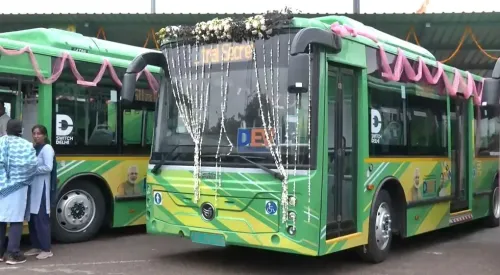
Metro rail, buses, and electric mobility are the cornerstones of the government’s long-term transport strategy. Certain corridors of Delhi Metro Phase-5A have received initial approval from the central government, allowing for further network expansion, which will alleviate road traffic pressure and provide a sustainable pollution control solution.
Gupta confirmed that the government is actively enforcing measures such as dust control, stringent monitoring of construction sites, regular mechanical road cleaning, effective prevention of open burning, and deploying mist spray systems and anti-smog guns in key areas.
All relevant departments are engaged and coordinating closely to ensure comprehensive pollution control efforts.
Point of View
It is imperative to recognize the crucial measures being taken by the Delhi government under Chief Minister Rekha Gupta's leadership. The focus on shared taxis and electric vehicles represents a proactive approach to tackle persistent air quality issues. This strategy, if executed effectively, could serve as a model for other urban centers facing similar challenges, aligning economic growth with environmental sustainability.
NationPress
30 Sept 2026
Frequently Asked Questions
What are shared taxi services?
Shared taxi services allow multiple passengers to share a single ride, making transportation more affordable and efficient.
How will EVs help reduce pollution?
Electric vehicles produce zero tailpipe emissions, significantly lowering air pollution compared to traditional gasoline or diesel vehicles.
What measures are being taken to ensure vehicle fitness?
The government is increasing the number of automated vehicle fitness testing stations to ensure all commercial vehicles are roadworthy and not polluting.
Why is reducing the number of vehicles important?
Reducing vehicles on the roads is crucial for decreasing traffic congestion and improving air quality in urban areas.
What role do transportation network companies play in this strategy?
Transportation network companies like Ola and Uber are being engaged to promote shared rides and enhance service options.