NSE IPO demand 'unexpectedly large': CEO Ashishkumar Chauhan on massive investor interest
Synopsis
The NSE IPO — one of the most anticipated exchange listings globally — is seeing demand that its own CEO calls 'unexpectedly large,' with bids massively outpacing available shares ahead of the 17 September opening. The anchor tranche was trimmed from ₹9,000 crore to ₹6,000 crore even as interest held firm, signalling that institutional confidence in India's top derivatives exchange is running high.
Key Takeaways
NSE IPO subscription opens 17 September and closes 21 September 2026 , with a price band of ₹1,700–₹1,785 per share .
CEO Ashishkumar Chauhan described investor interest as 'unexpectedly large,' with demand far exceeding the shares available.
The anchor portion was reduced from ₹9,000 crore to over ₹6,000 crore even as overall demand remained elevated.
The issue is a pure offer for sale (OFS) of up to 12.64 crore shares ; NSE will not issue fresh capital.
The stake on offer was trimmed from 6.2% to 5.11% after some shareholders were reluctant to sell at the proposed valuation.
Shares are proposed to list on the BSE ; NSE currently trades in the private market at higher transaction costs.
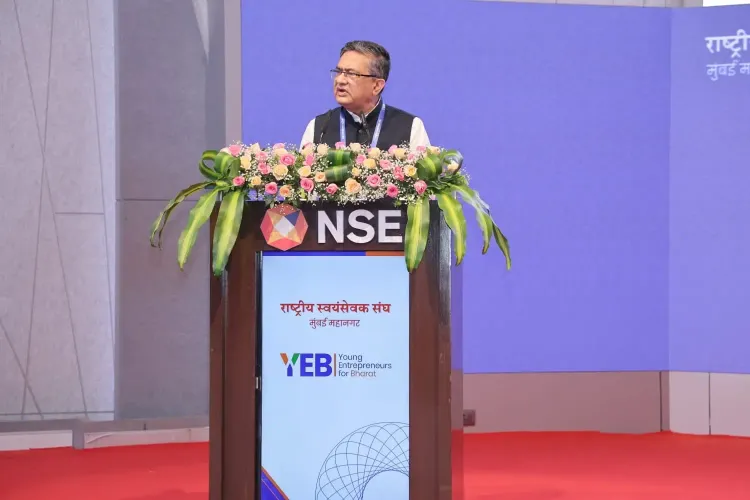
The initial public offering (IPO) of the National Stock Exchange of India (NSE) has attracted demand far exceeding the shares on offer, with NSE Managing Director and Chief Executive Officer Ashishkumar Chauhan describing investor appetite as 'unexpectedly large' on Tuesday, 15 September 2026. The development marks a significant milestone for one of the world's largest exchanges by derivatives volume, which has long awaited a public listing.
Scale of Demand and Anchor Allocation
Chauhan confirmed that demand from investors was substantially higher than the available share pool, though he declined to give a breakdown between domestic institutional investors (DIIs) and foreign portfolio investors (FPIs), noting that the allocation process remained ongoing. Notably, the anchor portion of the issue — initially expected at around ₹9,000 crore — was scaled back to over ₹6,000 crore, even as overall investor interest stayed considerably elevated.
'Demand is unexpectedly large,' Chauhan said, pointing to a large pool of investors competing for a relatively limited number of NSE shares.
IPO Structure and Subscription Window
The NSE IPO will open for subscription on 17 September and close on 21 September. The price band has been set at ₹1,700–₹1,785 per share. The issue is structured entirely as an offer for sale (OFS), under which existing shareholders will divest up to 12.64 crore shares. NSE itself will not raise fresh capital through the offering.
The stake being offered has been reduced from the earlier proposed 6.2% to 5.11%, after some existing shareholders were initially reluctant to sell at the proposed valuation. NSE subsequently engaged certain shareholders to participate in the OFS to meet listing requirements.
Why Listing Matters for Current Shareholders
According to Chauhan, the listing will provide existing shareholders a more transparent and liquid mechanism to exit their holdings. NSE shares currently trade in the private market, where transactions can involve higher costs and difficulties in finding suitable counterparties — friction that a public listing would eliminate.
The shares are proposed to be listed on the BSE, according to NSE's IPO documentation.
Pricing Process and Retail Participation
On valuation, Chauhan said NSE's investment bankers had gathered feedback from investors across India and overseas, including large institutional investors, mutual funds, pension funds, and retail participants. Retail access was a stated consideration in finalising the price band.
'There was feedback to leave something for retail investors,' Chauhan said. The allocation will be distributed across domestic mutual funds, other domestic institutions, and FPIs in accordance with applicable regulatory norms.
What Comes Next
With the subscription window opening in two days, market participants will closely watch the final allotment, particularly the split between domestic and foreign institutional categories. The NSE listing — long-anticipated and delayed by regulatory and governance hurdles — is set to be one of the largest exchange IPOs globally. How the stock prices on its BSE debut will be a key indicator of institutional confidence in India's capital market infrastructure.
Point of View
Delayed repeatedly by regulatory scrutiny over co-location scandals and governance concerns. The trimming of the anchor tranche from ₹9,000 crore to ₹6,000 crore, even amid surging interest, warrants scrutiny: it suggests that price discovery at the anchor stage may have flagged some valuation hesitancy among cornerstone investors, even if retail and broader institutional demand is strong. The OFS-only structure means NSE gets nothing from the proceeds — the beneficiaries are existing shareholders, many of whom held out on valuation grounds until recently. Whether the listing price holds post-debut will be the real test of whether the IPO was priced to reward early investors or to sustain long-term market confidence.
NationPress
15 Sept 2026
Frequently Asked Questions
When does the NSE IPO open for subscription?
The NSE IPO opens for subscription on 17 September 2026 and remains open until 21 September 2026. The price band has been set at ₹1,700 to ₹1,785 per share.
Why is demand for the NSE IPO described as 'unexpectedly large'?
NSE CEO Ashishkumar Chauhan used the phrase to describe investor bids that significantly exceed the number of shares available in the offering. The exchange attracted interest from a large pool of domestic and foreign institutional investors, mutual funds, pension funds, and retail participants.
What is the structure of the NSE IPO?
The NSE IPO is entirely an offer for sale (OFS), meaning existing shareholders will sell up to 12.64 crore shares. NSE itself will not issue any new shares or raise fresh capital through the listing.
Why was the NSE IPO stake reduced from 6.2% to 5.11%?
Some existing shareholders were initially reluctant to sell their holdings at the proposed valuation. NSE subsequently approached certain shareholders to join the OFS to meet listing requirements, resulting in the smaller stake being offered.
Where will NSE shares be listed, and why does it matter?
NSE shares are proposed to be listed on the BSE. The listing will provide existing shareholders a more liquid and transparent exit mechanism, replacing the current private market where transactions carry higher costs and counterparty challenges.