Rahul Gandhi slams Centre over UPI fees above ₹2,000; BJP calls it fake news
Synopsis
Rahul Gandhi's broadside over UPI fees triggered one of the sharpest political exchanges over digital payments policy in years. The NPCI has quietly revised the MDR framework — and while the government insists consumers won't pay directly, Gandhi's argument that merchant costs flow to prices is harder to dismiss than the BJP's 'fake news' framing suggests.
Key Takeaways
Rahul Gandhi on 15 September 2026 accused the Modi government of opening the door to UPI fees on transactions above ₹2,000 .
Gandhi argued that while charges formally fall on merchants, they will ultimately be passed on to consumers through higher prices.
Transactions above ₹2,000 represent just 5% of UPI volume but nearly 65% of total UPI transaction value, according to Gandhi's post.
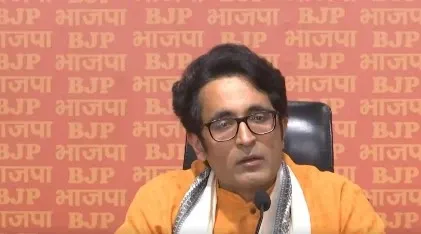
BJP spokesperson Pradeep Bhandari dismissed the allegations as fake news, calling Congress a 'historical opponent of India's digital financial revolution.' NPCI confirmed a revised MDR framework under which charges apply to select merchant UPI payments above ₹2,000 ; small merchants and low-value transactions retain zero MDR.
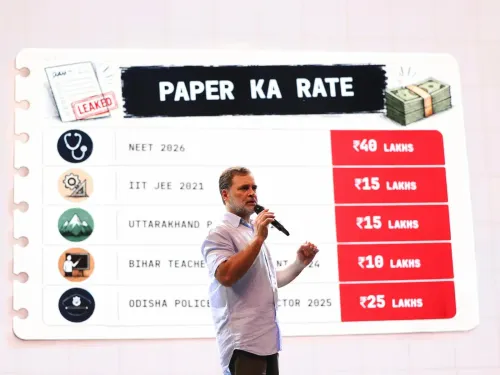
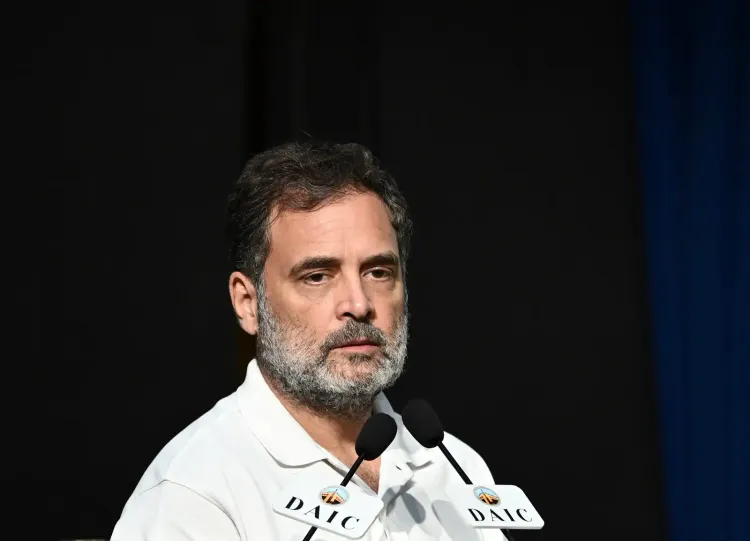
Leader of the Opposition in the Lok Sabha, Rahul Gandhi, on Tuesday, 15 September 2026, launched a sharp attack on the Centre over its decision to permit fees on UPI transactions above ₹2,000, alleging that the move would ultimately burden consumers. The Bharatiya Janata Party (BJP) hit back swiftly, accusing Gandhi of spreading lies and fake news, as the political row over the National Payments Corporation of India (NPCI)'s revised Merchant Discount Rate (MDR) framework escalated.
What Rahul Gandhi Said
In a post on X, Gandhi alleged that the Modi government had 'quietly opened the door to imposing fees on UPI.' He pointed out that while transactions above ₹2,000 account for only 5% of UPI volume, they represent nearly 65% of the platform's total transaction value — making the charge economically significant despite its narrow scope.
Gandhi argued that even though the government had stated no fees would be charged directly to customers, the burden would inevitably pass through. 'Where will the fees imposed on shopkeepers ultimately come from? Added to prices, straight out of the customer's pocket,' he said. He also alleged that the shift aligned with the longstanding position of American payment companies, which he claimed had 'long opposed India's zero-MDR policy.'
The BJP's Rebuttal
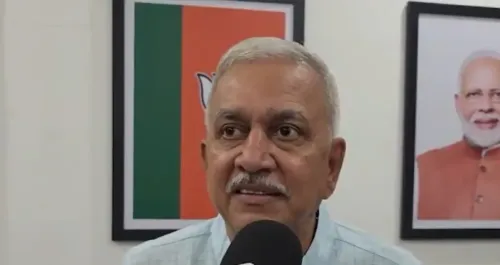
BJP national spokesperson Pradeep Bhandari dismissed Gandhi's claims as deliberate misinformation. He described the Congress leadership as 'a naraz fufa who run a shop of lies,' and argued that the Congress had historically opposed Prime Minister Narendra Modi's push for digital payments. 'Congress has been a historical opponent of the digital financial revolution achieved by India under PM Modi,' Bhandari said.
Referencing the BJP's performance in Rajasthan civic body polls, Bhandari added that voters had already passed their verdict on Congress's credibility. 'The entire country is watching that the Congress is frustrated because the Indian economy is moving forward and that UPI has been successful in India,' he said, characterising Gandhi's remarks as driven by a 'sick mindset.'
What NPCI Actually Changed
The National Payments Corporation of India (NPCI) on Tuesday confirmed it had revised the MDR framework for select UPI transactions. Under the revised rules, charges will apply to certain merchant payments above ₹2,000, while small merchants and low-value transactions will continue to benefit from a zero MDR regime. The NPCI clarified that end customers will not be charged directly, though critics argue the merchant cost will be passed on indirectly through pricing.
Why the UPI MDR Debate Matters
UPI has become the backbone of India's digital payments ecosystem, processing billions of transactions monthly. The zero-MDR policy, introduced to accelerate adoption, has long been a point of friction with payment service providers and foreign card networks, who have argued it is financially unsustainable. This revision — even if limited in scope — marks the first structural shift in that policy in years, and sets a precedent that analysts say could be expanded over time. Notably, the move arrives amid broader questions about the long-term financing model of India's public digital infrastructure.
Political Context
The exchange is part of a wider pattern of Congress-BJP confrontations over economic policy, where the opposition has increasingly sought to frame digital India initiatives as benefiting corporate interests over ordinary citizens. The BJP, in turn, has consistently positioned UPI's global success as a flagship achievement of the Modi government. Both sides are likely to continue amplifying the issue ahead of upcoming state electoral cycles.
Point of View
Not fiction. The harder question, which neither side is engaging seriously, is whether a zero-MDR model is indefinitely sustainable for a payment rail processing the volumes UPI now handles. By framing a legitimate policy debate as a binary of 'Truth vs Jhooth,' both parties are avoiding the structural conversation India's digital payments ecosystem actually needs.
NationPress
15 Sept 2026
Frequently Asked Questions
What is the UPI MDR fee change that Rahul Gandhi is criticising?
The NPCI revised its Merchant Discount Rate framework to allow charges on certain UPI merchant transactions above ₹2,000. Gandhi alleges this effectively ends India's zero-MDR policy for a large share of UPI's transaction value, even though the government says customers will not be charged directly.
Will UPI users be charged for transactions above ₹2,000?
The NPCI and government have stated that end customers will not be charged directly. However, critics including Rahul Gandhi argue that merchants facing MDR charges will pass the cost on through higher prices, indirectly burdening consumers.
Why does the ₹2,000 threshold matter for UPI?
According to Rahul Gandhi's post, transactions above ₹2,000 account for only about 5% of UPI's total volume but represent nearly 65% of its total transaction value. This means the MDR revision, while narrow in scope, applies to the economically most significant slice of UPI payments.
What did the BJP say in response to Gandhi's allegations?
BJP national spokesperson Pradeep Bhandari rejected Gandhi's claims as fake news, calling Congress a historical opponent of India's digital financial revolution. He argued that the Congress's frustration stems from UPI's success under PM Modi's tenure, something that did not happen when Congress was in power.
What is MDR and how does it relate to UPI?
Merchant Discount Rate (MDR) is the fee that merchants pay to payment service providers for processing digital transactions. India had adopted a zero-MDR policy for UPI and RuPay to accelerate adoption. The NPCI's revised framework reintroduces MDR for select UPI merchant payments above ₹2,000, marking a shift in that longstanding policy.