DigiHaat Rides expands to 55 Indian cities via driver cooperatives
Synopsis
DigiHaat has taken its cooperative ride-hailing model — built on driver ownership and lower commissions — from two cities to 55 in a single expansion, partnering with Bharat Taxi and Namma Yatri. At a moment when gig-worker grievances are mounting, the government-backed platform is making a direct structural argument against the shareholder-first model of mainstream ride-hailing.
Key Takeaways
DigiHaat expanded its 'DigiHaat Rides' service to 55 Indian cities on 22 May 2025 .
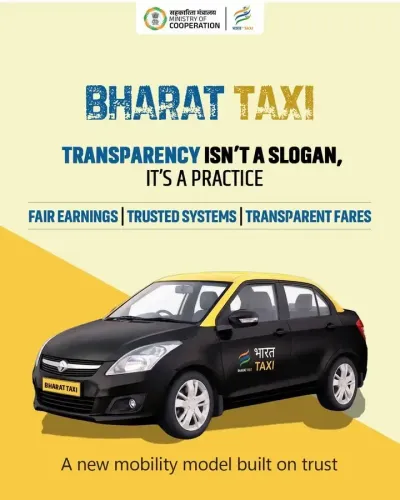
The rollout is powered by partnerships with driver-owned cooperatives Bharat Taxi and Namma Yatri .
Previously operational only in Delhi NCR and Bengaluru ; now covers Mumbai , Chennai , Hyderabad , Kolkata , and several tier-2 and tier-3 cities.
Drivers retain greater control over earnings; the platform charges lower commissions than conventional ride-hailing services.
The rides service will integrate with DigiHaat's existing metro ticketing , food delivery , and grocery offerings.
Rahul Vij , CEO of Nirmit Bharat , said the goal is digital infrastructure that 'serves citizens first, not shareholders.'
Government-backed e-commerce platform DigiHaat on 22 May 2025 announced the nationwide expansion of its 'DigiHaat Rides' mobility service to 55 cities across India, partnering with driver-owned cooperatives Bharat Taxi and Namma Yatri. The rollout positions the platform as a citizen-first alternative to conventional ride-hailing giants.
Cities Covered in the Expansion
Previously limited to Delhi NCR and Bengaluru, DigiHaat Rides has now been extended to major urban centres including Ahmedabad, Chandigarh, Chennai, Hyderabad, Jaipur, Kolkata, Kochi, Lucknow, Mumbai, Surat, Thiruvananthapuram, and Vadodara. Several tier-2 and tier-3 cities have also been brought under the service umbrella.
The Cooperative Model: How It Differs
DigiHaat's mobility model departs from the commission-heavy structure of mainstream ride-hailing platforms. According to the company, drivers retain greater control over their earnings and operational decision-making, while passengers benefit from transparent pricing and community-based accountability. The platform charges lower commissions compared to conventional players, a structural choice it says is central to the cooperative ethos.
Notably, this expansion comes at a time when driver dissatisfaction with surge pricing and high platform cuts has fuelled protests across India's gig economy, making the cooperative model a timely proposition.
What the CEO Said
Rahul Vij, CEO of Nirmit Bharat, framed the initiative as a challenge to the dominant shareholder-first logic of digital platforms. 'We are not building another ride-sharing app. We are proving that India can build digital infrastructure that serves citizens first, not shareholders. Every driver on DigiHaat retains their earnings. Every user gets a genuine choice. This is what inclusive digital participation looks like,' he said.
Integration with DigiHaat's Broader Platform
The rides service will be integrated with DigiHaat's existing suite of offerings — including metro ticketing, food delivery, shopping, and grocery services — as part of an effort to build a unified digital platform for everyday needs. The company describes itself as a government-backed initiative focused on strengthening digital participation for Indian producers, artisans, farmer groups, and enterprises.
DigiHaat has also invoked Prime Minister Narendra Modi's Digital India vision, stating the expansion aims to improve 'Ease of Living' and encourage inclusive digital access across the country. Whether the cooperative model can sustain scale against well-capitalised rivals will be the defining test ahead.
Point of View
But cooperative models have struggled to scale in India before — Namma Yatri's own growth in southern cities has been promising yet uneven. The real question is whether lower commissions and driver ownership can survive the cash-burn competition that conventional platforms have historically used to crowd out challengers. Government backing provides legitimacy, but it is not a substitute for operational depth. If DigiHaat can demonstrate sustained driver retention and rider adoption in tier-2 cities — where both gig-worker density and price sensitivity are high — it will have made a genuinely replicable case for the cooperative model.
NationPress
6 Oct 2026
Frequently Asked Questions
What is DigiHaat Rides and how does it work?
DigiHaat Rides is a government-backed ride-hailing service that operates through partnerships with driver-owned cooperatives Bharat Taxi and Namma Yatri. Drivers retain greater control over their earnings and decision-making, while passengers receive transparent pricing without the surge mechanisms common on mainstream platforms.
Which cities are now covered under DigiHaat Rides?
As of 22 May 2025, DigiHaat Rides is operational in 55 Indian cities, including Mumbai, Chennai, Hyderabad, Kolkata, Ahmedabad, Jaipur, Kochi, Lucknow, Surat, Thiruvananthapuram, Vadodara, and Chandigarh, in addition to its earlier markets of Delhi NCR and Bengaluru. Several tier-2 and tier-3 cities are also included.
How is DigiHaat Rides different from Ola or Uber?
Unlike conventional ride-hailing platforms that take significant commissions and retain centralised control, DigiHaat Rides is structured around driver-owned cooperatives. Drivers keep a larger share of their earnings and have a say in platform decisions, while pricing is designed to be transparent rather than surge-based.
Who is behind DigiHaat and what else does the platform offer?
DigiHaat is a government-backed e-commerce platform operated under Nirmit Bharat, with Rahul Vij as CEO. Beyond ride-hailing, it offers metro ticketing, food delivery, shopping, and grocery services, with the rides expansion designed to integrate into this unified digital platform.
Why does the cooperative ride-hailing model matter for Indian drivers?
India's gig economy has seen repeated protests over high platform commissions and opaque pricing policies. A cooperative model that gives drivers ownership stakes and higher earnings retention directly addresses these grievances, though whether it can sustain scale against well-funded rivals remains to be seen.