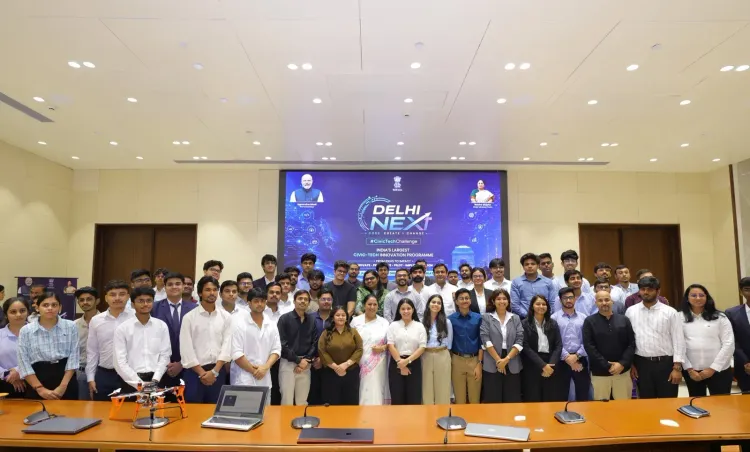
CM Rekha Gupta flags Delhi Next civic-tech drive for youth
Synopsis
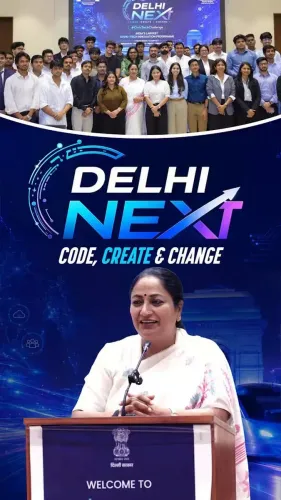
Delhi Chief Minister Rekha Gupta praised the Delhi Next – Code, Create & Change programme on 2 July 2026, calling it India's largest civic-tech initiative. She said the top 60 teams will have their solutions on traffic, waterlogging, pollution and digital services implemented as government pilot projects.
Key Takeaways
Delhi Next – Code, Create & Change is described as India's largest civic-tech innovation programme.
The initiative claims a reach of more than 1 crore young people from across the country.
The top 60 teams presented solutions covering traffic, waterlogging, pollution, digital services, and civic amenities.
CM Rekha Gupta announced the Delhi government will implement these innovations as pilot projects with relevant departments.
The programme aligns with the national Viksit Bharat 2047 framework promoting youth-led administrative modernisation.
Successful implementation could offer a replicable civic-tech model for other Indian states.
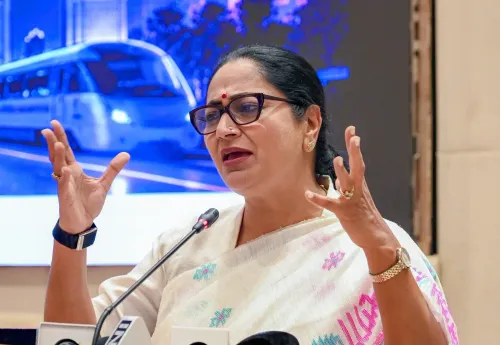
Delhi Chief Minister Rekha Gupta on Thursday, 2 July 2026, hailed the Delhi Next – Code, Create & Change programme as the country's largest civic-tech innovation initiative, saying it had reached more than 1 crore young people across India. The top 60 teams selected from the programme presented practical solutions to urban challenges including traffic congestion, waterlogging, pollution, digital services, and civic amenities. The Chief Minister announced that the Delhi government will implement these innovations as pilot projects in partnership with relevant departments.
Context
Posting in Hindi on X, Rekha Gupta said her heart swelled with pride — 'मन गर्व से भर गया' ('my heart filled with pride') — on witnessing the talent, energy, and innovation brought by young participants from across the country. She described Delhi Next not merely as a hackathon, but as 'a powerful platform to connect the ideas of youth directly with good governance.' She extended her gratitude to all young innovators on behalf of Delhi and called on citizens to collectively accelerate the building of a Viksit Delhi (Developed Delhi).
The programme's hashtag #ViksitDelhi aligns it with the national Viksit Bharat 2047 framework, which promotes youth-driven innovation as a pillar of administrative modernisation. The Chief Minister's statement signals that the government intends to move beyond the event format and embed shortlisted solutions into departmental workflows.
Policy Backdrop
India's civic-tech hackathon ecosystem has grown steadily since the Digital India programme was launched in 2015, which sought to integrate technology into governance and public service delivery. The Smart India Hackathon, initiated in 2017, established the model of crowdsourcing student-led technology solutions for public-sector problems at the national level.
Delhi Next follows this lineage but is positioned as a city-specific, governance-linked initiative rather than a standalone competition. By committing to pilot the top 60 innovations through actual government departments, the programme attempts to close the gap between ideation and implementation — a criticism frequently levelled at hackathon-style events that produce ideas without institutional follow-through.
Stakeholders and Impact
The primary beneficiaries of a successful rollout would be Delhi residents facing daily challenges related to traffic, urban flooding, air quality, and access to digital civic services. Young innovators — drawn from across the country — stand to gain direct exposure to government procurement and pilot processes, an unusual opportunity at that stage of their careers.
If the pilot model proves effective, it could also influence other state governments watching Delhi's experiment. Indian states have increasingly adopted civic-tech challenges to crowdsource municipal solutions, and a credible pilot-to-deployment pipeline in the national capital would provide a replicable template.
What's Next
Attention will now shift to whether the Delhi government follows through on its commitment to convert the top 60 team proposals into live departmental pilots. The pace and scale of that implementation — across domains such as mobility, waterlogging management, and digital service delivery — will determine whether Delhi Next is remembered as a governance milestone or a well-publicised event.
Other states may also watch closely for any replication announcements. The programme's claimed reach of over 1 crore participants would, if substantiated, make it among the largest civic-innovation mobilisations in Indian urban governance history.
Point of View
Rekha Gupta is attempting to distinguish her administration's approach to civic tech from the event-driven hackathon model that critics say rarely produces lasting outcomes. The explicit commitment to departmental pilots is a measurable political promise — one that will be easy to audit. Situating the programme within the #ViksitDelhi and Viksit Bharat 2047 vocabulary also ties a city-level initiative to the ruling party's national development narrative, broadening its political resonance beyond Delhi's borders.
NationPress
1 Oct 2026
Frequently Asked Questions
What is Delhi Next – Code, Create & Change?
Delhi Next – Code, Create & Change is a civic-tech innovation programme run by the Delhi government, described as India's largest of its kind. It invites young people from across the country to develop technology-based solutions for urban challenges such as traffic, waterlogging, pollution, and digital civic services.
How many teams were selected in Delhi Next 2026?
The top 60 teams were selected from the Delhi Next programme to present their innovations. Delhi CM Rekha Gupta announced these teams' solutions will be taken forward as pilot projects with relevant government departments.
What problems did Delhi Next participants try to solve?
Participants in Delhi Next addressed urban challenges including traffic congestion, waterlogging, air pollution, digital public services, and general civic amenities — all pressing issues for residents of the national capital territory.
Will Delhi Next innovations actually be implemented by the government?
CM Rekha Gupta announced on 2 July 2026 that the Delhi government will implement the top innovations as pilot projects in partnership with relevant departments. The actual implementation timeline and scale are yet to be publicly detailed.
How does Delhi Next relate to Viksit Bharat 2047?
Delhi Next uses the hashtag #ViksitDelhi and aligns with the national Viksit Bharat 2047 framework, which promotes youth-driven innovation and technology adoption as tools for modernising public administration and improving governance.