Is the Draft Electricity Amendment Bill 2025 Key to Achieving Viksit Bharat 2047 Goals?
Click to start listening
Synopsis
The Draft Electricity Amendment Bill 2025 is a pivotal step towards achieving India's ambitious vision of Viksit Bharat 2047. Union Minister Manohar Lal Khattar highlights its importance in strengthening the power sector, ensuring consumer welfare, and enhancing industry competitiveness. Discover how this legislation aims to transform India's energy landscape.
Key Takeaways
- Strengthens legislative framework for India's power sector.
- Promotes consumer welfare through subsidies.
- Empowers large consumers with flexibility in power procurement.
- Encourages the use of renewable energy sources.
- Enhances regulatory governance and operational efficiency.
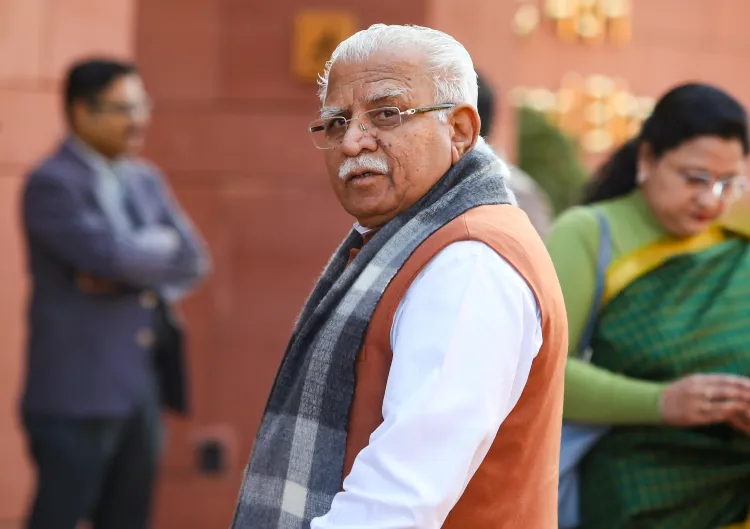
New Delhi, Dec 20 (NationPress) The Draft Electricity (Amendment) Bill, 2025, holds significant national relevance as it aims to bolster the legislative framework of India's power sector in line with the vision for 'Viksit Bharat 2047', stated Manohar Lal Khattar, the Union Minister for Power and Housing & Urban Affairs, on Saturday.
During a parliamentary consultative committee meeting attended by Members of Parliament from various political parties in both Lok Sabha and Rajya Sabha, the minister remarked that the country has made substantial advancements in all facets of the power sector since the enactment of the Act in 2003.
However, ongoing challenges, particularly in the distribution sector, such as persistent financial strain, remain.
He highlighted that the provisions of the Bill are designed to enforce cost-reflective tariffs and empower Commissions to take action when utilities delay tariff filings.
Khattar clarified that State Governments may continue offering subsidies to priority consumer groups, including domestic and agricultural consumers, ensuring no extra costs for these groups.
This approach guarantees that financial discipline aligns with consumer welfare. Additionally, the Bill aims to enhance the economic competitiveness of the Indian industry.
By minimizing distortions from cross-subsidies and surcharges, the Bill seeks to support Indian industries, particularly MSMEs, fostering growth, job creation, and global competitiveness. He stressed the importance of making electricity costs manageable for industries, benefiting all citizens.
Furthermore, the Bill proposes to empower State Electricity Regulatory Commissions (SERCs), in collaboration with State Governments, to exempt DISCOMs from the obligation to supply large consumers.
Large consumers will have the option to procure power at competitive rates from alternative sources, thereby reducing the fixed cost burden on DISCOMs, which will, in turn, benefit smaller consumers.
Khattar also noted that large consumers will have the flexibility to exit after providing a reasonable notice period.
Moreover, he acknowledged the collective responsibility to promote the increased use of electricity derived from non-fossil sources.
The Bill proposes a minimum obligation for utilizing electricity from non-fossil sources.
To ensure the availability of cost-effective and sufficient renewable energy, it suggests enabling capacity addition through market mechanisms, alongside agreements with DISCOMs, alleviating their burden.
The Government is committed to improving both the ease of living and the ease of doing business. The Bill includes provisions to enhance public service, reduce financial and compliance burdens, and create a more favorable business environment.
To fortify regulatory governance, several measures have been proposed in the draft Bill.
It also seeks to expand the capacity of the Appellate Tribunal for Electricity (APTEL) to manage increasing case loads effectively.
The Bill encompasses vital operational reforms, such as incorporating Right-of-Way provisions directly into the Act and promoting distribution network sharing to eliminate duplication.
Khattar emphasized that enabling network sharing will benefit consumers.
He assured that concerns regarding privatization, potential cost increases, or negative impacts on employees are unfounded.
Appropriate regulatory and policy actions will be implemented to ensure no adverse effects on any consumer class or employees.
Point of View
It is imperative to recognize the profound implications of the Draft Electricity Amendment Bill 2025. This legislation is not just procedural; it is a transformative initiative aimed at aligning India’s power sector with the ambitious goals of Viksit Bharat 2047. It effectively balances the need for financial discipline with consumer welfare, marking a significant step towards a sustainable and competitive energy future.
NationPress
22/12/2025
Frequently Asked Questions
What is the purpose of the Draft Electricity Amendment Bill 2025?
The Draft Electricity Amendment Bill 2025 aims to strengthen India's power sector by establishing a legislative framework that supports the vision of Viksit Bharat 2047, promoting consumer welfare and enhancing industrial competitiveness.
How does the Bill support consumer groups?
The Bill allows State Governments to continue providing subsidies to priority consumer groups like domestic and agricultural consumers, ensuring they do not face increased costs.
What changes does the Bill propose for large consumers?
The Bill empowers SERCs to exempt DISCOMs from supplying large consumers, allowing them to procure power from other sources at competitive rates, thereby reducing costs.
What is the significance of promoting non-fossil sources?
The Bill proposes a minimum obligation for using electricity from non-fossil sources, reflecting a commitment to sustainability and reducing environmental impact.
How will the Bill enhance regulatory governance?
The draft Bill includes provisions to strengthen regulatory governance, expand APTEL's capacity, and incorporate vital operational reforms.