India defence sector boom: Drones, indigenisation fuel multi-year growth
Synopsis
India's defence sector isn't just growing — it's structurally transforming. Tactical drone procurement has quadrupled in scale, 75% of defence capital procurement is now reserved for domestic firms, and a $500–700 billion maritime opportunity sits largely untapped. The PL Capital report makes a compelling case that this is a decade-long structural cycle, not a cyclical bump.
Key Takeaways
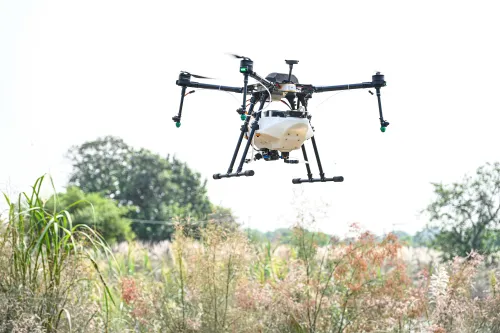
Tactical drone procurement opportunity has risen from ₹3,000–3,500 crore to nearly ₹12,000–14,000 crore , per a PL Capital report released on 30 June 2025 .
An additional ₹30,000 crore strategic drone opportunity is expected to emerge in coming years.
Nearly 75% of the Ministry of Defence's capital procurement is now reserved for domestic sourcing.
Private space companies in India have grown from around 7 to over 300 since the sector opened to private participation in 2020 .
India pays nearly $100 billion annually in freight, with 85% going to foreign shipping firms; an integrated maritime ecosystem could unlock $500–700 billion long-term.
Drone procurement cycles have compressed from 5–10 years to just 6–18 months , accelerating commercialisation for domestic manufacturers.
India's defence sector is entering a structural, multi-year growth cycle, with the tactical drone procurement opportunity alone expected to surge from ₹3,000–3,500 crore in the previous cycle to nearly ₹12,000–14,000 crore, according to a report released on Tuesday, 30 June by PL Capital. The findings, presented at a defence conference hosted by the firm, point to indigenisation mandates, rising capital expenditure, export momentum, and accelerating technology adoption as the primary growth drivers.
Drone Opportunity Expands Rapidly
Tactical drone procurement is among the fastest-growing segments in India's defence ecosystem, and the scale-up is significant. Beyond the tactical segment, an additional ₹30,000 crore strategic drone opportunity is expected to materialise in the coming years, according to the report.
Battlefield dynamics are also reshaping procurement timelines. Evolving operational requirements have compressed procurement cycles for drone platforms from the earlier five-to-ten-year window to as little as six to eighteen months, creating faster commercialisation pathways for domestic manufacturers. However, experts cautioned that while drone hardware may increasingly become commoditised, long-term competitive differentiation will hinge on payload capability, AI-enabled autonomy, sensing technologies, electronic warfare resilience, and counter-drone systems.
Indigenisation Mandate Reshapes the Supply Chain
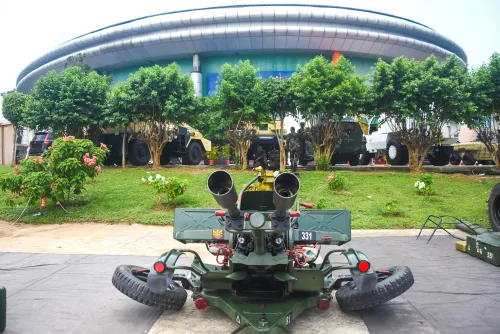
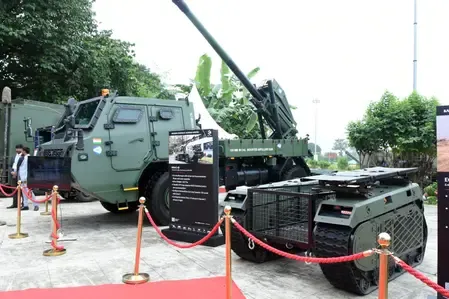
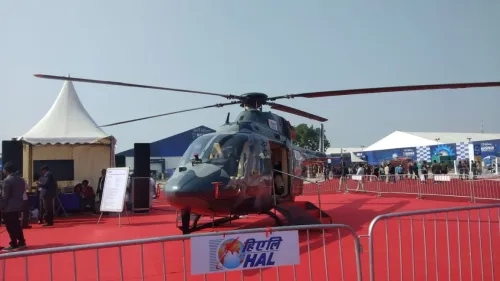
A pivotal structural shift is already under way in procurement policy. Experts at the PL Capital conference noted that nearly 75 per cent of the Ministry of Defence's capital procurement budget is now reserved for domestic sourcing. This reservation is creating significant opportunities for Indian companies across defence electronics, aerospace, shipbuilding, autonomous systems, semiconductors, and space technologies.
As the sector evolves beyond platform manufacturing, value creation is expected to shift progressively toward companies developing proprietary technologies, mission-critical software, electronic warfare systems, sensors, and advanced defence electronics — areas where margins and strategic relevance are both higher.
Space and Satellites: A Long-Term Strategic Frontier
Space and aerospace emerged as major long-term growth themes at the conference. Experts highlighted that the government's proposed constellation of 51 military satellites represents only a fraction of India's long-term strategic requirements. Future defence applications are expected to demand significantly larger satellite networks for continuous surveillance, communication, and targeting capabilities.
The private space sector has expanded dramatically since it was opened to private participation in 2020. The number of private space companies has grown from around 7 to more than 300, creating opportunities across launch vehicles, satellite manufacturing, payload systems, and downstream space applications.
Maritime Ecosystem: A $500–700 Billion Untapped Opportunity
India's maritime ecosystem was identified as another major structural opportunity. The country currently incurs nearly $100 billion annually in freight payments, with approximately 85 per cent flowing to foreign shipping companies, according to experts at the conference.
Developing an integrated maritime ecosystem — spanning shipbuilding, shipping, financing, and arbitration — could unlock a $500–700 billion opportunity over the long term, the PL Capital report said. This positions maritime as one of the most underleveraged segments within India's broader defence and strategic infrastructure build-out.
What Comes Next
With indigenisation mandates deepening, defence capital expenditure rising, and private sector participation accelerating across drones, space, and maritime, analysts expect the current growth cycle to sustain well into the next decade. The critical variable will be execution — whether domestic manufacturers can move up the technology value chain fast enough to capture the higher-margin, differentiated segments before global competitors entrench themselves.
Point of View
But the 75% domestic sourcing mandate is only as meaningful as its enforcement — past indigenisation targets have often been diluted at the contract stage. The drone segment's rapid procurement-cycle compression is structurally bullish, yet commoditisation risk is real: Indian firms that stay in hardware without moving into AI autonomy and electronic warfare software risk becoming low-margin assemblers. The maritime opportunity figure — $500–700 billion — is striking but spans decades and depends on financing and arbitration infrastructure that India has not yet built. The most credible near-term signal to watch is whether private space and drone companies can convert the policy tailwind into verifiable export revenue, not just domestic order books.
NationPress
30 Jun 2026
Frequently Asked Questions
What is driving India's defence sector growth in 2025?
India's defence sector growth is being driven by indigenisation mandates reserving 75% of capital procurement for domestic firms, rising defence capital expenditure, accelerating drone adoption, private sector entry into space, and an untapped maritime opportunity. A PL Capital report released on 30 June identifies these as structural, multi-year drivers rather than cyclical factors.
How big is India's tactical drone procurement opportunity?
The tactical drone procurement opportunity has risen from approximately ₹3,000–3,500 crore in the previous procurement cycle to nearly ₹12,000–14,000 crore, according to the PL Capital report. An additional ₹30,000 crore strategic drone opportunity is expected to emerge in coming years.
How has India's private space sector grown since 2020?
Since the space sector was opened to private participation in 2020, the number of private space companies in India has grown from around 7 to more than 300. Opportunities span launch vehicles, satellite manufacturing, payload systems, and downstream applications.
What is the maritime opportunity identified in the PL Capital report?
India currently pays nearly $100 billion annually in freight, with about 85% going to foreign shipping companies. Developing an integrated maritime ecosystem covering shipbuilding, shipping, financing, and arbitration could unlock a $500–700 billion long-term opportunity, according to the report.
Why are drone procurement timelines getting shorter in India?
Evolving battlefield requirements have compressed drone procurement cycles from the earlier five-to-ten-year window to just six to eighteen months. This acceleration creates faster commercialisation opportunities for indigenous manufacturers, though long-term differentiation will depend on AI autonomy, payload capability, and electronic warfare resilience rather than hardware alone.