India's Commercial Drone Sector Set for 18% Growth by FY29
Synopsis
India's commercial drone industry is on the rise, with a projected market size of $1.88 billion in FY26 and expected growth of 17.98% through FY29. Discover how government initiatives and technological advancements are reshaping agriculture and other sectors.
Key Takeaways
India's drone market is valued at $1.88 billion in FY26.
Projected growth rate is 17.98% from FY25 to FY29.
Drones can reduce agrochemical application costs by 80%.
70% of drone certifications are for agricultural use.
Government initiatives are fostering growth in the drone sector.
Mumbai, March 26 (NationPress) The commercial drone sector in India reached a market size of $1.88 billion (Rs 17,000 crore) in FY26, and it is projected to expand at a compound annual growth rate of 17.98 percent from FY25 to FY29, according to a report released on Thursday.
In the global landscape, the United States is the leading country in the commercial drone market, followed by China, while India holds the seventh position, as indicated by a research study from B2K Analytics.
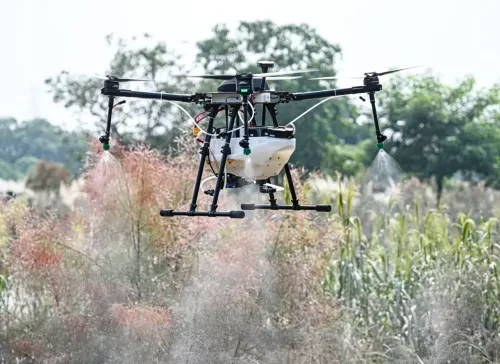
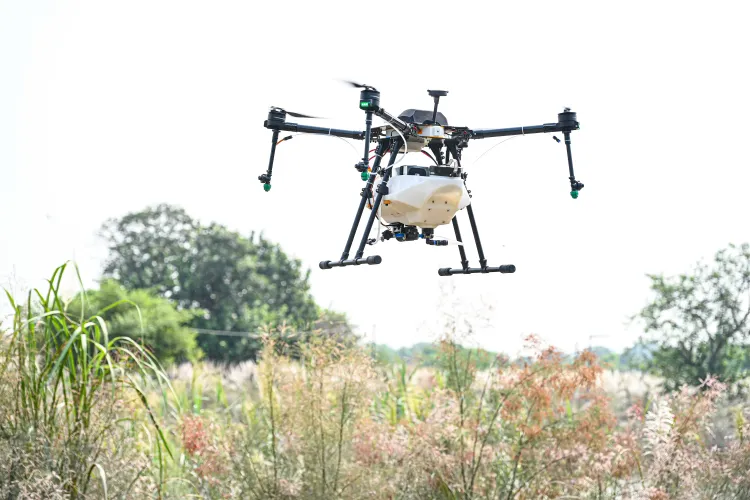
The report states that employing drones for agrochemical spraying can reduce costs by nearly 80 percent compared to traditional manual methods.
A thorough analysis compared the expenses of small and medium-sized drones, priced between Rs 6.4 and 7.1 lakh with a maximum operational lifespan of three years, against annual manual labor costs of approximately Rs 1.7 lakh.
“Although the initial investment is higher, drones are capable of covering 6 to 6.6 acres in the same time it takes manual labor to cover just one acre. When factoring in efficiency and depreciation, drones are over 78 percent more cost-effective than manual labor,” the findings reveal.
Currently, India has 122 Type Certificate holders, a certification issued by the DGCA that confirms a drone model's compliance with safety, airworthiness, and performance criteria for commercial operations.
Approximately 70 percent of these certifications are for drones utilized in agriculture, primarily for agrochemical spraying, while 24 percent are involved in surveillance and mapping, emphasizing agriculture as the primary application of drones at this time.
Government initiatives have bolstered the local drone industry through strategies such as prohibiting the import of completely built drone units and implementing a production-linked incentive scheme for manufacturing and research and development.
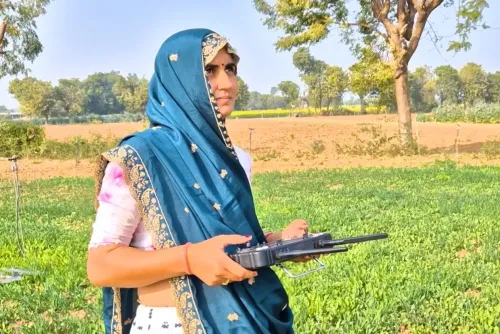
Programs like the Namo Drone Didi initiative strive to empower women Self-Help Groups with drone technology for agricultural services, promoting broader adoption, as noted in the report.
The Ministry of Agriculture and Farmers Welfare provides subsidies for drone acquisitions, while the Ministries of Mines and Road Transport and Highways utilize drones for monitoring mines and highway development projects.
The Ministry of Defence has established procurement processes for remotely piloted aerial vehicles to enhance operational preparedness.
Moreover, about 90 percent of India is classified within the green zone, where drone operations can be conducted without prior permissions.
“Following the lead of states such as Punjab, Haryana, and Andhra Pradesh, the adoption of drones in agriculture is anticipated to grow, thereby expanding the market focused on farming,” the report concluded.
Point of View
I view the ongoing growth of India's commercial drone industry as a significant development not only for agriculture but also for technological innovation in various sectors. With supportive government policies and increasing adoption rates, this sector is poised to become a key player in enhancing operational efficiencies.
NationPress
27 Sept 2026
Frequently Asked Questions
What is the projected growth rate of India's commercial drone market?
India's commercial drone market is expected to grow at a compounded annual growth rate of 17.98% from FY25 to FY29.
How much can drones reduce agrochemical spraying costs?
Drones can reduce the costs of agrochemical spraying by nearly 80% compared to manual methods.
What is the current market size of India's commercial drone industry?
As of FY26, India's commercial drone industry has a market size of $1.88 billion (Rs 17,000 crore).
What percentage of Type Certificates are for agricultural drones?
About 70% of the Type Certificates issued in India are for drones used in agriculture.
What government initiatives support the drone industry in India?
The government has implemented measures like the Namo Drone Didi scheme, production-linked incentives, and subsidies for drone purchases.