India among world's fastest-growing drone markets: 38,500 drones registered
Synopsis
India's drone sector has quietly crossed a threshold — 38,500 registered drones, 39,890 certified pilots, and a pipeline of 7.2 lakh projected jobs. But the report's real signal is a warning: rapid growth means little without deep domestic manufacturing. Sensors, propulsion systems, and specialised payloads are still largely imported, and that dependency could cap India's ambitions as a global drone hub.
Key Takeaways
India has more than 38,500 drones registered and 39,890 remote pilots certified as of February 2026 .
Over 240 training organisations have been approved, reflecting the sector's structured growth.
The SVAMITVA Scheme has completed drone surveys in 3.28 lakh villages , distributing 2.76 crore property cards across 31 states .
More than 1,094 drones distributed to women's self-help groups, including 500+ under Namo Drone Didi .
The sector is projected to create over 1,20,000 manufacturing jobs and more than 6,00,000 services-sector positions .
Reduced dependence on imported sensors, propulsion systems, and payloads identified as the key challenge for long-term competitiveness.
India's drone ecosystem has entered a structured growth phase, with more than 38,500 drones registered, 39,890 remote pilots certified, and over 240 training organisations approved as of February 2026, according to a report published in the Vietnam Times. The country has emerged as one of the world's fastest-growing drone markets, propelled by progressive policy reforms, rising strategic demand, and expanding commercial applications.
From Fragmented Beginnings to a Structured Ecosystem
The report details how India's drone sector has evolved from defence-led operations and scattered manufacturing into a comprehensive system encompassing production capabilities, service offerings, software development, and pilot training infrastructure. Three forces have driven this transformation: regulatory overhaul, growing security imperatives, and the emergence of new commercial use cases.
'The drone industry in India has entered a significant phase of expansion,' the report noted, adding that the ecosystem now spans the full value chain — from hardware production to certified training at over 240 approved organisations.
Defence and Strategic Applications
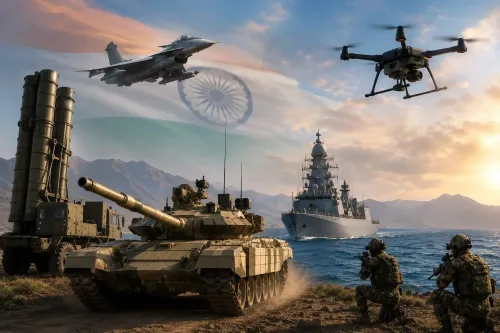
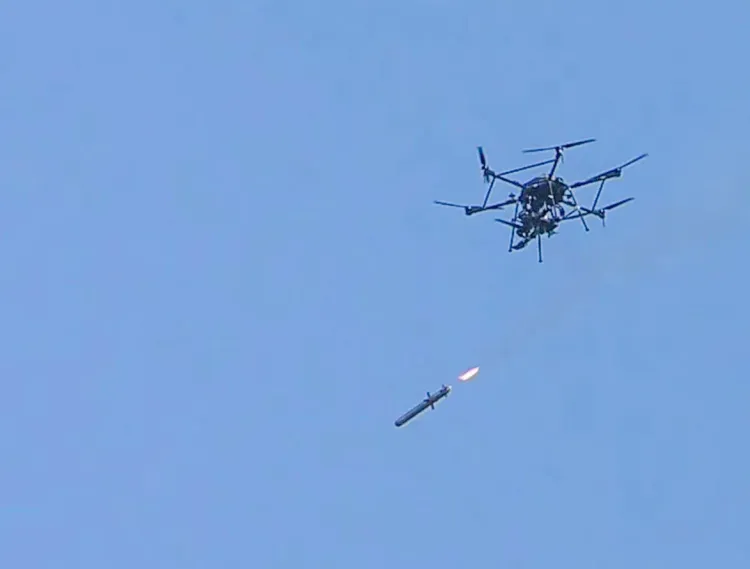
Unmanned systems are now deeply embedded in India's defence strategy. Drones are deployed for surveillance, intelligence gathering, reconnaissance, and logistics — tasks they execute faster and at lower operational cost than conventional platforms. According to the report, recent geopolitical developments have reinforced the urgency of building trustworthy indigenous drone systems, which security planners now consider essential to modern defence doctrine.
Governance and Agriculture: Drones Beyond the Battlefield
The report highlights that the benefits of drone technology extend well beyond military use. The SVAMITVA Scheme, launched by Prime Minister Narendra Modi on 24 April 2020, has conducted drone-based land surveys across 3.28 lakh villages in India, resulting in the distribution of 2.76 crore property cards across 1.82 lakh villages in 31 states. The initiative has strengthened land record systems, enabling clearer property ownership determination and reducing disputes.
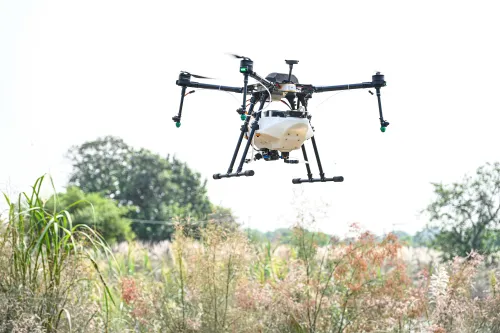
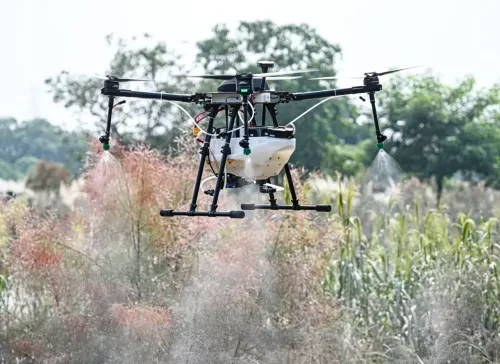
In agriculture, drones are supporting rural livelihoods through precision spraying. A total of 1,094 drones have been distributed to women's self-help groups — including more than 500 under the Namo Drone Didi initiative — enhancing farm efficiency and productivity.
Jobs, Manufacturing, and the Export Ambition
The economic opportunity is substantial. The drone industry is expected to generate over 1,20,000 jobs in manufacturing and more than 6,00,000 positions in the services sector, according to the report. India's focus on export-driven production is reinforcing its emergence as a key hub for drone manufacturing and global service delivery.
Challenges Ahead
Despite the momentum, the report cautions that long-term competitiveness hinges on more than operational scale. Complete project execution — rather than expansion alone — will determine future growth. Critically, India must reduce its reliance on imported components, including sensors, propulsion systems, and specialised payloads, to build a truly self-sufficient drone supply chain. Strengthening domestic manufacturing depth remains the sector's most pressing structural challenge.
With policy tailwinds in place and demand rising across defence, agriculture, logistics, and governance, India's drone sector is well-positioned — but the transition from a fast-growing market to a globally competitive manufacturing hub will require sustained investment and indigenous technology development.
Point of View
But the report's most important line is buried: long-term competitiveness requires reducing reliance on imported sensors, propulsion systems, and payloads. Without that, India risks becoming a large assembler of foreign-component drones rather than a true manufacturing power. The SVAMITVA and Namo Drone Didi programmes demonstrate genuine public-sector intent, but the 6-lakh services-jobs projection will only materialise if domestic hardware depth catches up. The gap between market growth and manufacturing self-sufficiency is where India's drone ambition will be won or lost.
NationPress
29 Sept 2026
Frequently Asked Questions
How big is India's drone market in 2026?
India has registered more than 38,500 drones and certified 39,890 remote pilots as of February 2026, with over 240 approved training organisations. It is ranked among the world's fastest-growing drone markets, driven by policy support and rising demand across defence, agriculture, logistics, and governance.
What is the SVAMITVA Scheme and how does it use drones?
The SVAMITVA Scheme, launched by Prime Minister Narendra Modi on 24 April 2020, uses drones to conduct land surveys across rural India. It has covered 3.28 lakh villages and distributed 2.76 crore property cards across 1.82 lakh villages in 31 states, helping resolve land ownership disputes.
What is the Namo Drone Didi initiative?
Namo Drone Didi is a government initiative under which drones are distributed to women's self-help groups for agricultural use. More than 500 drones have been provided under this scheme, enabling precision spraying and improving farm efficiency and rural livelihoods.
How many jobs is India's drone industry expected to create?
The drone industry is projected to generate over 1,20,000 jobs in manufacturing and more than 6,00,000 positions in the services sector, according to the report. India's export-focused production strategy is central to realising these employment targets.
What are the main challenges facing India's drone sector?
The primary challenge is reducing dependence on imported components — particularly sensors, propulsion systems, and specialised payloads. The report notes that complete project execution, not just operational expansion, will determine whether India can transition from a fast-growing market to a globally competitive drone manufacturing hub.