CSR Conference 2026: Coal Minister flags community-first growth at NCCSR
Synopsis
India's coal sector got its first dedicated CSR playbook at NCCSR 2026, where Coal Minister Satish Chandra Dubey launched the Comprehensive CSR Framework for Indian Coal Companies alongside the India CSR Factbook 2024-25 — signalling a regulatory shift from compliance-driven spending to outcome-oriented community development in resource-bearing regions.
Key Takeaways
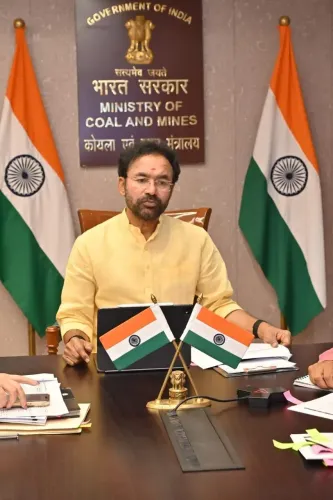
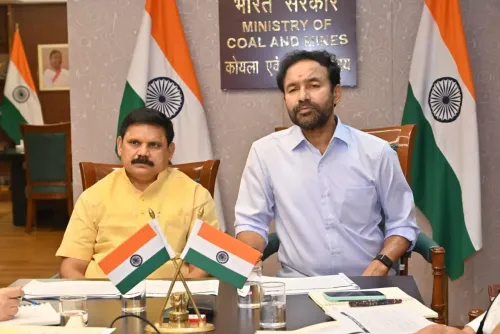
Minister of State for Coal and Mines Satish Chandra Dubey inaugurated NCCSR 2026 in New Delhi on 10 October 2026 .
The Comprehensive CSR Framework for Indian Coal Companies was released, targeting structured and outcome-oriented CSR interventions in the coal sector.
The India CSR Factbook 2024–25 was also launched, consolidating data on India's evolving CSR landscape.
Ministry of Corporate Affairs Secretary Dr Pallavi Jain Govil described CSR as a key expression of collective effort for Viksit Bharat .
IICA Director General Gyaneshwar Kumar Singh stressed that CSR value must be visible in schools, health centres and livelihood programmes on the ground.
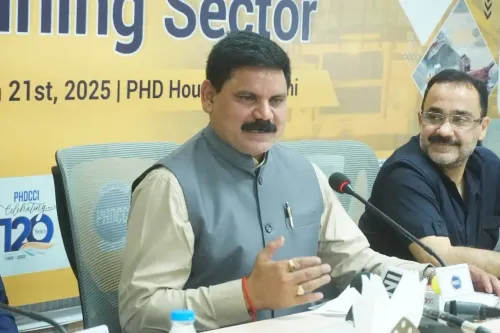
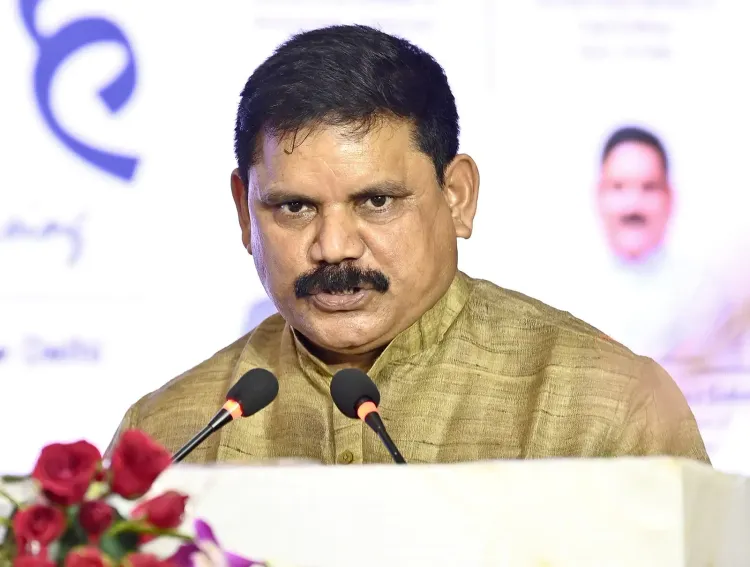
Minister of State for Coal and Mines Satish Chandra Dubey on 10 October 2026 declared that economic progress reaches its fullest potential only when its benefits are felt in stronger communities, wider opportunity and more resilient regions — remarks made at the inauguration of the 3rd National Conference and Exhibition on Corporate Social Responsibility (NCCSR 2026) in New Delhi. The minister's address underscored the inseparable link between national economic growth, regional development and community well-being in resource-bearing areas.
Key Developments at NCCSR 2026
The conference saw the release of two significant documents. The Comprehensive CSR Framework for Indian Coal Companies was unveiled by Minister Dubey, designed to offer sector-specific direction for more structured, need-based and outcome-oriented CSR interventions in the coal sector. Separately, the India CSR Factbook 2024–25 was also released, providing a consolidated reference on India's evolving CSR landscape.
Dubey emphasised that for sectors closely connected with natural resources and local communities, growth and social development cannot be treated as separate objectives. 'For sectors closely connected with natural resources and local communities, growth and social development cannot be viewed as separate objectives,' he said.
What the Government Said
Delivering the inaugural address, Dr Pallavi Jain Govil, Secretary of the Ministry of Corporate Affairs, said the conference's theme calls upon stakeholders to look beyond annual compliance obligations and consider the larger contribution that responsible enterprise can make to India's development journey. She noted that India's statutory CSR architecture combines legal obligation with company-level responsibility, Board oversight, public disclosure and impact assessment. She described CSR as 'an important expression of collective effort required for Viksit Bharat.'
Implementation Must Drive Outcomes
Gyaneshwar Kumar Singh, Director General and CEO of the Indian Institute of Corporate Affairs (IICA), stressed that CSR discussions must remain anchored in implementation and visible development outcomes. 'Decisions may be taken in Board rooms but their value is ultimately seen in schools, health centres, livelihood programmes, villages, towns and districts,' he said. The session was also attended by Shoko Ishikawa, UN Women Country Representative in India, and Prof Garima Dadhich, Head of the School of Business Environment at IICA.
Why This Matters
India's statutory CSR mandate — among the few of its kind globally — requires qualifying companies to spend a prescribed share of profits on social development. The coal sector, which operates in some of India's most resource-rich yet socioeconomically stressed regions, has historically faced scrutiny over whether CSR spending translates into measurable community impact. The new sector-specific framework signals a regulatory push toward accountability and outcome measurement, moving beyond box-ticking compliance. This comes amid the broader Viksit Bharat policy push, which positions corporate participation as a pillar of India's development ambitions ahead of 2047.
What Comes Next
The release of the Comprehensive CSR Framework for Indian Coal Companies is expected to guide future CSR planning cycles for public and private coal sector firms. Stakeholders will watch whether the framework introduces enforceable outcome metrics or remains advisory in nature — a distinction that will determine its real-world impact on mining-affected communities.
Point of View
Yet the coal sector — which operates in some of the country's most stressed communities — is only now receiving a dedicated framework. The gap between Board-room decisions and ground-level outcomes has been a persistent criticism of CSR compliance culture, and the new framework's real test will be whether it introduces enforceable outcome metrics or remains a well-intentioned advisory document. Notably, the conference's emphasis on 'Viksit Bharat' framing signals that the Centre is increasingly positioning corporate CSR as a policy instrument, not merely a regulatory obligation. Whether that ambition survives the translation into auditable, community-visible results in coal districts remains the central accountability question.
NationPress
10 Oct 2026
Frequently Asked Questions
What is the Comprehensive CSR Framework for Indian Coal Companies?
It is a sector-specific guidance document released at NCCSR 2026 on 10 October 2026, designed to provide structured, need-based and outcome-oriented direction for CSR interventions by coal sector companies in India. It aims to move the sector beyond generic compliance toward measurable community development.
What is the India CSR Factbook 2024–25?
The India CSR Factbook 2024–25 is a consolidated reference document released at NCCSR 2026 that maps the evolving CSR landscape across Indian industry, providing data and analysis on spending trends, sector participation and development outcomes.
Why is a dedicated CSR framework significant for the coal sector?
The coal sector operates in some of India's most resource-rich yet socioeconomically stressed regions, where the gap between CSR spending and visible community impact has historically drawn criticism. A sector-specific framework signals a regulatory push toward accountability and outcome measurement rather than box-ticking compliance.
Who attended NCCSR 2026?
Key attendees included Minister of State Satish Chandra Dubey, Ministry of Corporate Affairs Secretary Dr Pallavi Jain Govil, IICA Director General Gyaneshwar Kumar Singh, UN Women Country Representative in India Shoko Ishikawa, and IICA's Prof Garima Dadhich.