CM Sai Meets Union Minister Dubey on Coal and Mineral Use
Synopsis
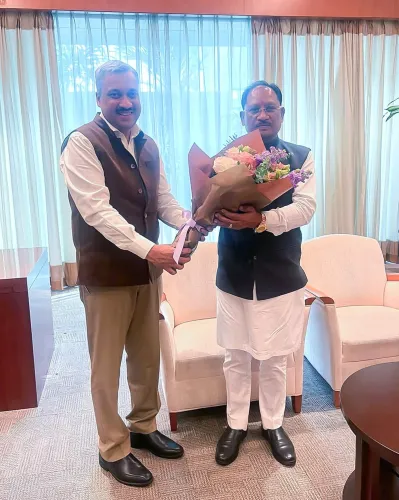
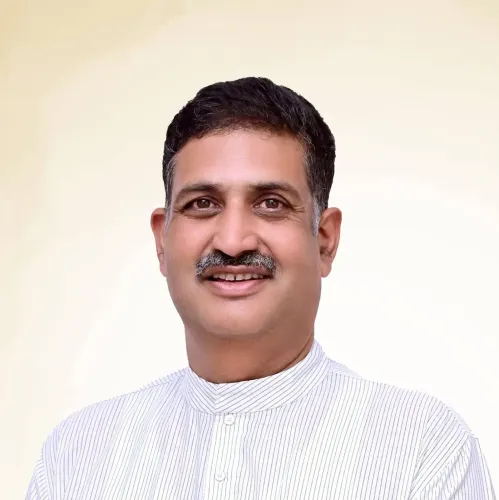
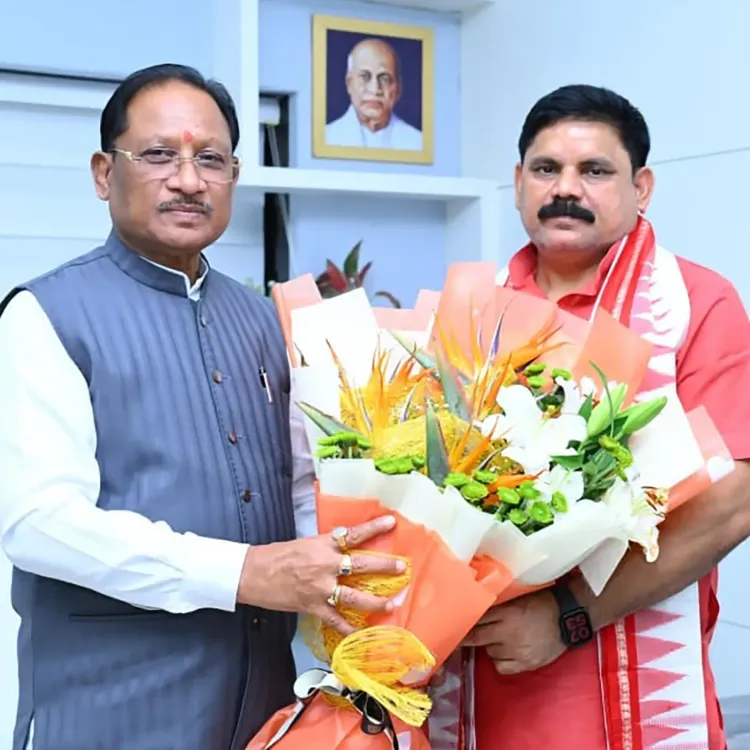
Chhattisgarh Chief Minister Vishnu Deo Sai met Union Minister of State for Coal and Mines Satish Chandra Dubey at Mahanadi Bhavan on 27 May 2026. Discussions covered optimal use of coal and mineral resources and development of mineral-based infrastructure in the state.
Key Takeaways
CM Vishnu Deo Sai hosted Union MoS for Coal and Mines Satish Chandra Dubey at Mantralaya, Mahanadi Bhavan, Raipur on 27 May 2026 .
Talks focused on the optimal utilisation of coal and mineral resources and development of mineral-based infrastructure in Chhattisgarh.
Chhattisgarh is one of India's largest coal-producing states, making Centre-state coordination on mining a high-stakes priority.
The meeting follows key legislative reforms including the Coal Mines (Special Provisions) Act, 2015 and the MMDR Amendment Act, 2021 , which reshaped coal block auctions and royalty-sharing.
Possible follow-ups include announcements on coal block auctions and rail-road evacuation infrastructure projects in the state.
Chhattisgarh Chief Minister Vishnu Deo Sai held a courtesy meeting with Union Minister of State for Coal and Mines Satish Chandra Dubey at the Mantralaya office in Mahanadi Bhavan, Raipur, on Tuesday, 27 May 2026. The two leaders discussed the optimal utilisation of coal and mineral resources as well as the development of mineral-based infrastructure in the state.
Context
Sai posted on X that Dubey visited his office at Mantralaya, Mahanadi Bhavan, for a courtesy call. In his words, 'कोयला एवं खनिज संसाधनों के समुचित उपयोग तथा खनिज आधारित अधोसंरचना के विकास से जुड़े विभिन्न विषयों पर चर्चा हुई' ('Various topics related to the proper utilisation of coal and mineral resources and the development of mineral-based infrastructure were discussed'). The meeting reflects routine but significant Centre-state engagement on resource governance.
Chhattisgarh is among India's largest coal-producing states, along with Jharkhand and Odisha, and its mineral wealth makes coordination with the Union Ministry of Coal a recurring priority for the state administration.
Policy Backdrop
The conversation takes place against a series of legislative reforms that have reshaped India's mining sector. The Coal Mines (Special Provisions) Act, 2015 enabled competitive auctions of coal blocks after the Supreme Court cancelled earlier allocations. From 2020, commercial coal mining was opened to private players to boost domestic output and reduce import dependence.
The Mines and Minerals (Development and Regulation) Amendment Act, 2021 further simplified lease procedures and strengthened state-level revenue-sharing mechanisms. These reforms have increased the frequency of Centre-state consultations, particularly in resource-rich states like Chhattisgarh, where royalty revenues and block allocations carry significant fiscal weight.
Stakeholders and Impact
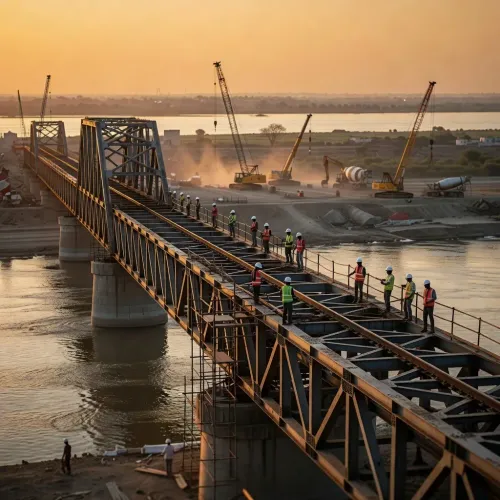
The primary stakeholders in such discussions include coal mining companies operating in Chhattisgarh, mineral-bearing district administrations, and the state government, which depends on mining royalties for a substantial share of its revenues. Improved mineral-based infrastructure — covering rail links, road connectivity, and evacuation corridors — directly affects the pace at which approved mining projects translate into production and state revenue.
Local communities in mining districts also have a stake, as infrastructure development tied to mineral extraction can bring both economic opportunity and environmental scrutiny. Centre-state alignment on these projects is often a prerequisite for timely project clearances.
What's Next
Observers will watch for follow-up announcements on coal block auctions or rail and road infrastructure projects in Chhattisgarh linked to the discussions. Joint committees between the state and the Union ministry on mineral logistics and royalty frameworks could also see renewed activity.
With national energy security remaining a policy priority, Chhattisgarh's role as a coal-supply anchor gives such bilateral meetings an outsized bearing on India's broader production and infrastructure targets.
Point of View
Alignment with a Union ministry helmed by a party colleague also smooths the path for project clearances that carry electoral dividends in mining districts. The emphasis on 'mineral-based infrastructure' signals that the agenda may extend beyond coal to the broader critical-minerals push that has gained momentum in recent years.
NationPress
14 Oct 2026
Frequently Asked Questions
Why did Union Minister Satish Chandra Dubey meet Chhattisgarh CM Vishnu Deo Sai?
Dubey paid a courtesy call on CM Sai at Mahanadi Bhavan, Raipur, on 27 May 2026 to discuss the optimal use of coal and mineral resources and the development of mineral-based infrastructure in Chhattisgarh.
What is Chhattisgarh's importance in India's coal sector?
Chhattisgarh is one of India's largest coal-producing states and, along with Jharkhand and Odisha, accounts for a major share of national coal output, making it central to India's energy supply chain.
What reforms govern coal mining in India?
Key reforms include the Coal Mines (Special Provisions) Act, 2015, which enabled competitive block auctions, the opening of commercial coal mining to private players from 2020, and the MMDR Amendment Act, 2021, which streamlined leases and royalty-sharing with states.
What could be the outcome of the CM Sai and coal minister meeting?
Possible outcomes include announcements on coal block auctions, rail and road evacuation infrastructure projects, or joint state-central committees on mineral logistics in Chhattisgarh, though no specific agreements have been confirmed.
Who is Vishnu Deo Sai?
Vishnu Deo Sai is the Chief Minister of Chhattisgarh and a BJP leader who assumed office in December 2023.