EU-India FTA could be signed by year-end, says German Ambassador Dr Jasper Wieck
Synopsis
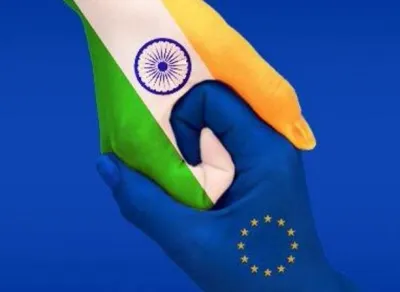
Germany's Ambassador to India says the long-negotiated EU-India Free Trade Agreement — already concluded earlier this year — could be formally signed before the end of 2026. Experts, he noted, believe the deal has the potential to double bilateral trade, making this one of the most consequential commerce pacts either side could seal this decade.
Key Takeaways
German Ambassador Dr Jasper Wieck said the EU-India FTA could be formally signed before the end of 2026 .
The agreement was reportedly concluded earlier in 2026 ; Wieck said his priority will be realising its full economic potential.
Experts believe the deal could double bilateral trade between India and the EU.
The India-Germany strategic partnership , established in 2000 , has grown more critical amid global geopolitical uncertainty, the ambassador said.
Wieck reiterated Germany's criticism of Russia 's actions in Ukraine, citing the annexation of Crimea and military operations in Georgia as examples of revisionism.
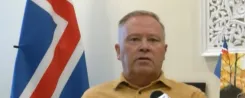
The proposed Free Trade Agreement (FTA) between India and the European Union (EU) could be formally signed before the end of 2026, German Ambassador to India Dr Jasper Wieck said on Wednesday, 23 September, adding that realising the pact's economic potential would be among his foremost priorities in New Delhi.
What the Ambassador Said
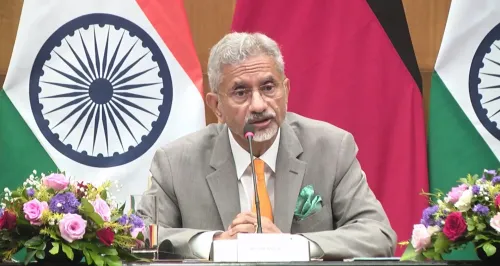
Addressing a press conference in New Delhi, Wieck confirmed that the agreement had already been concluded earlier this year and that a formal signing ceremony could follow before year-end. 'The agreement was concluded at the beginning of the year and could be signed by the end of the year. Our focus will be on realising the agreement's economic potential,' he said.
He stressed that one of his primary objectives as ambassador would be to ensure that both Indian and German companies are positioned to fully capitalise on the commercial opportunities the deal unlocks.
Trade Potential and Economic Impact
According to Wieck, experts believe the India-EU FTA has the potential to substantially increase bilateral commerce — and could even double trade between the two sides. The pact, years in the making, covers goods, services, and investment protections across one of the world's most consequential trade relationships. This comes amid a broader global push to diversify supply chains away from single-country dependencies, a trend that has accelerated since 2022.
Strategic Partnership and Geopolitical Context
Emphasising the wider relationship, Wieck noted that the India-Germany strategic partnership, established in 2000, has grown more significant than ever against a backdrop of rapid shifts in the global geopolitical landscape. He described the current international environment as increasingly unpredictable, marked by declining inter-state trust and intensifying competition among major powers.
'The deterioration in the global strategic environment has reinforced the importance of partnerships based on trust, predictability and mutual confidence,' the ambassador said, adding that India and Germany share precisely these qualities.
Germany's Domestic Politics and Russia-Ukraine
On Europe's internal affairs, Wieck said recent regional elections in Germany were unlikely to affect India-Germany bilateral ties, characterising the overwhelming majority of Germans — who live in western Germany — as moderate and confident in democratic institutions.
Reiterating Berlin's position on the conflict in Ukraine, the ambassador criticised Russia's conduct, arguing that Moscow's actions — including the annexation of Crimea and military operations in Georgia — represent a broader revisionist approach that has undermined peace, stability, and trust across Europe.
What to Watch Next
With the FTA reportedly on track for signing before 31 December 2026, attention will shift to ratification timelines across EU member states and the legislative processes in India. Industry bodies on both sides are expected to publish impact assessments as the formal signing approaches, with sectors such as automobiles, pharmaceuticals, and digital services among those watching closely.
Point of View
It would mark the conclusion of one of the longest-running trade negotiations in EU history, spanning over a decade of stops and restarts. The 'double trade' projection is eye-catching but deserves scrutiny: EU-India goods trade has long been skewed, and services liberalisation — where India has the most to gain — remains the harder political lift in European capitals. The real test of this agreement will not be the signing ceremony but the ratification gauntlet across 27 member states, where domestic industry lobbies in countries like France and Italy have historically resisted Indian market access in sensitive sectors.
NationPress
23 Sept 2026
Frequently Asked Questions
What is the EU-India Free Trade Agreement?
The EU-India FTA is a wide-ranging trade and investment agreement between the European Union and India that covers goods, services, and investment protections. Negotiations, which had stalled for years, were reportedly concluded earlier in 2026, with a formal signing potentially expected before the end of the year.
When could the EU-India FTA be signed?
German Ambassador Dr Jasper Wieck said on 23 September 2026 that the agreement could be formally signed before the end of 2026 . The deal was described as having been concluded at the beginning of the year.
What is the expected trade impact of the EU-India FTA?
According to Ambassador Wieck , experts believe the agreement has the potential to substantially increase bilateral commerce and could even double trade between India and the EU. Sectors such as automobiles, pharmaceuticals, and digital services are among those expected to benefit most.
Why is the India-Germany strategic partnership significant right now?
Wieck said the partnership, established in 2000 , has become more important than ever amid an increasingly unpredictable global environment marked by declining inter-state trust and intensifying major-power competition. He argued that partnerships built on trust and predictability — which he said characterise India-Germany ties — are critical to navigating these challenges.
What is Germany's position on Russia's actions in Ukraine?
Ambassador Wieck reiterated Germany's criticism of Russia , arguing that Moscow's conduct — including the annexation of Crimea and military actions in Georgia — reflects a revisionist approach that has undermined peace and stability in Europe .