India-Iceland ties strengthened by TEPA: Ambassador Hoskuldsson

Synopsis
Iceland's Ambassador to India says TEPA is already delivering — tourism workshops, seafood trade events, and a marine sector investment are showing early results. But the bigger story is what comes next: Iceland's century-old geothermal expertise and 20-plus years of carbon capture technology are now being positioned to help India decarbonise its most emissions-heavy industries.
Key Takeaways
Iceland's Ambassador Benedikt Hoskuldsson said India-Iceland relations have strengthened significantly since TEPA came into force in October 2025 .
Three tourism workshops across different Indian cities and a New Delhi seafood promotion event have already produced tangible results.
At least one significant Icelandic investment in India's marine sector has been recorded since TEPA's activation.
Iceland is bringing geothermal technology — with nearly 100 years of experience — to India, targeting northern and Himalayan regions.
Icelandic CCUS technology , commercialised for over 20 years , is being introduced to India to help decarbonise steel, petrochemicals, and cement industries.
Potential use of captured CO2 converted into e-methanol as a future aviation fuel is also on the bilateral agenda.
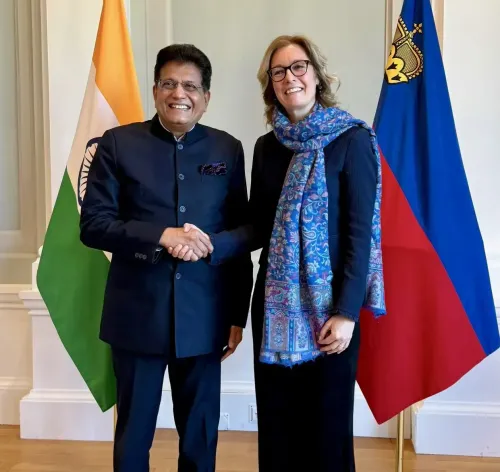
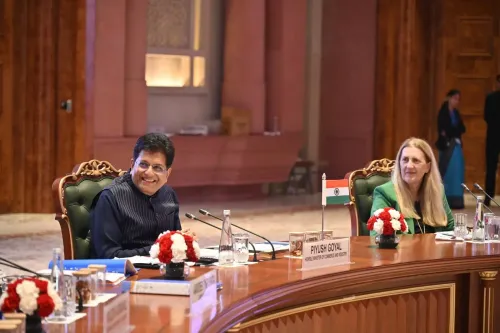
India-Iceland bilateral relations have grown measurably stronger since the Trade and Economic Partnership Agreement (TEPA) between India and the European Free Trade Association (EFTA) countries came into force last year, according to Iceland's Ambassador to New Delhi, Benedikt Hoskuldsson. Speaking in an exclusive interview on Wednesday, 23 September 2026, the Ambassador described TEPA as an anchor for the expanding partnership between the two nations.
TEPA's Tangible Impact
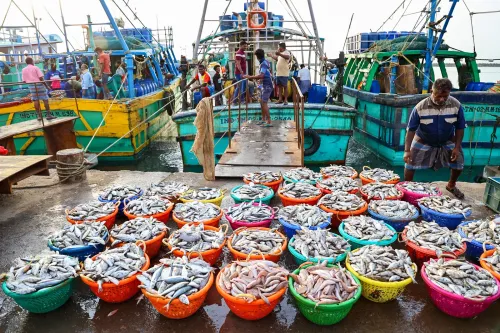
'I believe TEPA really anchors the growing relationship between our two countries,' Ambassador Hoskuldsson said. Since the agreement took effect in October last year, Iceland has actively worked to promote bilateral interests across key sectors. Three workshops held in three different Indian cities have already delivered visible results in boosting tourism flows between the two countries. A dedicated event in New Delhi to promote Icelandic seafood in the Indian market has also yielded positive early outcomes, according to the Ambassador.
Notably, this period has also seen at least one significant investment from Iceland in India's marine sector — a concrete signal that the trade agreement is translating into real capital movement, not just diplomatic goodwill.
India's Rising Weight in Iceland's Asia Strategy
Ambassador Hoskuldsson underscored that Iceland views India as a key pillar of its broader Asian engagement strategy in the years ahead. He pointed to India's rapid economic development over the past decade and its growing geopolitical relevance globally, adding that the Arctic nation sees the Indian market as one of significant long-term importance. 'India will be one of the key components of Iceland's engagement and activities in Asia,' he said.
Climate Cooperation: Geothermal and Carbon Capture
Beyond trade, the two countries are working together on climate change across two high-impact areas where Iceland brings deep expertise. The first is geothermal technology, a field in which Iceland has nearly 100 years of operational experience. This covers both high-temperature applications for electricity generation and low-temperature geothermal resources that could benefit vulnerable communities, particularly in India's northern and Himalayan regions.
The second is carbon capture, utilisation and storage (CCUS). Iceland has been commercially deploying CCUS technologies for more than 20 years, and Icelandic companies in this space are now being introduced to the Indian market. 'We believe these technologies can support India's hard-to-abate sectors because, in order for India to grow, these sectors cannot simply be stopped,' Hoskuldsson noted. He specifically cited steel, petrochemicals, and cement as industries that must reduce emissions without shutting down.
One pathway under discussion involves storing captured carbon in basalt rock formations underground. Another involves converting CO2 with hydrogen into e-methanol, which could serve as a future aviation fuel — a prospect with significant implications for India's civil aviation decarbonisation agenda.
What This Means for India
The Ambassador's remarks signal that the India-EFTA TEPA is moving beyond paper commitments toward sectoral outcomes — in tourism, seafood trade, marine investment, and clean technology transfer. For India, gaining access to Iceland's geothermal know-how and battle-tested CCUS platforms could accelerate progress in hard-to-abate industrial sectors, areas where India faces international pressure to cut emissions while sustaining economic growth. As TEPA matures, the depth of India-Iceland engagement is expected to expand further across both economic and climate dimensions.
Point of View
India-Iceland could become a model for small-nation, high-expertise partnerships within the EFTA framework. The real test is whether Icelandic CCUS companies find a regulatory and financing environment in India capable of scaling pilot programmes into industrial deployment.
NationPress
23 Sept 2026
Frequently Asked Questions
What is TEPA and how does it affect India-Iceland relations?
TEPA, or the Trade and Economic Partnership Agreement, is a trade deal signed between India and the European Free Trade Association (EFTA) countries, including Iceland. It came into force in October 2025 and has since served as the foundation for stronger bilateral engagement, including tourism promotion, seafood trade, and clean technology cooperation.
What concrete results has TEPA produced for India and Iceland so far?
Since TEPA came into force, Iceland has conducted three tourism-focused workshops across Indian cities, hosted a seafood promotion event in New Delhi, and facilitated at least one significant investment in India's marine sector. Ambassador Hoskuldsson described these as early but tangible outcomes of the agreement.
How can Iceland's geothermal technology benefit India?
Iceland has nearly 100 years of experience in geothermal technology, covering both high-temperature electricity generation and low-temperature applications. The Ambassador indicated this expertise could benefit India's northern and Himalayan regions, where geothermal resources remain largely untapped.
What is CCUS and why is Iceland offering it to India?
Carbon Capture, Utilisation and Storage (CCUS) is a technology that captures CO2 emissions and either stores them underground or converts them into usable products. Iceland has been commercially deploying CCUS for over 20 years, and Icelandic firms are now entering the Indian market to help hard-to-abate sectors like steel, cement, and petrochemicals reduce their carbon footprint.
What role will India play in Iceland's Asia strategy going forward?
Ambassador Hoskuldsson said India will be 'one of the key components' of Iceland's engagement and activities in Asia, citing India's rapid economic development and growing geopolitical importance. Iceland views the Indian market as a long-term priority within its broader international strategy.