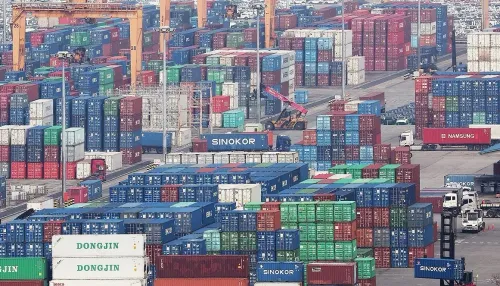
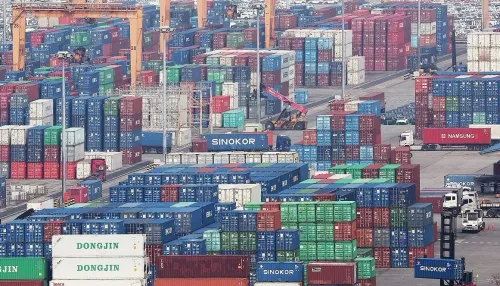
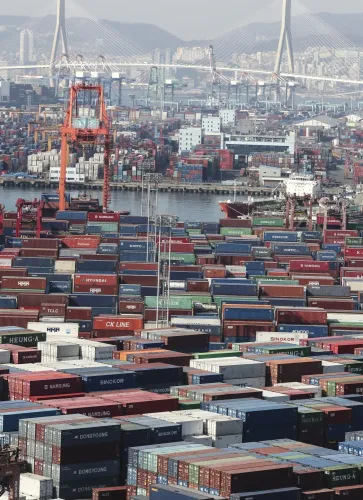
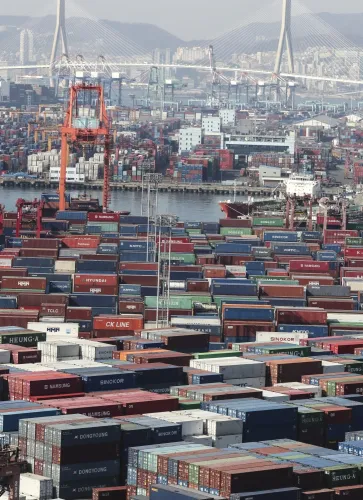
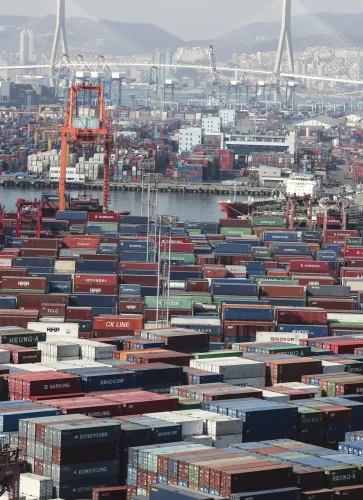
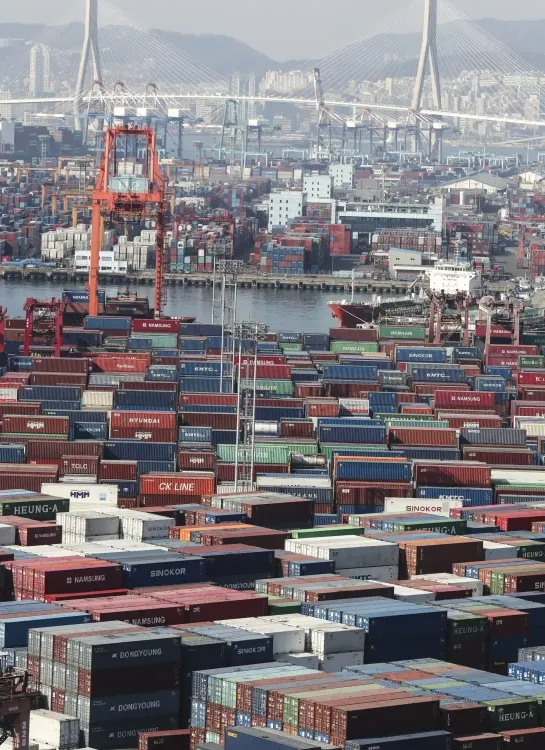
South Korea exports surge 78% in Sep 1-20 on record chip shipments
Synopsis
South Korea's first-20-day September exports hit an all-time 20-day high of $71.4 billion — up 78% year-on-year — with semiconductors alone accounting for $34.12 billion after a staggering 259% spike. Exports to China more than doubled and US-bound shipments surged 118%, pushing the KOSPI past the 7,000 mark even as elevated oil prices and Middle East tensions cloud the outlook.
Key Takeaways
South Korea's exports reached $71.4 billion in September 1–20, 2026 — an all-time 20-day record, up 78% year-on-year.
Semiconductor exports surged 259% to $34.12 billion , driving the overall gain.
Exports to China more than doubled to $16.6 billion ; shipments to the US jumped 118% to $14.2 billion .
The trade surplus for the period stood at $23 billion ; cumulative 2026 surplus reached $225.5 billion .
The KOSPI rose 1.55% to 7,000.88 , lifted by chipmaker gains tracking a Philadelphia Semiconductor Index rally.
Brent crude at $104.68 a barrel remains a key inflation and geopolitical risk for markets.
South Korea's exports jumped 78 percent year-on-year in the first 20 days of September 2026, customs data released on Monday showed, with semiconductor shipments powering the country to its highest-ever 20-day export tally. Outbound shipments reached $71.4 billion in the September 1–20 period, up sharply from $40 billion recorded in the same window a year earlier, according to the Korea Customs Service.
Record-Breaking Export Volume
The $71.4 billion figure surpassed the previous 20-day record of $61.7 billion, which was set as recently as June 2026, underscoring the pace at which South Korea's export engine has accelerated through the second half of the year. Imports also climbed, rising 26.7 percent year-on-year to $48.4 billion over the same period, resulting in a trade surplus of $23 billion.
Semiconductors Lead the Charge
Chip exports were the dominant force, surging 259 percent to reach $34.12 billion — nearly half of total outbound shipments for the period. The semiconductor boom reflects surging global demand for advanced memory and logic chips, a segment where South Korean firms hold commanding positions.
Other categories also posted strong gains. Exports of petroleum products climbed 47.8 percent to $4 billion, while car exports rose 9.3 percent to $3.73 billion. Steel products and ships saw growth of 8 percent and 63 percent, respectively. Mobile device exports were the lone laggard, slipping 0.4 percent to $1.24 billion.
China and US Drive Destination Growth
By destination, exports to China more than doubled to $16.6 billion, while shipments to the United States surged 118 percent to $14.2 billion. The dual surge in South Korea's two largest trading partners underlines the breadth of the current export cycle. Accumulated exports through the preceding Sunday this year reached $764.9 billion, with the cumulative trade surplus standing at $225.5 billion.
Markets React: KOSPI Crosses 7,000
South Korean equities responded positively to the data and to a Friday rally in US semiconductor stocks. The benchmark Korea Composite Stock Price Index (KOSPI) gained 106.65 points, or 1.55 percent, to trade at 7,000.88 as of 11:20 am on Monday. The Philadelphia Semiconductor Index had jumped 2.78 percent on Friday, providing a positive overnight cue for major Korean chipmakers, while the Nasdaq gained 0.39 percent and the S&P 500 edged up 0.17 percent.
Headwinds persist, however. Elevated crude oil prices — Brent crude was trading at around $104.68 a barrel — continue to stoke inflationary and geopolitical concerns linked to Middle East tensions. The Korean won was quoted at 1,386.0 won against the US dollar as of 11:12 am, marginally weaker by 0.5 won from the previous session's close. With full-month September data yet to arrive, analysts will be watching whether the chip-driven momentum is sustained through the rest of the month.
Point of View
Though, is the destination split: exports to both China and the US surging simultaneously suggests that geopolitical chip restrictions have not yet structurally severed demand from either bloc. The KOSPI crossing 7,000 on the back of this data carries its own risk — equity markets pricing in a chip supercycle while Brent crude above $104 quietly erodes the margins of every energy-importing manufacturer. The full-month September print will be the real test of whether this is a sustained export breakout or a front-loading effect ahead of potential policy shifts.
NationPress
21 Sept 2026
Frequently Asked Questions
How much did South Korea's exports grow in September 2026?
South Korea's exports rose 78 percent year-on-year to $71.4 billion in the first 20 days of September 2026, according to Korea Customs Service data. This was the highest-ever 20-day export figure, surpassing the previous record of $61.7 billion set in June 2026.
Why did South Korea's semiconductor exports surge so sharply?
Chip exports jumped 259 percent to $34.12 billion in September 1–20, 2026, driven by surging global demand for advanced memory and logic semiconductors, particularly linked to AI infrastructure and data-centre expansion. South Korean chipmakers also benefited from a Friday rally in US semiconductor stocks, which lifted the sector globally.
Which countries drove the export growth?
Exports to China more than doubled to $16.6 billion, while shipments to the United States surged 118 percent to $14.2 billion over the September 1–20 period. Together, the two destinations accounted for a substantial share of total outbound shipments.
What is South Korea's trade surplus for 2026 so far?
The cumulative trade surplus through the preceding Sunday stood at $225.5 billion, with total exports for the year reaching $764.9 billion, according to Korea Customs Service data.
How did the South Korean stock market react to the export data?
The KOSPI rose 106.65 points, or 1.55 percent, to 7,000.88 as of 11:20 am on Monday, driven by gains in major chipmakers. The positive sentiment followed a 2.78 percent jump in the Philadelphia Semiconductor Index on Friday, though elevated crude oil prices above $104 a barrel remained a concern.