Is Foreign Ownership of South Korean Stocks at a 6-Year High?
Click to start listening
Synopsis
In a remarkable turn of events, foreign ownership of South Korean stocks has soared to a near six-year high. This surge is largely attributed to strategic investments in shipbuilding, defense, and nuclear power sectors, indicating robust foreign interest amidst rising global demand.
Key Takeaways
- Foreign ownership of South Korean stocks hits a 6-year high.
- Investments driven by sectors like shipbuilding, defense, and nuclear power.
- Foreign net purchases of Samsung Electronics reached 14.1 trillion won.
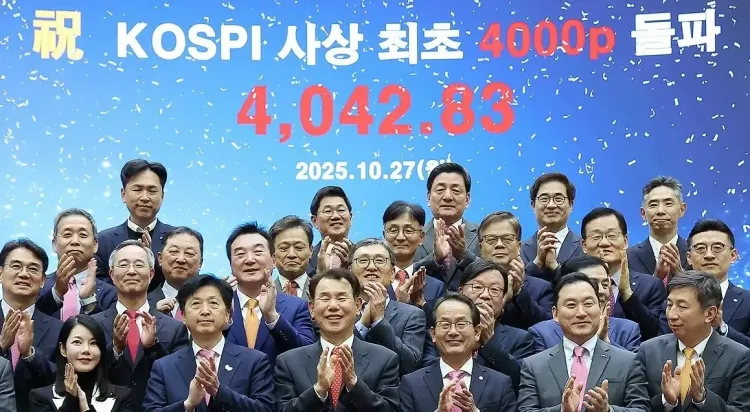
- KOSPI index shows a rising trend, closing at 4,990.07.
- Increased global demand impacts investment strategies.
Seoul, Jan 25 (NationPress) The proportion of foreign ownership in South Korean stocks has surged to its highest mark in nearly six years as of January, propelled by substantial net acquisitions in the shipbuilding, defense, and nuclear power sectors, according to the main stock exchange operator on Sunday.
As of January 7, foreign holdings represented 37.18 percent of the overall market capitalization, the highest recorded since April 9, 2020, when it stood at 37.34 percent, as per data from the Korea Exchange (KRX), reported by the Yonhap news agency.
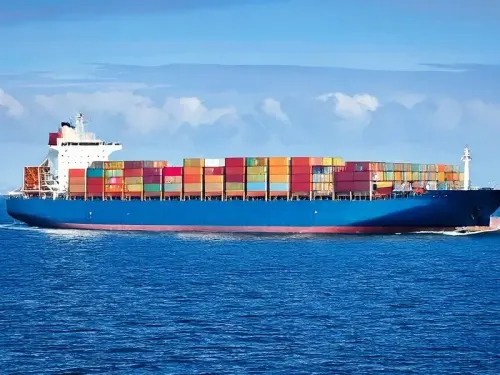
This growth was primarily driven by foreign investors who acquired shares in the semiconductor industry during the latter half of the previous year, followed by increased interest in shipbuilding, defense, and nuclear power stocks this month.
During the second half of last year, foreign investors net purchased 14.1 trillion won (approximately US$9.7 billion) worth of Samsung Electronics shares alone.
This month, the stocks that attracted the most interest included Hanwha Ocean, Doosan Enerbility, and Naver, in that order.
Investments in the shipbuilding and nuclear power sectors were influenced by expectations of significant orders due to a rise in global demand, while investments in the defense sector were likely spurred by geopolitical tensions surrounding former U.S. President Donald Trump's threats regarding Greenland.
On a related note, South Korean stocks reached a new peak on Friday, buoyed by gains in technology and brokerage shares, after hitting another intraday record. The Korean won appreciated against the U.S. dollar.
Despite a volatile trading session, the benchmark Korea Composite Stock Price Index (KOSPI) rose by 37.54 points, or 0.76 percent, closing at 4,990.07.
Trade volume was robust, totaling 595.6 million shares valued at 29.6 trillion won (around US$20.2 billion), with a significant number of gainers outpacing losers by 677 to 212.
Institutional and foreign investors bought stocks worth 491.2 billion won and 133.3 billion won, respectively, while individual investors sold off a net of 725.6 billion won.
The index opened strongly, briefly exceeding the 5,000-point mark for the second consecutive session, reaching an intraday record of 5,021.13.
Point of View
The rising foreign ownership in South Korean stocks underscores the increasing global interest in the nation's economy. This trend reflects both confidence in South Korean industries and the potential for growth, particularly in defense and technology sectors. It is crucial for domestic investors to stay informed and adapt to these market dynamics, ensuring that they remain competitive in an ever-evolving economic landscape.
NationPress
25/01/2026
Frequently Asked Questions
What is the current percentage of foreign ownership in South Korean stocks?
As of January 7, foreign ownership in South Korean stocks reached 37.18% of the total market capitalization.
Which sectors are driving this increase in foreign ownership?
The shipbuilding, defense, and nuclear power sectors are primarily driving the increase in foreign ownership of South Korean stocks.
How much did foreign investors spend on Samsung Electronics shares?
Foreign investors net purchased 14.1 trillion won (approximately US$9.7 billion) worth of Samsung Electronics shares in the second half of last year.
What was the closing value of the KOSPI index recently?
The KOSPI index closed at 4,990.07, marking a significant increase.
Is the trend of foreign investment expected to continue?
Given the rising global demand and investment opportunities in key sectors, the trend of foreign investment in South Korea is likely to continue.