India energy security needs diversification, says Rajiv Gauba at PNGRB Foundation Day

Synopsis
Former Cabinet Secretary Rajiv Gauba used PNGRB's 20th Foundation Day to deliver a pointed message: India's energy security cannot rest on incremental fixes. He called for deep-water exploration, a stronger National Gas Grid, CGD network expansion, and a regulatory framework ready for hydrogen and syngas — framing it all as essential to the Viksit Bharat@2047 vision.
Key Takeaways
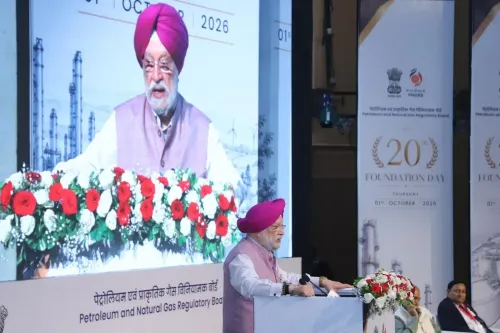
Former Cabinet Secretary Rajiv Gauba addressed the 20th Foundation Day of PNGRB in New Delhi on 1 October 2026 .
He called for faster domestic exploration and production, especially in frontier and deep-water areas , backed by private investment and public-sector capacity.
Gauba stressed accelerating India's shift to a gas-based economy , including strengthening the National Gas Grid and expanding City Gas Distribution coverage.
PNGRB , established in 2006 , was described as a key institutional milestone for promoting competition and protecting consumer interests.
He called for regulatory frameworks to be updated to cover emerging sectors including hydrogen , syngas , and carbon dioxide pipelines .
All reforms were framed as essential to India's long-term energy vision under Viksit Bharat@2047 .
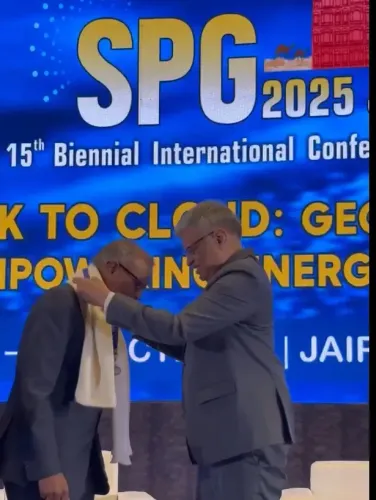
Former Cabinet Secretary Rajiv Gauba on Thursday, 1 October 2026, called for continued regulatory reforms, market-oriented policies, and stronger institutional capacity to reinforce India's energy security and advance the country's vision of Viksit Bharat@2047. Speaking at the 20th Foundation Day of the Petroleum and Natural Gas Regulatory Board (PNGRB) in New Delhi, Gauba said India's petroleum and natural gas sector is operating in an increasingly complex global environment.
A Sector Under Pressure
Gauba underscored that geopolitical tensions, supply disruptions, and growing energy-security risks are making resilient energy systems more critical than ever. He traced the evolution of India's energy-sector regulation from colonial-era legislation and foreign ownership at the time of Independence, through decades of state control and administered pricing, to progressive liberalisation since the late 1990s. That liberalisation, he noted, ended a four-decade-long nomination monopoly and dismantled the administered pricing mechanism.
PNGRB's Role and Regulatory Legacy
Against this historical backdrop, Gauba described the establishment of PNGRB in 2006 as an important institutional milestone aimed at promoting fair competition, strengthening investor confidence, and protecting consumer interests. He highlighted the board's role in developing the regulatory framework for natural gas pipelines, noting that the adoption of common carrier and contract carrier principles has supported open access to pipeline infrastructure and helped promote competition in the downstream energy market. He observed that the impact of regulation is not always immediately visible, but predictable regulatory frameworks are essential for creating well-functioning markets, attracting investment, and strengthening public confidence.
Diversification and Domestic Capacity: The Core Argument
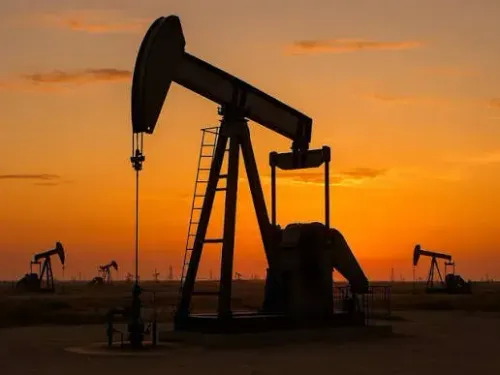
With India's energy requirements expected to expand alongside urbanisation, industrialisation, and rising living standards, Gauba stressed the urgent need to diversify and expand domestic energy capacity. He called for faster development of domestic exploration and production, particularly in frontier and deep-water areas, supported by technology, private investment, and the capabilities of public-sector enterprises. This comes amid India's sustained effort to reduce dependence on imported crude, which continues to strain the current account.
Accelerating the Gas Economy Transition
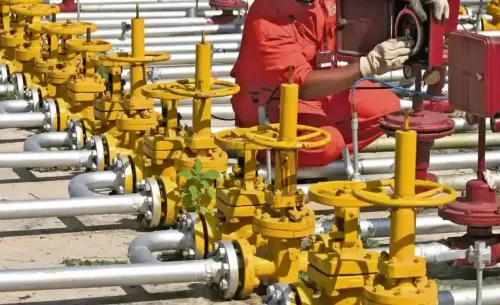
Gauba also underlined the need to accelerate India's transition towards a gas-based economy. He said this would require an integrated and economically viable natural gas value chain, including the strengthening of the National Gas Grid, better utilisation of pipelines and LNG terminals, and expansion of the City Gas Distribution (CGD) network. He further called for regulatory reforms to reduce unnecessary frictions and ensure the framework keeps pace with emerging areas such as hydrogen, syngas, and carbon dioxide pipelines — sectors that remain largely outside current regulatory architecture.
What Comes Next
The remarks signal a clear policy direction at a moment when India is recalibrating its energy strategy ahead of its 2047 centenary milestone. Regulators, investors, and policymakers will be watching whether PNGRB's next phase of reforms matches the ambition outlined at its own anniversary event.
Point of View
But they also expose a recurring gap: the policy direction is clear, the execution record is patchy. India has spoken of a gas-based economy for years, yet gas accounts for a modest share of the primary energy mix, and the CGD rollout has lagged targets in several states. The call for regulatory modernisation to cover hydrogen and syngas is timely, but without a legislative push, PNGRB's mandate remains structurally constrained. The deeper question — whether India can mobilise private capital into frontier and deep-water exploration at scale — is one that speeches alone cannot answer.
NationPress
1 Oct 2026
Frequently Asked Questions
What did Rajiv Gauba say at the PNGRB Foundation Day?
Former Cabinet Secretary Rajiv Gauba called for regulatory reforms, market-oriented policies, and stronger institutional capacity to reinforce India's energy security. He specifically urged faster domestic exploration in frontier and deep-water areas, a strengthened National Gas Grid, and regulatory modernisation to cover emerging areas like hydrogen and syngas.
What is PNGRB and why was its Foundation Day significant this year?
The Petroleum and Natural Gas Regulatory Board (PNGRB) is India's statutory body for regulating the midstream and downstream petroleum and natural gas sector, established in 2006. Its 20th Foundation Day marked two decades of regulatory development, making it a natural occasion to review progress and chart future direction.
Why does India need to diversify its energy sources?
India's energy requirements are expected to grow significantly with urbanisation, industrialisation, and rising living standards, while geopolitical tensions and global supply disruptions continue to create energy-security risks. Reducing dependence on imported crude through domestic production and a broader energy mix is central to the Viksit Bharat@2047 vision.
What is India's gas-based economy transition and what does it require?
The transition to a gas-based economy involves increasing the share of natural gas in India's energy mix. According to Gauba, it requires an integrated and economically viable natural gas value chain, including a stronger National Gas Grid, better utilisation of LNG terminals, and expansion of the City Gas Distribution network.
What emerging energy sectors did Gauba say need new regulatory frameworks?
Gauba identified hydrogen, syngas, and carbon dioxide pipelines as emerging areas where India's current regulatory architecture needs to be updated. He called for reforms that reduce unnecessary frictions and ensure the framework keeps pace with these new energy vectors.