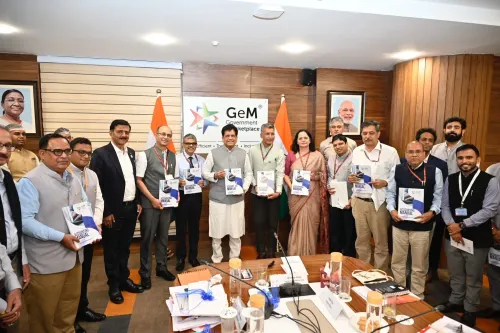
GeM signs MoU with TICCI to bring tribal entrepreneurs into govt procurement

Synopsis
GeM has signed a formal MoU with TICCI to bring tribal entrepreneurs into India’s government procurement mainstream — a move that pairs the country’s largest public procurement portal with a tribal industry body for the first time, combining outreach, mentoring, and onboarding support to close a long-standing access gap.
Key Takeaways
GeM and TICCI signed an MoU on 21 November to boost tribal entrepreneur participation in government procurement.
The agreement covers targeted outreach, capacity building, onboarding assistance, and handholding support for tribal businesses.
The MoU was signed by Ajit B.
Chavan , Additional CEO of GeM, and Sudhakar Dharavath , Founder and Chairman of TICCI.
TICCI will identify tribal entrepreneurs, run outreach programmes, and build a network of trainers and mentors.
GeM CEO Mihir Kumar said the platform aims to strengthen awareness and enable greater inclusion for tribal entrepreneurs in its procurement ecosystem.
The Government e-Marketplace (GeM), India's national public procurement portal, has signed a Memorandum of Understanding (MoU) with the Tribal Indian Chamber of Commerce and Industry (TICCI) to expand the participation of tribal entrepreneurs and enterprises in government procurement. The agreement was formalised on Saturday, 21 November, according to an official statement from the Ministry of Commerce and Industry.
What the MoU Covers
The partnership is designed to connect tribal businesses with public procurement opportunities through targeted outreach, capacity building, onboarding assistance, and sustained handholding support. Under the agreement, TICCI will identify and mobilise tribal entrepreneurs, facilitate regional and national outreach programmes, provide field-level support, and develop a network of trainers and mentors.
GeM, in turn, will support these efforts through training resources, onboarding facilitation, capacity-building initiatives, and issue-resolution mechanisms to ease the entry of tribal sellers into the procurement ecosystem.
Who Signed the Agreement
The MoU was signed by Ajit B. Chavan, Additional CEO of GeM, and Sudhakar Dharavath, Founder and Chairman of TICCI. The signing formalises a structured collaboration to promote awareness and greater participation of tribal entrepreneurs on the GeM platform.
What Officials Said
GeM CEO Mihir Kumar said the platform aims to 'strengthen awareness of tribal entrepreneurs, build capabilities and enable greater inclusion on GeM and further improve their participation in GeM’s transparent and inclusive procurement ecosystem.'
Ajit B. Chavan added: 'This partnership will help take GeM closer to tribal entrepreneurs through focused outreach, training and handholding, enabling greater access to government procurement opportunities.'
Why This Matters
Tribal communities have historically faced structural barriers to formal commerce, including limited digital access and unfamiliarity with procurement processes. GeM’s push for inclusion reflects a broader policy direction to diversify the supplier base on India’s largest government procurement platform. Both organisations will collaborate to develop joint action plans, monitor participation progress, and incorporate feedback from entrepreneurs to refine the programme over time.
The collaboration reinforces GeM’s stated commitment to making public procurement more inclusive, enabling enterprises from diverse socioeconomic backgrounds to access business growth opportunities through the national procurement ecosystem. The next phase will likely involve measurable onboarding targets and regional outreach milestones as the partnership moves from agreement to implementation.
Point of View
But intent and impact are two different things on India’s procurement platforms. GeM has signed multiple inclusion-focused MoUs in recent years; the real test is always in onboarding numbers and order volumes, not the signing ceremony. Tribal entrepreneurs face compounding disadvantages — digital literacy gaps, logistics constraints, and limited working capital — that a mentoring network alone cannot resolve. Without published targets, timelines, and a public dashboard tracking tribal seller registrations and transaction values, this risks becoming another framework agreement that generates a press release but not a measurable shift in procurement diversity.
NationPress
21 Nov 2026
Frequently Asked Questions
What is the GeM-TICCI MoU about?
The MoU signed on 21 November is a formal partnership between the Government e-Marketplace (GeM) and the Tribal Indian Chamber of Commerce and Industry (TICCI) to increase tribal entrepreneur participation in government procurement. It covers outreach, capacity building, onboarding support, and sustained mentoring for tribal businesses.
Who signed the GeM-TICCI MoU?
The agreement was signed by Ajit B. Chavan, Additional CEO of GeM, and Sudhakar Dharavath, Founder and Chairman of TICCI. The signing was announced through an official statement from the Ministry of Commerce and Industry.
What will TICCI do under the partnership?
TICCI will identify and mobilise tribal entrepreneurs, facilitate regional and national outreach programmes, provide field-level support, and develop a network of trainers and mentors to help tribal businesses navigate the GeM platform.
How will GeM support tribal entrepreneurs under this MoU?
GeM will provide training resources, onboarding facilitation, capacity-building initiatives, and issue-resolution mechanisms to help tribal sellers register and transact on the platform successfully.
Why is tribal inclusion in government procurement significant?
Tribal communities have historically faced structural barriers to formal commerce, including limited digital access and unfamiliarity with procurement processes. Bringing them onto GeM — India’s largest public procurement portal — could open a substantial and stable revenue channel for tribal enterprises that previously lacked access to government buyers.