BHASHINI-GeM MoU: Multilingual access to public procurement in 22 languages

Synopsis
India's public procurement platform GeM has partnered with BHASHINI to deliver services in 22 Indian languages using voice AI and Generative AI — a direct challenge to the English-language dominance that has long kept small and rural businesses out of government marketplaces. If executed at scale, it could be the most consequential inclusion push in GeM's history.
Key Takeaways
Digital India BHASHINI Division (DIBD) and Government e-Marketplace (GeM) signed an MoU on 16 June to embed multilingual capabilities across public procurement.
The initiative will support services in 22 officially recognised Indian languages and other Indian languages.
Key technologies include translation APIs , voice bots , Generative AI , and domain-specific language models under a 'Voice First' framework.
Multilingual upgrades will cover seller onboarding , platform navigation, communication, and stakeholder engagement on GeM.
Language data contributions will be encouraged through the Bhashadaan programme alongside capacity-building across GeM-linked institutions.
Amitabh Nag , CEO of DIBD, said the collaboration will 'ensure that language is no longer a barrier to participation' in public procurement.
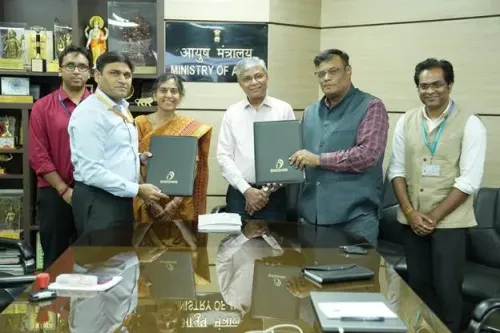
The Digital India BHASHINI Division (DIBD) and the Government e-Marketplace (GeM) have signed a Memorandum of Understanding (MoU) to embed multilingual digital capabilities across India's public procurement ecosystem, enabling stakeholders to access services in their preferred Indian languages. The agreement, announced on 16 June in New Delhi, leverages BHASHINI — India's national language Digital Public Infrastructure (DPI) — to dismantle language barriers that have long limited participation in government procurement.
What the MoU Covers
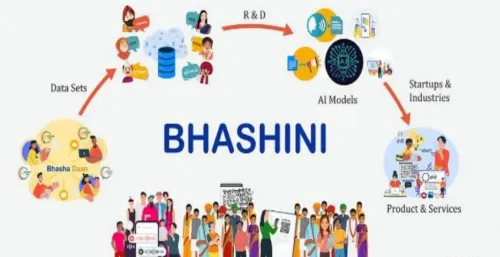
The collaboration spans a broad range of multilingual technology interventions, including translation API integration, domain-specific language model development, multilingual glossary creation, voice-enabled technologies, voice bots, and linguistic dataset development. Together, these tools are designed to strengthen multilingual capabilities across the entire GeM ecosystem.
The two organisations will also work on the co-creation, integration, and deployment of multilingual digital public resources through flagship BHASHINI initiatives — BHASHINI Udyat, Mitra, Appmitra, Sahyogi, and Pravakta. Additionally, the MoU will encourage language data contributions through the Bhashadaan programme and drive capacity-building efforts across institutions associated with the GeM network.
Voice-First and Generative AI at the Core
A central pillar of the initiative is the advancement of a 'Voice First' language technology infrastructure, supplemented by Generative AI solutions. According to the Ministry of Electronics and Information Technology, the framework will support seamless interaction across 22 officially recognised Indian languages and other Indian languages, making it one of the most linguistically ambitious integrations in India's public digital infrastructure to date.
The initiative will also focus on strengthening multilingual AI models tailored to the specific needs of public procurement, government service delivery, commerce, and business participation — enabling voice-first multilingual experiences across India's diverse linguistic landscape.
What the Government Said
Amitabh Nag, Chief Executive Officer of the Digital India BHASHINI Division, underscored the democratising intent of the partnership. 'BHASHINI is committed to making digital public infrastructure truly inclusive by enabling citizens and enterprises to interact in their preferred Indian languages. Our collaboration with GeM will help democratise access to public procurement through multilingual and voice-enabled technologies, ensuring that language is no longer a barrier to participation,' he said.
Impact on Sellers and Stakeholders
The MoU is expected to directly benefit small businesses, rural entrepreneurs, and first-time sellers who have historically struggled to navigate GeM's English-dominant interface. Areas such as seller onboarding, platform navigation, communication, and stakeholder engagement are all earmarked for multilingual upgrades.
The collaboration will also support the collection, curation, and dissemination of linguistic resources to enhance multilingual support across procurement services, according to the official statement. Wider adoption of multilingual AI tools is envisaged across all institutions and stakeholders associated with the GeM ecosystem.
Broader Significance
This comes amid a broader government push to make digital public infrastructure accessible beyond urban, English-literate populations. GeM, which has processed transactions worth several lakh crore rupees since its launch, stands to significantly widen its seller and buyer base if language friction is reduced. The BHASHINI platform's integration with a high-volume government marketplace marks a concrete step toward operationalising India's language-inclusion commitments at scale.
Implementation timelines for specific features are yet to be publicly disclosed; further details are expected as the two organisations begin deploying the agreed frameworks.
Point of View
But its real test will be adoption depth, not announcement breadth. GeM's existing seller base skews toward urban, digitally literate businesses; the platform's language barrier is a symptom of a deeper access gap that voice bots alone may not close. The MoU lists an ambitious stack — translation APIs, Generative AI, voice bots, domain-specific models — but offers no public timeline or measurable targets. India has a pattern of multilingual digital initiatives that are technically sound but underutilised because of low awareness in the communities they are meant to serve. Whether Bhashadaan-driven data contributions will be sufficient to train procurement-specific models at the quality needed for legal and transactional accuracy remains an open question that the government has yet to address publicly.
NationPress
16 Sept 2026
Frequently Asked Questions
What is the BHASHINI-GeM MoU about?
The MoU is an agreement between the Digital India BHASHINI Division and the Government e-Marketplace to integrate multilingual and voice-enabled technologies into GeM's public procurement platform. It aims to allow citizens and businesses to access procurement services in 22 officially recognised Indian languages and other Indian languages.
Which languages will be supported under this initiative?
The initiative targets all 22 officially recognised Indian languages listed in the Eighth Schedule of the Constitution, along with other Indian languages. Specific language rollout timelines have not yet been publicly disclosed.
What technologies will be used to enable multilingual access on GeM?
The collaboration will deploy translation APIs, domain-specific language models, multilingual glossaries, voice bots, Generative AI solutions, and reference applications. These will be integrated through BHASHINI initiatives including Udyat, Mitra, Appmitra, Sahyogi, and Pravakta.
Who benefits most from the BHASHINI-GeM partnership?
Small businesses, rural entrepreneurs, and first-time sellers who have struggled with GeM's English-dominant interface stand to benefit most. The multilingual upgrades cover seller onboarding, platform navigation, communication, and stakeholder engagement.
What is the Bhashadaan programme mentioned in the MoU?
Bhashadaan is a crowdsourced language data contribution initiative under the BHASHINI platform. The MoU will use it to collect linguistic datasets that help train and improve multilingual AI models tailored to public procurement and government service delivery.