Global Fintech Fest 2026 opens in Mumbai, spotlights AI, tokenisation and quantum
Synopsis
The 7th Global Fintech Fest opens in Mumbai with a theme that goes well beyond payments — Agentic AI, tokenisation, and quantum security are now centre stage. Backed by RBI, SEBI, NITI Aayog, and multiple ministries, GFF 2026 is India's most ambitious attempt yet to position its digital finance model as a global blueprint.
Key Takeaways
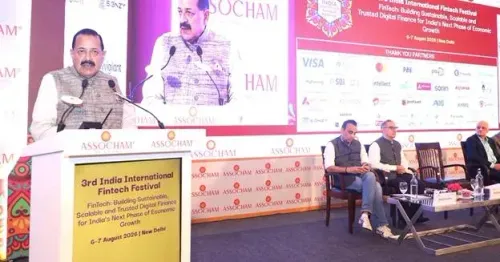
Global Fintech Fest 2026 opened in Mumbai on 8 September 2026 and runs through 11 September .
The event's theme centres on Agentic AI , tokenisation , and quantum technologies for inclusive global finance.
Principal organisers are PCI , NPCI , and the Fintech Convergence Council (FCC) .
Institutional backers include RBI , SEBI , IFSCA , PFRDA , MeitY , NITI Aayog , and multiple Union ministries.
India's Aadhaar , UPI , and DPI stack underpin the country's positioning as a global fintech model.
GFF has grown into one of the world's leading fintech gatherings since its inception in 2020 .
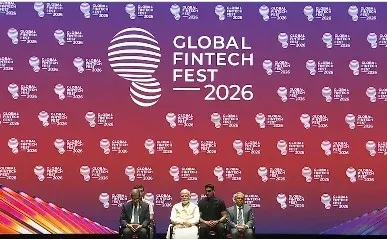
The Global Fintech Fest (GFF) 2026 officially opened in Mumbai on 8 September 2026, drawing global policymakers, technologists, and financial institutions for a four-day dialogue on the future of financial technology. Running through 11 September, the event has grown into one of the world's foremost fintech gatherings since its launch in 2020, according to an official statement.
Theme and Foundational Technologies
GFF 2026 is anchored by the theme 'Potential to Impact: Agentic AI | Tokenisation | Quantum: Trusted, Connected, Global Systems for Inclusive Finance' — a framework built around three technologies reshaping global financial architecture. The choice of theme signals a deliberate shift from infrastructure-building to real-world deployment and systemic impact.
Agentic AI enables financial systems to sense, decide, and act autonomously in real time, within defined governance frameworks. It is expected to orchestrate end-to-end workflows, strengthen regulatory oversight, improve fraud prevention, and personalise financial services responsibly at scale — while preserving human decision-making through explainable intelligence.
Tokenisation converts assets into programmable digital units, enabling fractional ownership, instant settlement, and interoperable money flows. Proponents argue it can unlock liquidity and democratise access across capital markets and payments systems globally.
Quantum technologies introduce what organisers describe as a foundational shift in computation and security. From quantum-safe cryptography to advanced risk optimisation, the technology is positioned to reinforce systemic resilience and long-term trust in financial infrastructure.
India's Digital Finance Credentials
India's prominence at GFF is underpinned by its track record in Digital Public Infrastructure (DPI). The rollout of Aadhaar, the rapid expansion of internet connectivity, and the development of the Unified Payments Interface (UPI) collectively transformed financial services access at population scale — enabling digital identity, instant payments, and consent-based data sharing for hundreds of millions of citizens.
This experience, organisers note, positions India as a credible model for both emerging markets and the Global South on how technology can make financial services more accessible, efficient, and inclusive. GFF serves as the primary platform to export those learnings and exchange ideas with global innovators.
Institutions Behind GFF 2026
The fest is principally organised by the Payments Council of India (PCI), the National Payments Corporation of India (NPCI), and the Fintech Convergence Council (FCC). It carries the backing of a broad coalition of government bodies, including the Ministry of Electronics and Information Technology (MeitY), the Department of Financial Services, the Ministry of Finance, the New, Emerging and Strategic Technology (NEST) Division of the Ministry of External Affairs, NITI Aayog, the Reserve Bank of India (RBI), the Securities and Exchange Board of India (SEBI), the International Financial Services Centres Authority (IFSCA), and the Pension Fund Regulatory and Development Authority (PFRDA).
The breadth of institutional support — spanning monetary, securities, and pension regulators alongside multiple ministries — reflects the event's positioning as a whole-of-government showcase for India's fintech ambitions.
What the Festival Signals
This is the seventh edition of GFF, and its expanding institutional footprint tracks directly with growing global interest in India's digital financial architecture. Notably, the inclusion of quantum technologies alongside AI and tokenisation marks a forward leap from previous editions, which focused primarily on payments infrastructure and open finance. As the 8–11 September programme unfolds, outcomes on cross-border interoperability and AI governance frameworks will be closely watched by regulators and industry alike.
Point of View
SEBI, IFSCA, PFRDA, and five ministries — reveals something important: India is no longer just hosting a fintech conference, it is conducting a coordinated sovereign pitch to the world. The pivot to Agentic AI and quantum in this edition is bold, but the gap between theme and tangible policy output has widened at past GFFs. Whether the 2026 edition produces binding cross-border interoperability commitments or actionable AI governance frameworks — rather than declarations — will determine whether it moves markets or merely moves conversations.
NationPress
24 Oct 2026
Frequently Asked Questions
What is the Global Fintech Fest 2026?
The Global Fintech Fest 2026 is a four-day international fintech conference held in Mumbai from 8 to 11 September 2026, organised by the Payments Council of India, NPCI, and the Fintech Convergence Council. Now in its seventh edition, it has grown into one of the world's leading gatherings for dialogue, collaboration, and innovation in financial technology since its launch in 2020.
What is the theme of GFF 2026?
The theme is 'Potential to Impact: Agentic AI | Tokenisation | Quantum: Trusted, Connected, Global Systems for Inclusive Finance.' It focuses on three foundational technologies — Agentic AI, tokenisation, and quantum computing — that are reshaping global financial systems toward autonomous, programmable, and secure ecosystems.
Which government bodies are supporting GFF 2026?
GFF 2026 is backed by a wide range of institutions including MeitY, the Department of Financial Services, the Ministry of Finance, the NEST Division of the Ministry of External Affairs, NITI Aayog, RBI, SEBI, IFSCA, and PFRDA. This broad coalition reflects the event's status as a whole-of-government fintech showcase.
Why is India significant in the global fintech conversation?
India has built a large-scale Digital Public Infrastructure — including Aadhaar for digital identity, UPI for instant payments, and consent-based data-sharing frameworks — that has transformed financial access for hundreds of millions of people. This track record positions India as a replicable model for emerging markets and the Global South.
How has the Global Fintech Fest grown since it started?
GFF was launched in 2020 and has grown steadily into one of the world's foremost fintech events, reflecting rising global interest in India's digital financial architecture. The 2026 edition marks its seventh instalment and its most expansive institutional backing to date.