Dr. Jitendra Singh calls for India's leap from inclusion to empowerment at FinTech fest

Synopsis
At the 3rd India International FinTech Festival, Union Minister Dr. Jitendra Singh called on India to move beyond financial inclusion toward empowerment, with AI, quantum technologies, cybersecurity and blockchain shaping the next phase of the country's fintech growth.
Key Takeaways
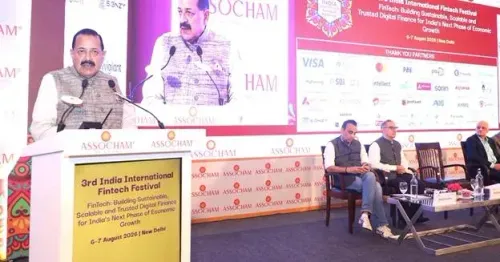
Jitendra Singh addressed the 3rd India International FinTech Festival on 7 August 2026 .
He called for India to shift from financial inclusion to financial empowerment and from digital payments to digital prosperity .
The next phase of FinTech growth will be driven by Artificial Intelligence, quantum technologies, cybersecurity and blockchain .
PM Modi's Jan Dhan Yojana , launched in August 2014 , was cited as the foundational programme that substantially advanced financial inclusion.
Strong public-private partnerships were identified as the core foundation of India's expanding innovation ecosystem.
India was positioned as having a 'unique opportunity to emerge as the world's trusted innovation economy.'
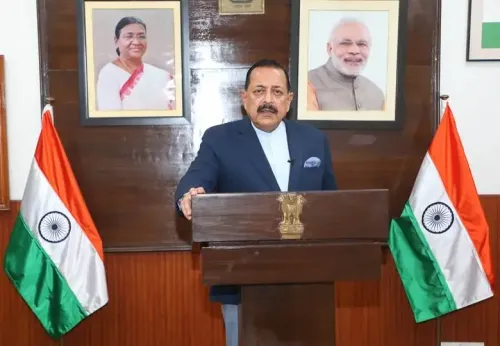
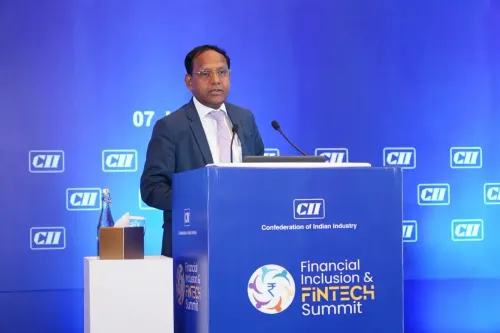
India's next financial frontier is not a bank branch — it is an algorithm. Addressing the 3rd India International FinTech Festival on 7 August 2026, Union Science and Technology Minister Dr. Jitendra Singh laid out a sharp, technology-forward vision: the country must graduate from financial inclusion to financial empowerment, and from digital payments to digital prosperity.
From Jan Dhan's foundation to the AI frontier
Dr. Singh anchored his address in the decade-long journey that began with Prime Minister Narendra Modi's landmark Pradhan Mantri Jan Dhan Yojana, launched in August 2014 to bring banking access to previously unbanked households. That programme, he said, had 'substantially advanced financial inclusion' — but the minister was clear that inclusion alone is no longer the finish line.
The next chapter, in his framing, belongs to Artificial Intelligence, quantum technologies, cybersecurity, blockchain and credible digital innovation. India, he argued, has 'a unique opportunity to emerge as the world's trusted innovation economy' — a phrase that signals both ambition and a deliberate bid for global positioning at a time when trust in digital infrastructure is a geopolitical asset.
The public-private engine behind India's FinTech rise
Dr. Singh credited the sector's emergence as a 'critical driver of economic transformation' to a collaborative architecture — one built on the interlocking roles of the banking sector, financial institutions, technology companies and startups. He described strong public-private partnerships as the 'foundation of India's rapidly expanding innovation ecosystem,' a formulation that echoes the country's broader digital public infrastructure model combining Aadhaar, UPI and Jan Dhan accounts.
That stack, assembled since the mid-2010s, has given India a rare advantage: scale. The minister's call to now layer emerging technologies onto this base reflects a policy consensus that the infrastructure phase is largely complete — and the intelligence phase must begin.
Why 'trusted' is the operative word
Dr. Singh's repeated emphasis on a 'secure and trusted' ecosystem is pointed. As AI and quantum computing enter regulated financial systems, cybersecurity and governance frameworks become as critical as the technologies themselves. Regulators and policymakers are watching how India defines the guardrails — and the minister's language suggests the government intends to lead that conversation, not follow it.
For India's fintech startups and global investors, the signal is direct: the next wave of policy support will flow toward innovation that is not just fast, but credible.
India has built the pipes. Now it is being asked to power them with intelligence — and the world, the minister made clear, is watching whether it can do both at once.
Point of View
UPI, Jan Dhan — has done its job, and the next policy cycle must layer intelligence and security onto that base. The pivot from 'inclusion' to 'empowerment' is not merely rhetorical; it signals a shift in where state support and regulatory attention will flow. Positioning India as the world's 'trusted' innovation economy is also a geopolitical play — trust is the currency that attracts global fintech capital at a time when rivals face scrutiny over data governance. Watch for RBI and MeitY consultations on AI and quantum frameworks to follow this political signal with regulatory substance.
NationPress
22 Sept 2026
Frequently Asked Questions
What did Dr. Jitendra Singh say at the India International FinTech Festival?
Dr. Jitendra Singh called for India to build an intelligent, secure and trusted financial ecosystem driven by AI, quantum technologies, cybersecurity and blockchain, and urged the country to move from financial inclusion to financial empowerment.
What is the 3rd India International FinTech Festival?
It is an industry and policy forum focused on India's financial technology sector, bringing together banking institutions, technology companies, startups and government representatives to discuss the future of digital finance.
How does Jan Dhan Yojana connect to India's FinTech ambitions?
Launched by PM Modi in August 2014, Jan Dhan Yojana provided bank accounts and financial access to previously unbanked households, creating the inclusion foundation on which India now aims to build digital empowerment and prosperity.
What technologies did Dr. Jitendra Singh highlight for India's fintech future?
He specifically highlighted Artificial Intelligence, quantum technologies, cybersecurity and blockchain as the key emerging technologies that will shape the next phase of India's fintech growth.
What does 'trusted innovation economy' mean in India's fintech context?
It refers to India's stated goal of becoming a global leader in digital financial innovation that is not only technologically advanced but also secure, credible and governed by robust frameworks — making it attractive to global investors and partners.