AI, quantum tech reshaping governance: MoS Jitendra Singh urges civil servants to upskill
Synopsis
India's civil servants are being told to treat AI and quantum technologies not as distant disruptions but as immediate job requirements. At a 15-day lateral entry refresher course in New Delhi, MoS Jitendra Singh pushed for a two-way learning model, anonymous faculty feedback, and broader IIPA outreach — signalling that the Centre wants a bureaucracy that adapts as fast as the technology it is meant to govern.
Key Takeaways
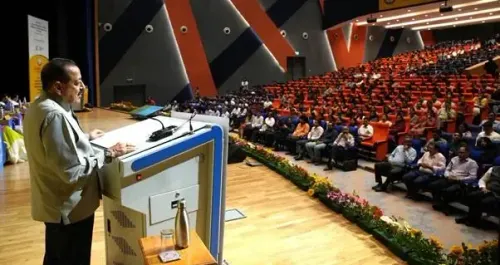
Jitendra Singh addressed the 15-Day Refresher Course for Lateral Entry Joint Secretaries, Directors and Deputy Secretaries on 18 August in New Delhi .
He identified AI, quantum technologies, cybersecurity, and digital tools as forces rapidly reshaping governance.
The minister called for a shift from lecture-based training to two-way dialogue , with anonymous feedback mechanisms for faculty and course content.
Approximately 63 officers have entered government service through the lateral entry mechanism so far.
Curriculum areas highlighted include policy analysis, digital transformation, municipal finance, cybersecurity, and public health .
Expansion of IIPA outreach to state governments, elected bodies, and private-sector participants was also emphasised.
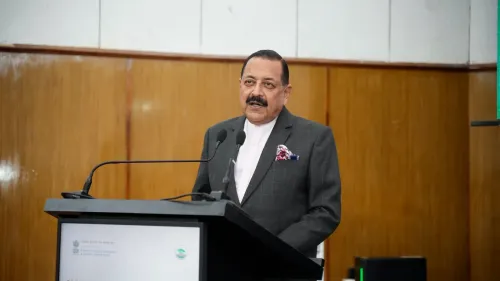
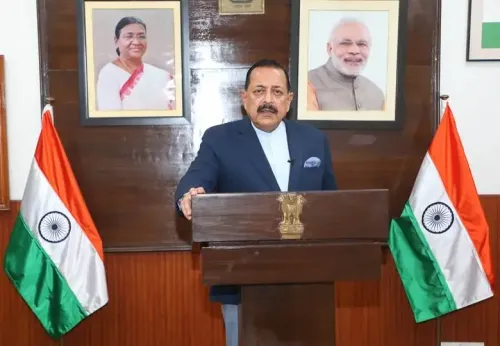
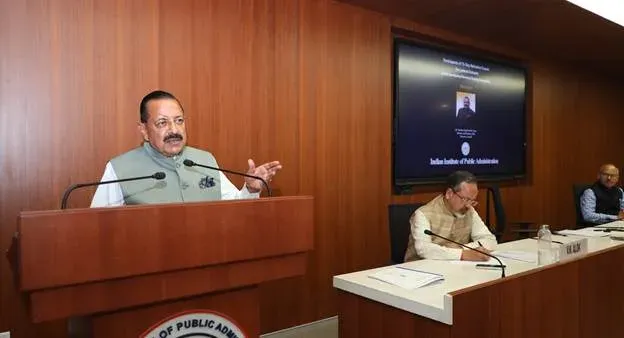
Union Minister of State for Personnel, Public Grievances and Pensions Dr. Jitendra Singh on Tuesday, 18 August said that artificial intelligence, quantum technologies, cybersecurity, and digital tools are rapidly transforming governance in India, and stressed the urgent need for continuous learning and adaptation among civil servants. His remarks came during his address at the 15-Day Refresher Course for Lateral Entry Joint Secretaries, Directors and Deputy Secretaries in New Delhi.
Key Message to Civil Servants
Dr. Singh urged officers to remain 'curious learners' who continuously update their knowledge and skills in response to a rapidly shifting administrative environment. He underlined the added responsibility on civil servants to harness emerging technologies and digital tools for delivering flagship government programmes, while upholding their constitutional duties and preserving the institutional integrity of the government.
Rethinking the Refresher Course Format
The minister called for a fundamental rethink of how such training programmes are structured. He said the refresher course should function as a platform for two-way communication and learning through dialogue, rather than a conventional lecture-driven format. Dr. Singh encouraged participants — who bring substantial professional experience — to actively engage in discussions and provide candid feedback on their learning needs. He also suggested introducing mechanisms for anonymous feedback on faculty and course content to enable continuous improvement of training programmes.
Curriculum and Communication Skills
Highlighting the course curriculum, Dr. Singh pointed to key focus areas including policy analysis, digital transformation, municipal finance, public health, cybersecurity, education, and government communication. He noted that the evolving communication landscape — particularly the growing influence of social media — makes it increasingly important for officers to develop effective multi-stakeholder communication skills. The government, he added, has also prioritised improving ease of implementation and ease of monitoring across programmes.
Lateral Entry and Institutional Outreach
Dr. Singh highlighted the importance of institutionalising processes that bring fresh talent, ideas, and work culture from diverse sectors into the bureaucracy. He informed participants that approximately 63 officers have so far entered government service through the lateral entry mechanism. He also stressed the need to expand the outreach of institutions such as the Indian Institute of Public Administration (IIPA) and integrate them with other bodies working under similar mandates. Such outreach, he noted, extends across Central and State Governments, public institutions, and elected bodies, with courses now being developed for corporate and private-sector participants as well.
As AI and emerging technologies continue to redefine the boundaries of public administration, the Centre's push for a continuously upskilling civil service will be closely watched for tangible outcomes in service delivery.
Point of View
A seminar there — rather than embedded in daily workflow. Flagging AI and quantum technologies as priorities is easy; building a cadre that can operationalise them within constitutional constraints is the harder task. The lateral entry programme, with just 63 officers so far, remains a modest experiment relative to the scale of the IAS and allied services. And the push for anonymous faculty feedback, while sensible, will only matter if the IIPA and associated institutions have the autonomy and incentives to act on it. Governance reform that stops at the training room rarely moves the needle in the field.
NationPress
3 Oct 2026
Frequently Asked Questions
What did MoS Jitendra Singh say about AI and governance?
Dr. Jitendra Singh said that AI, quantum technologies, cybersecurity, and digital tools are rapidly transforming governance, and that civil servants must continuously update their knowledge and skills to keep pace. He made these remarks at a 15-day refresher course for lateral entry officers in New Delhi on 18 August.
What is the 15-Day Refresher Course for Lateral Entry Officers?
It is a government-run training programme for Lateral Entry Joint Secretaries, Directors, and Deputy Secretaries — officers who have entered the civil service from outside the traditional UPSC route. The course covers areas such as policy analysis, digital transformation, cybersecurity, and public health.
How many officers have joined through lateral entry so far?
According to Dr. Jitendra Singh, approximately 63 officers have entered government service through the lateral entry mechanism as of August 2025. The government views this as a means of bringing fresh talent, ideas, and work culture from diverse sectors into the bureaucracy.
What changes did the minister propose for training programmes?
Dr. Singh proposed shifting from a lecture-based format to a two-way dialogue model, where experienced participants actively engage and provide feedback. He also suggested introducing anonymous feedback mechanisms for faculty and course content to enable continuous improvement.
What is the role of IIPA in this initiative?
The Indian Institute of Public Administration (IIPA) is central to the government's civil service training outreach. Dr. Singh called for expanding IIPA's reach across Central and State Governments, public institutions, elected bodies, and even corporate and private-sector participants, and for integrating it more closely with other institutions working under similar mandates.