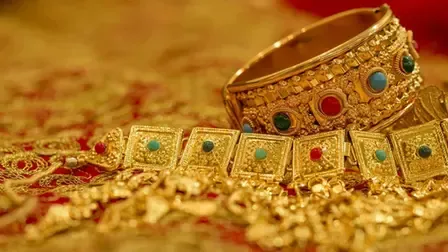
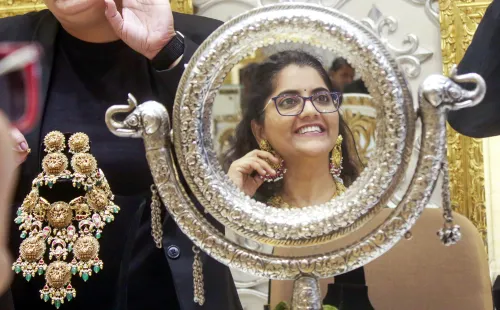
India organised gold jewellery retail revenue to grow 20-25% in FY27: Crisil

Synopsis
India's organised gold jewellery sector is set for a paradox in FY27: revenues up 20–25%, volumes down to a decade low. A customs duty hike from 6% to 15% is the centrepiece of a government drive to contain a $72 billion gold import bill — and it is reshaping the sector faster than any single policy move in recent memory.
Key Takeaways
India's organised gold jewellery retail sector is projected to grow revenue by 20–25 per cent year-on-year in FY27 , per a Crisil Ratings report.
Sales volume is expected to fall 13–15 per cent to 620–640 tonnes — the lowest in a decade, excluding Covid-impacted FY2021 .
The Centre more than doubled customs duty on gold from 6 per cent to 15 per cent to curb imports and reduce the trade deficit.
India imported 720 tonnes of gold in FY2026 , causing a foreign currency outflow of $72 billion .
Despite higher debt reliance from elevated inventory costs, credit profiles in the organised sector are expected to remain stable .
A shift toward gold bars and coins driven by investment demand is underway but is unlikely to fully offset the jewellery volume decline, according to Crisil .
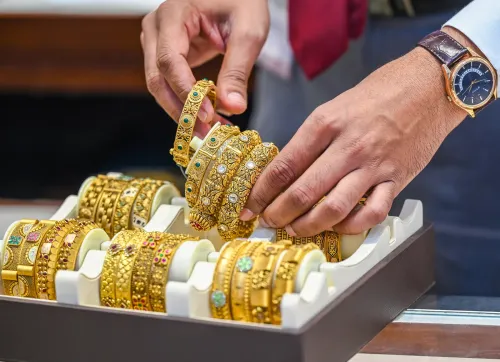
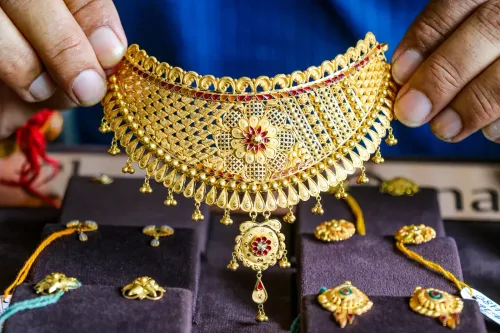
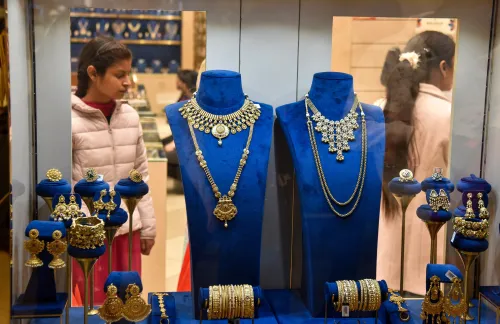
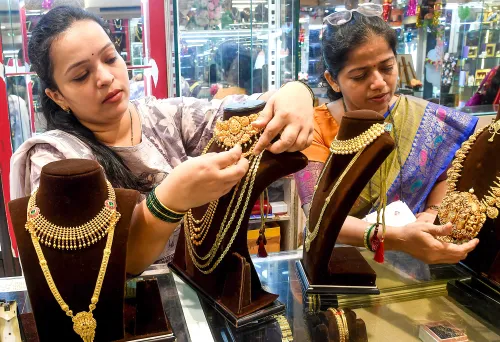
India's organised gold jewellery retail sector — spanning jewellery, coins, and bars — is on course to post 20–25 per cent year-on-year revenue growth in FY27, according to a Crisil Ratings report released on Friday, 22 May. The expansion is driven by higher realisations even as sales volumes are expected to contract sharply, weighed down by elevated gold prices and a recent hike in customs duty.
Volume Set to Hit Decade Low
The sector's sales volume is projected to fall 13–15 per cent year-on-year to 620–640 tonnes in FY27 — the lowest level in a decade, excluding the Covid-impacted FY2021, according to Crisil. This follows an 8 per cent contraction recorded in the previous fiscal. The twin pressures of persistently high gold prices and tighter import controls are the primary drivers of the volume slump.
In FY2026, India imported 720 tonnes of gold, resulting in a foreign currency outflow of $72 billion. The scale of that outflow prompted the Centre to act decisively on the import front.
Customs Duty More Than Doubled to 15%
To reduce the trade deficit and stabilise the rupee, the central government recently raised customs duty on gold from 6 per cent to 15 per cent — more than doubling the levy. Himank Sharma, Director at Crisil Ratings, said the move would act as a significant demand deterrent.
'The central government's decision to more than double the customs duty on gold to 15 per cent from 6 per cent will be a significant deterrent to demand for gold jewellery. While we see a notable shift towards gold bars and coins driven by investment demand, that is unlikely to fully offset the decline in overall demand,' Sharma said.
Revenue Growth Cushioned by Higher Realisations
Despite the volume decline, revenue growth is expected to remain robust because higher gold prices translate directly into larger per-unit realisations for retailers. The Crisil report notes that the uptick in realisations will also yield inventory gains. However, some of those gains may be passed on to customers through deeper discounts to incentivise volume sales.
Increased promotional spending and the growing trade in gold bars and coins — driven by investment rather than adornment demand — are expected to weigh on gross margins. Higher gold prices will also push up inventory holding costs and bank borrowings for retailers.
Credit Profiles Expected to Stay Stable
Despite the increase in debt reliance, Crisil expects credit profiles across the organised segment to remain stable. The rationale: rising revenues and cash accruals will broadly offset the higher cost of carrying gold inventory and servicing borrowings. The organised segment's structural advantages — standardised pricing, hallmarking, and brand trust — give it a buffer that unorganised players lack.
Key Risks to Watch
The Crisil report flags several variables that could alter the outlook: steep fluctuations in gold prices, further regulatory changes or duty revisions, potential government restrictions on gold purchases, and shifts in consumer sentiment. Any escalation on the import-duty front — or a sharp correction in gold prices — could significantly alter both volume and margin trajectories. How quickly retailers adapt their product mix toward investment-grade products will also be a critical determinant of performance in the months ahead.
Point of View
Volumes down, and margins under pressure from multiple directions simultaneously. The customs duty hike to 15% is a blunt instrument — it will curb the trade deficit on paper, but it also risks accelerating the shift toward informal and unorganised gold channels, where price transparency is lower and hallmarking weaker. The deeper question is whether the organised sector's brand premium is strong enough to hold customers when gold is already at record prices and the duty adds a further cost layer. A decade-low volume figure, even excluding Covid, is not a cyclical dip — it is a structural signal that policymakers and retailers alike cannot afford to ignore.
NationPress
28 Sept 2026
Frequently Asked Questions
Why is India's organised gold jewellery sector expected to grow revenue despite falling volumes?
Revenue growth of 20–25 per cent in FY27 is driven by higher gold prices boosting per-unit realisations, even as sales volumes fall 13–15 per cent. Higher prices mean retailers earn more on each gram sold, offsetting the impact of fewer transactions overall.
How much has India raised customs duty on gold and why?
The Centre raised customs duty on gold from 6 per cent to 15 per cent — more than doubling the levy — to reduce the trade deficit and stabilise the rupee. In FY2026, India imported 720 tonnes of gold, resulting in a $72 billion foreign currency outflow.
What is the expected gold jewellery sales volume in FY27?
Sales volume is projected to decline to 620–640 tonnes in FY27, a fall of 13–15 per cent year-on-year. This would be the lowest volume in a decade, excluding the Covid-impacted FY2021, according to Crisil Ratings.
Will the shift to gold bars and coins offset the jewellery volume decline?
Crisil says a notable shift toward gold bars and coins is underway, driven by investment demand. However, Himank Sharma, Director at Crisil Ratings, noted this is 'unlikely to fully offset the decline in overall demand' for gold jewellery.
What are the key risks facing the organised gold jewellery sector in FY27?
Crisil flags steep gold price volatility, further changes in import regulations or duty, potential government restrictions on gold purchases, and shifts in consumer sentiment as the primary risks. Any escalation in duties or a sharp price correction could significantly alter both volume and margin forecasts.