Did the Government Approve 25 Lakh Additional LPG Connections under PMUY?
Synopsis
The Indian government has taken a significant step by approving an additional 25 lakh LPG connections under the PMUY. This initiative ensures that more households gain access to clean cooking fuel, significantly improving the quality of life, particularly for women. Read on to discover the impact of this scheme on rural households.
Key Takeaways
The government approved 25 lakh additional LPG connections under PMUY.
Eligibility criteria have been simplified for better access.
Increased subsidies make LPG more affordable.
PMUY positively impacts rural women's health and productivity.
Indoor air pollution has been reduced significantly.
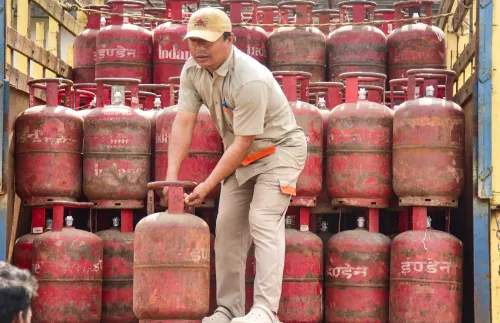
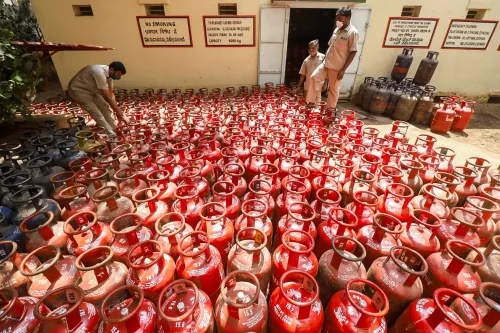
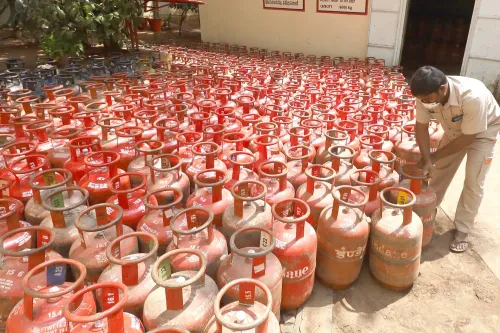
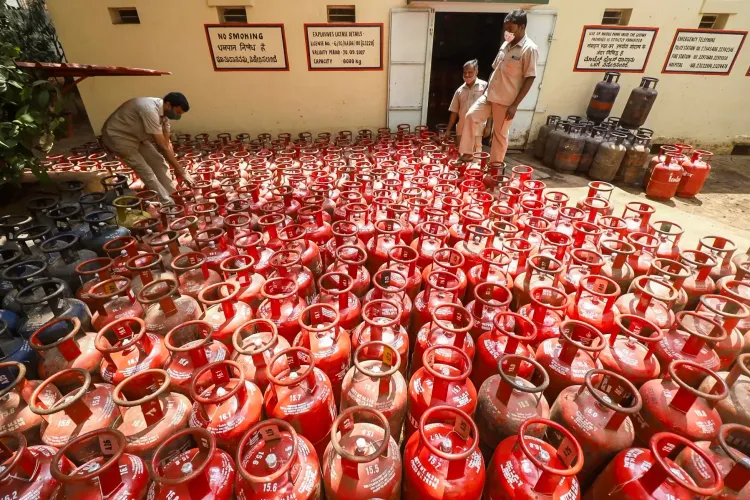
New Delhi, Dec 4 (NationPress) The Indian government has sanctioned the distribution of 25 lakh additional liquefied petroleum gas (LPG) connections under the Pradhan Mantri Ujjwala Yojana (PMUY) for the financial year 2025-26. This initiative aims to address pending applications and progress towards achieving comprehensive household LPG access, as stated in an official announcement made on Thursday.
To enhance accessibility, the eligibility requirements have been streamlined to include adult women from economically disadvantaged households based on the submission of a Deprivation Declaration, as noted by the Minister of State for Petroleum and Natural Gas, Suresh Gopi, in a written response to the Lok Sabha.
The Pradhan Mantri Ujjwala Yojana, which was initiated in May 2016 to provide deposit-free LPG connections to adult women from lower-income families, has achieved around 10.33 crore connections as of November 1, 2025, according to the minister.
To make LPG more affordable for PMUY beneficiaries and ensure its consistent use, the government introduced a targeted subsidy in May 2022, increasing the amount from Rs 200 to Rs 300 per 14.2 kg cylinder.
For the financial year 2025-26, a targeted subsidy of Rs 300 per cylinder will be provided for up to nine refills of 14.2 kg cylinders annually, with proportional adjustments for 5 kg connections.
The government monitors LPG usage through reports and management information systems (MIS) or consumption profiles via the Petroleum Planning and Analysis Cell and oil marketing firms.
Numerous independent studies have indicated that the PMUY initiative has substantially improved the quality of life for rural households, particularly for women, as per the statement.
This scheme has contributed to reducing indoor air pollution and respiratory health hazards, especially among women and children, who were historically more vulnerable to smoke from traditional fuels like wood, dung, and crop residues.
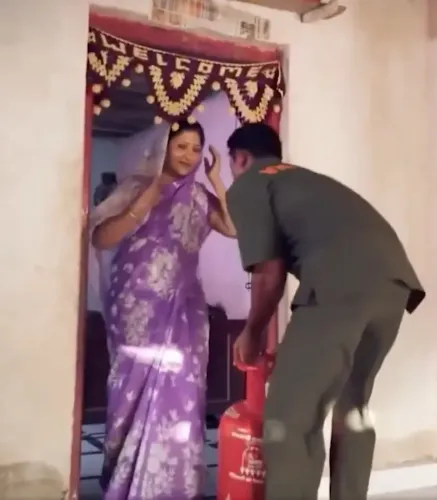
The adoption of LPG has alleviated the burden of cooking fuel collection for women in lower-income households. The time saved can be redirected towards various activities, enhancing economic productivity, the statement highlighted.
IANS
Point of View
The government's decision to expand the PMUY initiative demonstrates a strong commitment to improving the living conditions of rural households. By simplifying eligibility criteria and increasing subsidies, the government is making strides towards ensuring that every family has access to safe and clean cooking fuel. This is a crucial step in promoting women's health and well-being, ultimately contributing to the nation's socio-economic development.
NationPress
22 Oct 2026
Frequently Asked Questions
What is the Pradhan Mantri Ujjwala Yojana?
The Pradhan Mantri Ujjwala Yojana (PMUY) is a government initiative launched in May 2016 to provide deposit-free LPG connections to women from low-income households, aiming to improve health and reduce indoor air pollution.
How many additional LPG connections have been approved?
The government has approved 25 lakh additional LPG connections under the PMUY for the financial year 2025-26 .
Who is eligible for the new LPG connections?
Eligibility has been simplified to include adult women from economically disadvantaged households who can submit a Deprivation Declaration.
What subsidies are available for LPG under this scheme?
The government provides a targeted subsidy of Rs 300 per 14.2 kg cylinder for up to nine refills annually.
What impact has the PMUY had on rural households?
The PMUY has significantly improved the quality of life for rural households, reducing indoor air pollution and the burden of fuel collection, especially for women.