Piyush Goyal: Viksit Bharat by 2047 non-negotiable, India eyes $1 trillion exports
Synopsis
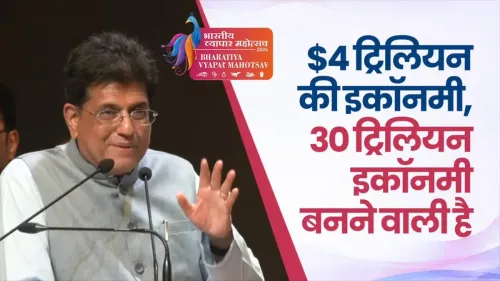
Commerce Minister Piyush Goyal told students at Kirori Mal College that Viksit Bharat by 2047 is non-negotiable — and backed it with numbers: India's exports hit a record $863 billion last year, and the government has set a $1 trillion target for this year, more than eight times the IMF's original global trade growth forecast.
Key Takeaways
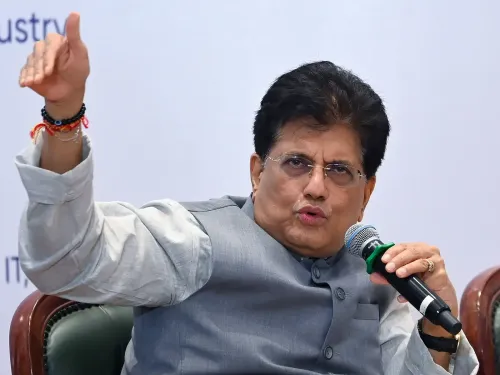
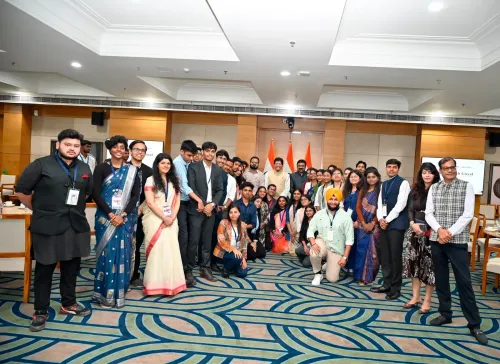
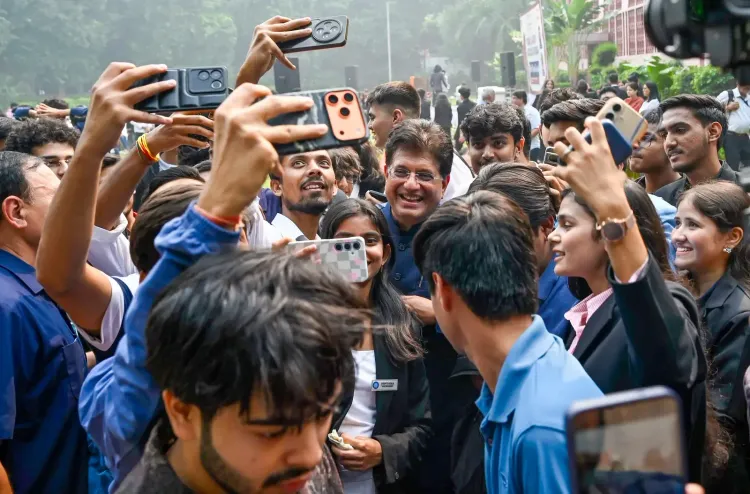
Piyush Goyal addressed the Young Leaders Discourse Forum at Kirori Mal College, New Delhi on 3 November 2026 .
Goyal declared the Viksit Bharat by 2047 goal 'non-negotiable,' urging youth to be ambitious and embrace transformation.
India recorded its highest-ever exports of $863 billion last year; the current-year target is $1 trillion , implying 16 per cent growth .
Exports grew 14 per cent to $480 billion in April–September , with the minister expressing confidence the annual target will be met.
A World Bank report cited by Goyal states 50 crore people have been lifted out of extreme poverty in India.
India's average population age is below 30 years , with 1.1 billion internet users cited as key growth drivers.
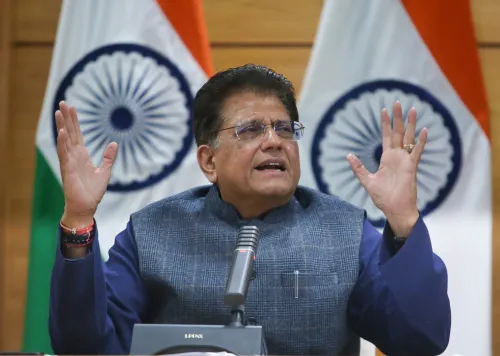
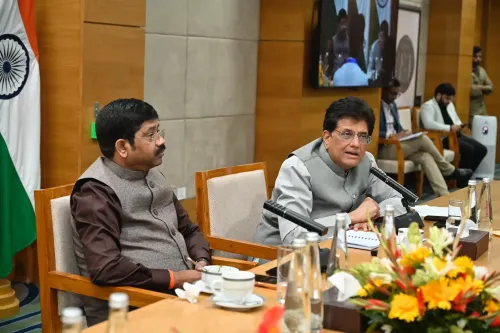
Union Commerce and Industry Minister Piyush Goyal on Tuesday, 3 November 2026, called on India's youth to be ambitious and embrace transformation, declaring that the goal of a Viksit Bharat (Developed India) by 2047 is 'non-negotiable.' Speaking at the Young Leaders Discourse Forum at Kirori Mal College in New Delhi, Goyal said today's students will be the architects of India's centenary and will be in their 40s when the country marks 100 years of Independence.
Vision for Youth and Nation-Building
Goyal urged students to aim high, stressing that transformation demands a change in mindset and continuous reinvention. He underlined discipline and respect for tradition as foundational pillars of strong institutions. On education, he highlighted the flexibility introduced under the National Education Policy (NEP), pointing to digitalisation and India's base of 1.1 billion internet users as expanding opportunities for the current generation.
India's Export Surge and the $1 Trillion Target
The minister highlighted what he described as a landmark export achievement: India recorded its highest-ever exports of $863 billion last year and has now set an ambitious target of $1 trillion for the current year — representing 16 per cent growth. Goyal noted that India could have settled for a more conservative target of $900 billion, or roughly 5 per cent growth, which would itself have been significant given the IMF's April-May projection of 1.9 per cent global trade growth. Instead, the country chose the higher bar. Exports for the April–September period grew 14 per cent to $480 billion, he said, expressing confidence the annual target is within reach.
India's Revised Role in Global Trade
Goyal added that the IMF has since revised its global trade growth projection upward to approximately 3.5 per cent, and suggested India's export performance may have been a contributing factor. This comes amid a broader narrative of India's rising weight in world commerce, with multiple countries reportedly keen on bilateral preferential and free trade agreements with New Delhi.
From 'Fragile Five' to Fastest-Growing Large Economy
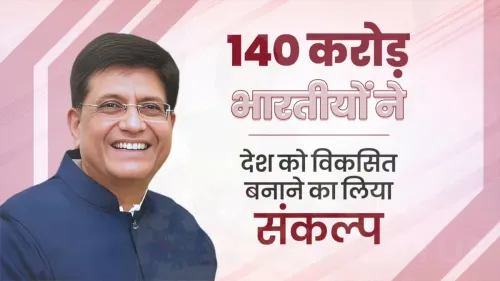
Tracing India's economic trajectory, Goyal cited a World Bank report stating that 50 crore people have been lifted out of extreme poverty, and noted the country's transition from being part of the so-called 'fragile five' — a grouping of vulnerable emerging economies — to the world's fastest-growing large economy. He attributed this shift to India's talent pool, a youthful demography with an average age below 30 years, its democratic system, decisive leadership, and domestic demand from 140 crore Indians. He also recalled India's role during the COVID-19 pandemic, when the country supplied vaccines globally while ensuring free vaccination at home, as an illustration of the trust India has earned internationally.
Goyal's address signals the government's intent to keep youth engagement central to its Viksit Bharat messaging as the 2047 deadline moves from aspiration to policy benchmark across ministries.
Point of View
But the gap between $480 billion in the first half and $1 trillion by year-end demands a strong second-half acceleration that trade data will either vindicate or contradict. Notably, attributing the IMF's upward revision of global trade growth to India's own performance is a stretch the ministry has not substantiated. The deeper question mainstream coverage glosses over: are exports growing in value-added manufacturing, or are commodity and re-export categories carrying the headline number?
NationPress
3 Nov 2026
Frequently Asked Questions
What is Viksit Bharat 2047 and why did Goyal call it non-negotiable?
Viksit Bharat 2047 is India's government-stated goal of becoming a fully developed nation by 2047, the centenary of Independence. Goyal used the term 'non-negotiable' at Kirori Mal College to underscore the administration's commitment and to motivate students who will be in their 40s when the milestone arrives.
What is India's export target for the current year?
India has set an export target of $1 trillion for the current financial year, up from a record $863 billion last year, representing 16 per cent growth. Exports for April–September already reached $480 billion, a 14 per cent year-on-year rise.
How does India's export growth compare to global trade growth projections?
The IMF initially projected global trade growth at 1.9 per cent for the year; India's $1 trillion target implies 16 per cent growth — more than eight times that figure. The IMF has since revised its global projection upward to around 3.5 per cent, which Goyal suggested India's performance may have influenced.
What did Goyal say about poverty reduction in India?
Goyal cited a World Bank report stating that 50 crore people have been lifted out of extreme poverty, using this as evidence of India's economic transformation from the 'fragile five' grouping to the world's fastest-growing large economy.
What role does the National Education Policy play in Goyal's vision for youth?
Goyal highlighted the NEP's flexibility as a key enabler for today's students, combining it with India's 1.1 billion internet users and rapid digitalisation to argue that the current generation has wider opportunities than any before it to contribute to India's development journey.