Piyush Goyal: India set to become global car manufacturing hub
Synopsis
Commerce Minister Piyush Goyal has staked out a bold claim: India will be the world's go-to destination for car manufacturing. With a 1.4-billion-strong consumer base, advancing FTAs, and a trillion-dollar export target on the horizon, the vision is ambitious — but scale and execution remain the real tests.
Key Takeaways
Piyush Goyal declared on 12 October 2026 that India is set to become a global automobile manufacturing hub.
The minister cited rising domestic demand , a growing manufacturing ecosystem, and the Viksit Bharat 2047 vision as key drivers.
India is expanding free trade agreements (FTAs) to boost exports in textiles, footwear, agriculture, and food processing.
Goyal expressed confidence in achieving a trillion-dollar export target as part of the 2047 developed-nation goal.
Surging demand for electronics , white goods , and semiconductors is expected to complement the auto manufacturing push.
Global car manufacturers will increasingly choose India as a production base once domestic market demand reaches the required scale , Goyal said.
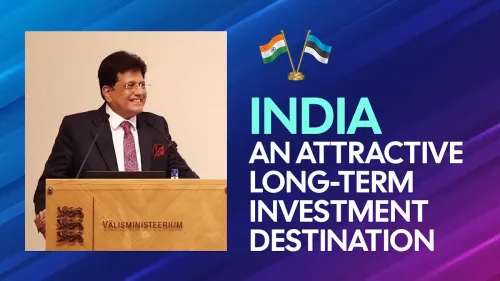
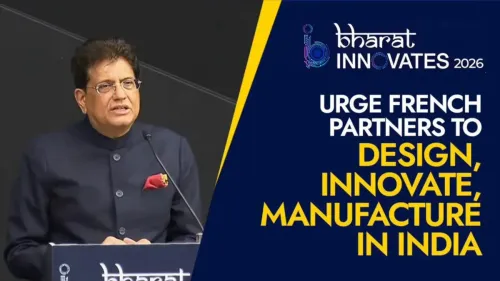
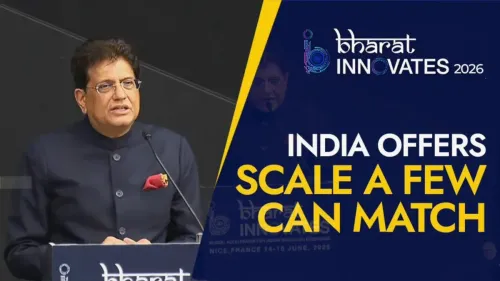
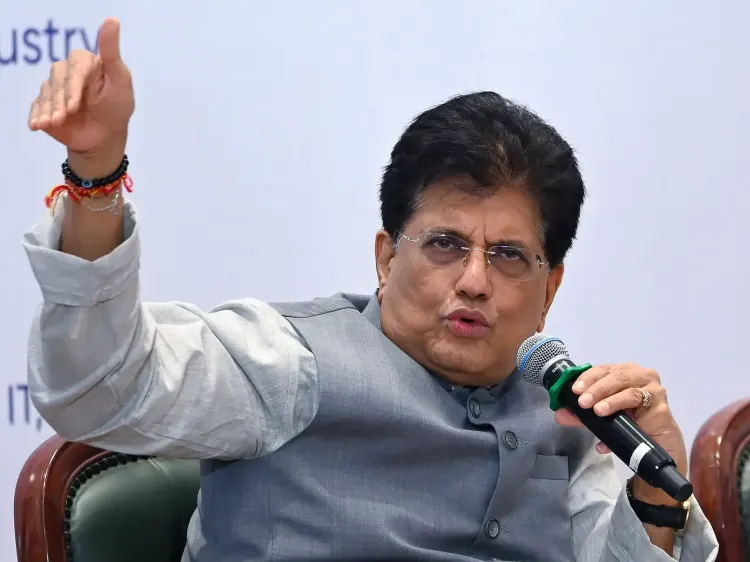
Union Commerce and Industry Minister Piyush Goyal on Monday, 12 October 2026, declared that India is on course to emerge as a global hub for automobile manufacturing, with international carmakers increasingly selecting the country as a preferred production base. Speaking at the 'Dilli Dialogue: Policies for a Future-Ready India' in New Delhi, Goyal attributed the shift to rising domestic demand, a maturing manufacturing ecosystem, and the country's long-term economic ambitions under the Viksit Bharat 2047 vision.
India's Twin-Track Strategy
Goyal outlined what he described as a dual approach: integrating India into global technology supply chains while simultaneously targeting sectors with high employment and business-growth potential. “We want to be a part of the global marketplace. Providing opportunities for people, providing opportunities for jobs, for our startups, for our youth to come up with newer ideas,” he said.
The minister stressed that India is not retreating from globalisation but is actively broadening international partnerships and welcoming foreign investments across key industries.
FTAs and Export Ambitions
On trade policy, Goyal said India is fast-tracking free trade agreements (FTAs) to widen market access for Indian exporters. He highlighted sectors such as textiles, footwear, agriculture, and food processing as primary beneficiaries, while adding that FTAs would also enable Indian firms to access advanced technologies from developed economies.
Goyal reiterated the government's target of achieving a trillion-dollar export figure as part of India's push to become a developed nation by 2047. A detailed sectoral roadmap, he said, has been drawn up to identify the industries that will drive growth over the next two decades.
Automobile Sector: Scale as the Trigger
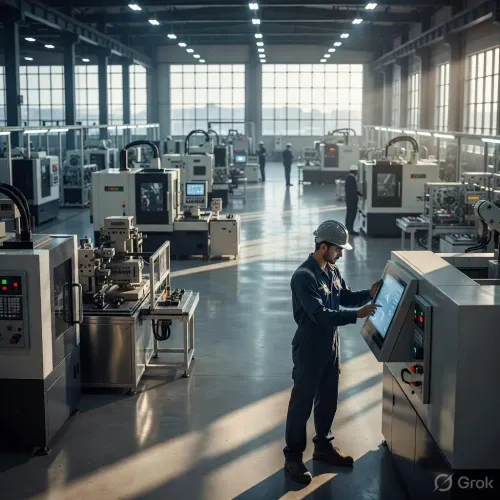
On the automobile sector specifically, Goyal said global manufacturers would increasingly choose India as a production base once domestic market demand reaches the requisite scale. With India's population of 1.4 billion driving sustained demand for goods and services, he argued that the conditions for such a tipping point are already forming.
The minister also flagged surging demand for electronics and white goods as a catalyst that could accelerate investments in domestic manufacturing facilities and semiconductor production — sectors seen as strategic complements to the auto industry's localisation drive.
Broader Economic Context
Goyal's remarks come as India's auto sector posts record domestic sales, with passenger vehicle volumes crossing previous highs in recent months. Several global original equipment manufacturers (OEMs) have already announced capacity expansions in India, citing lower labour costs, an expanding middle class, and policy incentives under the Production-Linked Incentive (PLI) scheme for automobiles.
With the government preparing a detailed sectoral growth roadmap and FTA negotiations advancing with multiple trading partners, the auto-hub ambition is set to be tested on execution over the years ahead.
Point of View
Job-creating production commitments rather than just assembly operations. India's PLI scheme for automobiles has attracted announcements, but localisation depth and supplier-ecosystem maturity remain lagging indicators. The trillion-dollar export target is also a significant stretch from current levels, and the credibility of the roadmap will hinge on whether sectoral timelines and accountability mechanisms are made public. If the FTA pipeline accelerates and semiconductor investment follows through, the auto-hub thesis has structural legs — but ministerial optimism has preceded underwhelming execution before.
NationPress
12 Oct 2026
Frequently Asked Questions
What did Piyush Goyal say about India becoming a car manufacturing hub?
Commerce and Industry Minister Piyush Goyal said on 12 October 2026 that India is poised to become a global hub for automobile manufacturing, with international carmakers increasingly choosing the country as a production base as domestic market demand scales up. He made the remarks at the 'Dilli Dialogue' event in New Delhi.
What is the Viksit Bharat 2047 vision mentioned by Goyal?
Viksit Bharat 2047 is India's long-term goal of becoming a fully developed nation by the centenary of its independence. It encompasses targets across manufacturing, exports, infrastructure, and quality of life, and serves as the overarching framework for major economic policy decisions.
How do free trade agreements fit into India's auto-hub ambition?
Goyal said India is actively negotiating and expanding FTAs to open new export markets for Indian manufacturers, including in the auto sector. These agreements are also designed to give Indian firms access to advanced technologies from developed economies, which could support domestic manufacturing upgrades.
What is India's trillion-dollar export target?
The government has set a goal of achieving one trillion dollars in exports as part of the push toward becoming a developed economy by 2047. Goyal said a detailed roadmap identifying growth sectors over the coming decades has already been prepared.
Which sectors besides automobiles did Goyal highlight?
Beyond automobiles, Goyal flagged textiles, footwear, agriculture, food processing, electronics, white goods, and semiconductors as sectors with strong potential for employment generation, export growth, and attracting global investment into India.