Goyal Maps India's Viksit Bharat 2047 Industry Roadmap
Synopsis
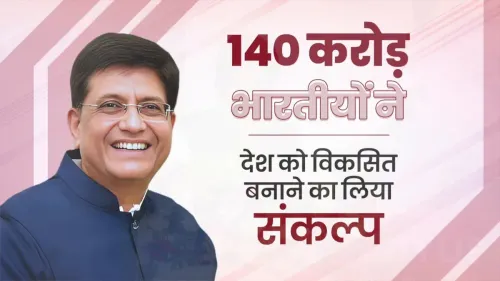
On Independence Day 2026, Minister Piyush Goyal translated PM Modi's Red Fort address into a concrete industrial agenda: 50 Indian Fortune 500 companies, 5-8 semiconductor fabs, AI training for 1 crore youth, and FTA-led export expansion — all anchored in the Viksit Bharat 2047 vision.
Key Takeaways
Minister Piyush Goyal outlined an industry roadmap on August 15, 2026 in response to PM Modi's Independence Day address from the Red Fort .
The Saptadhara framework identifies seven pillars: manufacturing, agriculture and food processing, technology and innovation, Gati Shakti, defence, the green and blue economy, and soft power.
Industrial targets include building 50 Indian Fortune 500 companies , placing an Indian bank in the global top 5 , and operationalising 5-8 semiconductor plants within 7-8 years .
1 crore young Indians are to be trained in artificial intelligence within one year , alongside a free national online coaching network for competitive exams.
A grassroots talent hunt for children aged 5-15 was announced with the 2036 Olympics as the target horizon.
MSMEs, textile, and seafood exporters were urged to immediately leverage India's Free Trade Agreements to capture global market share.
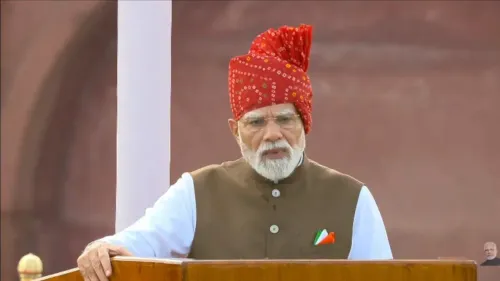
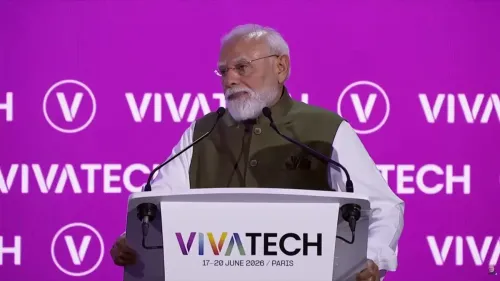
From the ramparts of the Red Fort on Independence Day, August 15, 2026, Prime Minister Narendra Modi delivered what Union Commerce and Industry Minister Piyush Goyal is calling an 'execution-first roadmap' — and the minister wasted no time translating the speech into a concrete industrial agenda for every sector he oversees.
The Saptadhara: Seven Pillars India Must Build On
Goyal anchored his response to what he described as the Saptadhara — seven pillars of progress drawn from the Prime Minister's address: manufacturing, agriculture and food processing, technology and innovation, Gati Shakti, defence, the green and blue economy, and soft power. These, he argued, are not aspirational themes but operational mandates for the years ahead.
The framing is deliberate. Gati Shakti, the national master plan for multimodal infrastructure connectivity launched in 2021, sits alongside newer priorities like green economy and soft power — a signal that the government sees infrastructure, sustainability, and cultural reach as equally load-bearing pillars, not afterthoughts.
50 Fortune 500 Companies, 5-8 Semiconductor Fabs, One Indian Bank in the Global Top 5
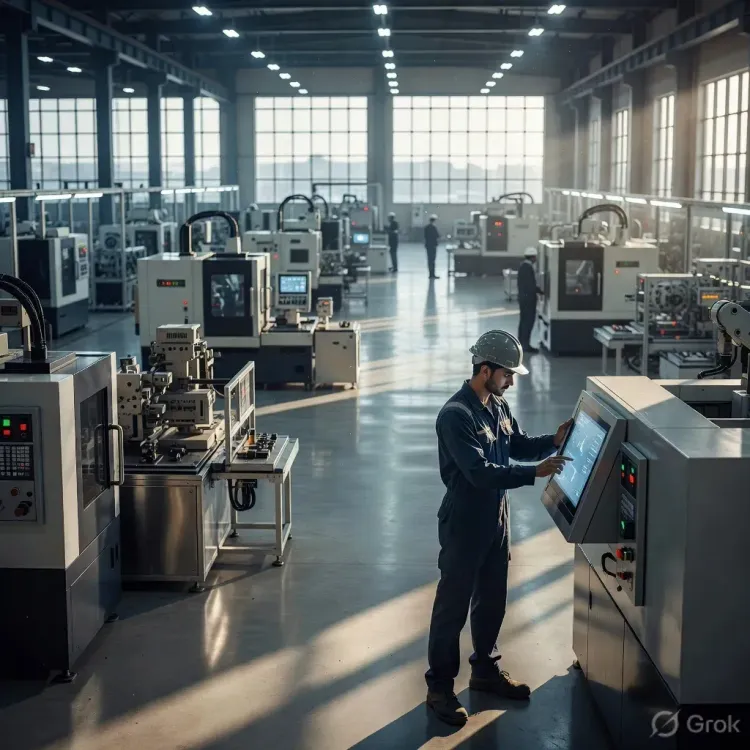
The industrial targets Goyal outlined are ambitious by any measure. He called on India's private sector to build 50 Indian companies into the Fortune 500, push an Indian bank into the global top 5, and operationalise 5 to 8 new semiconductor plants within 7 to 8 years — all under the banner of 'Zero Defect, Precision Manufacturing'.
The semiconductor push has policy scaffolding behind it. The India Semiconductor Mission, approved in 2021, was designed precisely to build domestic chip manufacturing capacity. The minister's call to operationalise multiple fabs within a near-term window signals urgency — especially as global supply chains continue to rewire away from single-source dependencies. For MSMEs, textile exporters, and seafood exporters, Goyal's message was sharper still: India's Free Trade Agreements are live instruments, and the window to capture global market share is now, not a future policy cycle.
1 Crore Youth Trained in AI, a Free Coaching Network, and Eyes on 2036
The youth agenda from the Independence Day address drew particular emphasis from Goyal. He highlighted three announcements: training 1 crore young Indians in artificial intelligence within a year, launching a free nationwide online coaching network to democratise access to competitive examinations, and a grassroots talent hunt for children aged 5 to 15 — with the 2036 Olympics as the explicit horizon.
The coaching network is the kind of detail that travels beyond policy circles. Competitive exam preparation in India is a vast, expensive, and deeply unequal ecosystem. A free national platform, if executed at scale, would represent a structural shift in access — not merely a welfare gesture. The AI training target, meanwhile, places India in direct conversation with global workforce transformation at a moment when every major economy is racing to build the same pipeline.
Make in India at 12, Now Asked to Deliver at Scale
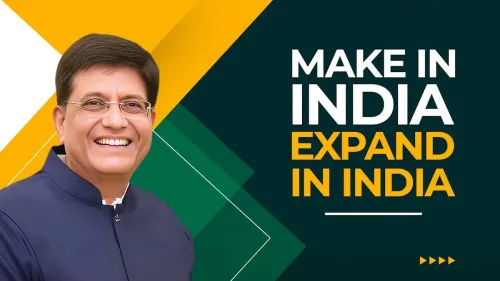
The Make in India initiative, launched in 2014, turns twelve this year. Goyal's post frames the current moment as the shift from campaign to consequence — from building the policy architecture to delivering measurable outcomes. 'Cost, quality, and scale must become the buzzwords of industry,' he wrote, a formulation that reads less like a slogan and more like a performance review criterion.
The broader pattern is consistent: since 2014, successive policy levers — Atmanirbhar Bharat (2020), Production Linked Incentive schemes across electronics and pharma, Gati Shakti (2021), the Semiconductor Mission — have been stacked in the same direction. The Viksit Bharat 2047 vision, India as a fully developed economy by the centenary of independence, is the capstone framing. What the minister is signalling today is that the stacking phase is over. Execution is the only metric that remains.
An India that leads global industry, a generation equipped to create jobs rather than seek them — in AI labs, semiconductor fabs, sports arenas, and export markets. The roadmap is drawn. The question 2047 will answer is whether the construction matched the blueprint.
Point of View
Semiconductor fab numbers, AI trainee volume) is unusual for a social media post and suggests these figures carry official weight, not just rhetorical ambition. Framing the moment as a shift from policy architecture to execution is also a quiet acknowledgement that twelve years of Make in India and allied schemes have not yet produced the scale outcomes the government envisioned. The 2036 Olympics talent hunt is the most politically durable element — it creates a visible, time-bound accountability marker that will outlast any single budget cycle.
NationPress
30 Sept 2026
Frequently Asked Questions
What is Viksit Bharat 2047?
Viksit Bharat 2047 is India's long-term national vision to transform the country into a fully developed economy by 2047, the centenary of its independence. It serves as the overarching framework for major government schemes in manufacturing, technology, infrastructure, and social development.
What did PM Modi announce on Independence Day 2026?
PM Modi's Independence Day 2026 address from the Red Fort outlined an execution-first roadmap for Viksit Bharat 2047, covering industrial targets, AI training for 1 crore youth, a free online coaching network, and a grassroots sports talent hunt targeting the 2036 Olympics.
What is the Saptadhara framework mentioned by Piyush Goyal?
The Saptadhara refers to seven pillars of progress that Goyal identified from PM Modi's Independence Day address: manufacturing, agriculture and food processing, technology and innovation, Gati Shakti, defence, the green and blue economy, and soft power.
What are India's semiconductor manufacturing targets?
Minister Goyal called for operationalising 5 to 8 new semiconductor plants within 7 to 8 years, building on the India Semiconductor Mission approved in 2021 to develop domestic chip manufacturing capacity.
How does the AI training target of 1 crore youth work?
The Independence Day 2026 announcement envisages training 1 crore (10 million) young Indians in artificial intelligence within one year, as part of a broader youth empowerment agenda that also includes a free nationwide online coaching platform for competitive examinations.