Himachal Pradesh fiscal deficit breaches FRBM limits; 86% revenue eaten by salaries, subsidies
Synopsis
The CAG's 2024-25 audit of Himachal Pradesh reveals a state where 86 paise of every rupee earned goes toward salaries and subsidies — leaving just 14 paise for roads, schools, and investment. With the fiscal deficit at 5.44% of GSDP and outstanding liabilities above Finance Commission targets, the numbers undercut the Sukhu government's narrative of fiscal recovery.
Key Takeaways
Himachal Pradesh's fiscal deficit stood at ₹12,611.05 crore ( 5.44% of GSDP ) in 2024-25 , breaching FRBM limits.
Revenue deficit was recorded at ₹6,804.61 crore , or 2.94% of GSDP .
86% of total revenue receipts were consumed by committed expenditure and subsidies; only 14% remained for development.
Salaries, pensions, and gratuity alone accounted for around 70% of revenue expenditure.
The state's share of India's GDP has declined to 0.70% over the past five years .
Funds from milk cess , environment cess , and construction workers cess were kept outside the government account, reportedly violating Article 266 of the Constitution.
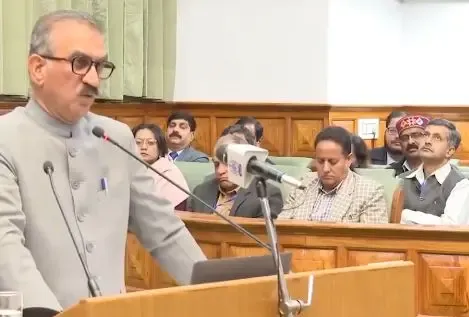
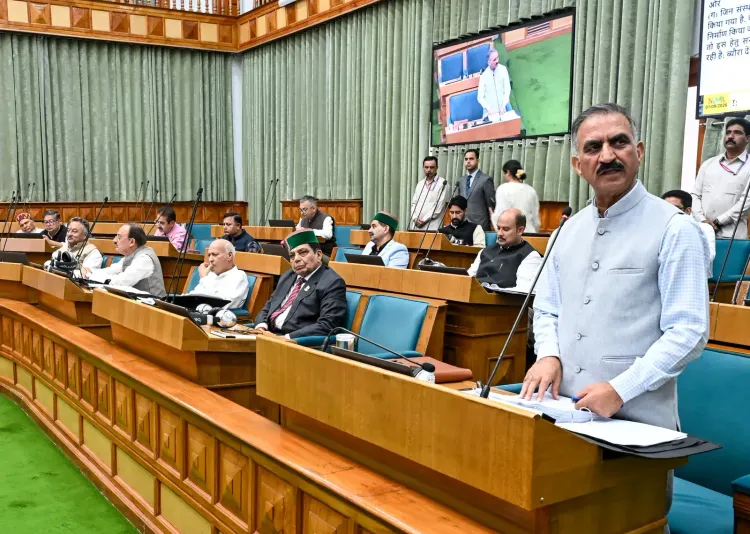
The Comptroller and Auditor General of India (CAG) on 3 September flagged a deteriorating fiscal picture for Himachal Pradesh, warning that the state's fiscal deficit has breached limits prescribed under the Fiscal Responsibility and Budget Management (FRBM) framework and that as much as 86 per cent of total revenue receipts are being consumed by committed expenditure and subsidies. The CAG report for financial year 2024-25 was tabled in the state Assembly by Chief Minister Sukhvinder Singh Sukhu.
Key Deficit Numbers
According to the report, Himachal Pradesh's revenue deficit stood at ₹6,804.61 crore, equivalent to 2.94 per cent of the Gross State Domestic Product (GSDP). The fiscal deficit was recorded at ₹12,611.05 crore, or 5.44 per cent of GSDP — well above the targets prescribed under the FRBM Act. The state's outstanding liabilities were also significantly higher than benchmarks recommended by the 15th Finance Commission and the state's own budget estimates.
Salaries and Subsidies Crowding Out Development
The audit report highlighted that salaries, pensions, and gratuity alone accounted for approximately 70 per cent of revenue expenditure. When combined with subsidies, committed expenditure swallowed 86 per cent of total revenue receipts, leaving only 14 per cent available for infrastructure development and capital investment. The CAG specifically raised concerns over rising expenditure on power subsidies and debt relief measures, noting that such commitments are placing additional pressure on state finances.
Economy Grows, But Contribution to National GDP Shrinks
The CAG acknowledged that Himachal Pradesh's economy registered a growth of 9.20 per cent during 2024-25. However, the state's contribution to India's GDP stood at only 0.70 per cent and has declined over the past five years — a trend the national auditor described as a matter of concern. Revenue receipts did improve, rising 4.34 per cent aided by Goods and Services Tax (GST) collections and a larger share in central taxes, while non-tax revenue grew by 22.40 per cent. Despite these gains, the state remains heavily dependent on grants from the Centre.
Constitutional Violations and Transparency Gaps
The report also flagged specific irregularities in fund management. Levies collected through the milk cess, environment cess, and Building and Other Construction Workers Welfare Cess were reportedly kept outside the government account — a practice the CAG said amounts to a violation of Article 266 of the Constitution, which governs the Consolidated Fund and Public Account. The auditor additionally pointed to delays in submission of utilisation certificates by local bodies, departmental undertakings, and autonomous institutions, and raised concerns over excessive use of the budget head 'Object Head 20 – Other Charges', which it said undermines transparency in financial reporting.
What the CAG Recommends
The CAG acknowledged the implementation of the Single Nodal Agency (SNA) and SNA SPARSH mechanism for tracking funds under centrally-sponsored schemes as a positive development, though it noted that full rollout remains pending. The auditor has advised the state government to strengthen revenue mobilisation, tighten expenditure control, and undertake structural reforms to restore fiscal stability. These findings arrive as the Sukhu government has been publicly projecting its efforts to improve the state's financial position under a broader agenda of 'system change' in governance — a claim the CAG report implicitly complicates.
Point of View
The fiscal deficit is not a rounding error — it is a governance failure. The irony is sharp: the Sukhu government has staked its identity on 'system change', yet the auditor's report describes a system where constitutional provisions are bypassed on cess collections and transparency in financial reporting is compromised. With the state's share of national GDP declining for five consecutive years, the question is not whether reforms are needed, but whether the political will exists to cut committed expenditure in the face of a civil service and welfare constituency that both major parties have spent decades cultivating.
NationPress
19 Oct 2026
Frequently Asked Questions
What did the CAG report say about Himachal Pradesh's fiscal deficit?
The CAG report for 2024-25 found that Himachal Pradesh's fiscal deficit stood at ₹12,611.05 crore, or 5.44% of GSDP — exceeding the limits prescribed under the FRBM Act. The revenue deficit was ₹6,804.61 crore, equivalent to 2.94% of GSDP, also above the prescribed target.
Why is 86% of Himachal Pradesh's revenue being spent on salaries and subsidies?
The CAG report attributes this to high committed expenditure — salaries, pensions, and gratuity account for roughly 70% of revenue expenditure, with the remainder absorbed by subsidies including power subsidies and debt relief. This leaves only 14% of revenue receipts for infrastructure and capital investment.
What constitutional violation did the CAG flag in Himachal Pradesh?
The CAG flagged that funds collected through the milk cess, environment cess, and Building and Other Construction Workers Welfare Cess were kept outside the government account. According to the auditor, this violates Article 266 of the Constitution, which governs the Consolidated Fund and Public Account of India and the states.
How has Himachal Pradesh's economy performed despite the fiscal stress?
The state's economy grew at 9.20% during 2024-25, and revenue receipts rose 4.34% on the back of GST collections and central tax shares. However, the state's contribution to India's GDP has declined to 0.70% over the past five years, which the CAG described as a matter of concern.
What reforms has the CAG recommended for Himachal Pradesh?
The CAG has advised the Himachal Pradesh government to strengthen revenue mobilisation, exercise greater control over expenditure, and undertake structural reforms to restore fiscal stability. It also called for full implementation of the SNA and SNA SPARSH mechanisms for tracking centrally-sponsored scheme funds.