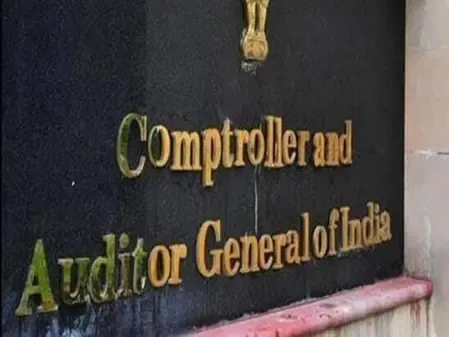
CAG flags Rajasthan fiscal deficit above limits for 12 years across governments

Synopsis
A new CAG audit reveals Rajasthan's fiscal deficit has breached prescribed limits for virtually every year between 2015-16 and 2024-25, cutting across three governments. With the state still projecting deficits above the 3 percent FRBM ceiling through 2028-29, the report makes clear this is a structural problem — not a political one.
Key Takeaways
The CAG report covers Rajasthan's fiscal performance from 2015-16 to 2024-25 , spanning the Vasundhara Raje , Ashok Gehlot , and Bhajan Lal Sharma governments.
Rajasthan's fiscal deficit peaked at 9.25 percent of GSDP in 2015-16 and remained above the 3 percent FRBM ceiling in every subsequent year.
The deficit stood at 4.25 percent in 2024-25 ; medium-term projections still exceed 3 percent through 2028-29 .
Revenue receipts consistently fell below budget estimates; the state relies heavily on Central transfers .
The CAG recommends quarterly revenue forecasting reviews, a dedicated OPS pension fund , debt restructuring, and outcome-based expenditure monitoring.
Borrowed funds have been used to finance routine revenue expenditure rather than capital asset creation , the report flags.
A fresh report by the Comptroller and Auditor General (CAG) has flagged persistent fiscal mismanagement in Rajasthan, revealing that the state's fiscal deficit breached prescribed limits for the overwhelming majority of the 12-year period between 2015-16 and 2024-25 — spanning the administrations of Vasundhara Raje, Ashok Gehlot, and the current Bhajan Lal Sharma government. The findings underscore a structural fiscal challenge that has outlasted multiple political regimes.
Deficit Trends Across a Decade
According to the CAG report, Rajasthan's fiscal deficit stood at a high of 9.25 percent of GSDP in 2015-16, before moderating to 6.09 percent in 2016-17 and 3.04 percent in 2017-18. It subsequently remained above the 3 percent benchmark in every subsequent year covered, spiking to 5.83 percent in 2020-21 — a year marked by pandemic-driven expenditure pressures — before gradually easing.
The deficit was recorded at 4.31 percent in 2023-24 and 4.25 percent in 2024-25. The state's revised estimate for 2025-26 projects the deficit at 3.89 percent, while the 2026-27 budget estimate puts it at 3.69 percent. Medium-term projections indicate a further gradual reduction to 3.49 percent in 2027-28 and 3.29 percent in 2028-29 — still above the FRBM-mandated ceiling.
Revenue Management and Central Dependence
The CAG report also highlights weaknesses in revenue management. Although revenue receipts increased over the period, they consistently fell short of budget estimates. Rajasthan has remained heavily dependent on transfers and support from the Centre, raising questions about the state's fiscal self-sufficiency.
Under the Fiscal Responsibility and Budget Management (FRBM) framework, the objective was to eliminate the revenue deficit and bring the fiscal deficit below 3 percent of GSDP. Rajasthan achieved a revenue surplus only in 2011-12 and 2012-13; thereafter, the state reverted to deficit, increasing its reliance on borrowing to finance routine expenditure — a pattern the CAG describes as structurally concerning.
Key CAG Recommendations
The CAG has outlined a series of corrective measures. It has called on the Finance Department to establish a quarterly revenue forecasting review mechanism to sharpen estimates of the state's own-tax revenue. The report also recommends department-wise scrutiny of revised budget estimates, with corrective action prioritised wherever gaps are identified.
Among other recommendations, the CAG has suggested creating a dedicated fund for pension payments under the Old Pension Scheme (OPS), developing a dashboard to track department-wise grants, and introducing outcome-based monitoring for major revenue expenditure heads. The report further urges the state to restructure its debt to reduce the interest burden and to ensure that cess collections are deposited into designated government accounts on time.
Borrowing Pattern Under Scrutiny
A particularly pointed observation in the report concerns the use of borrowed funds. The CAG has stressed that borrowings should primarily be deployed to create capital assets rather than finance routine revenue expenditure. Directing borrowed money toward productive infrastructure, the report argues, would ensure that debt contributes to long-term development rather than merely sustaining day-to-day government operations.
What the Findings Signal
Taken together, the CAG's data present a picture of a fiscal challenge that is systemic rather than partisan. The deficit has breached benchmarks both in budget estimates and in actual outcomes across governments of different political persuasions. With Rajasthan's medium-term projections still above the 3 percent FRBM ceiling through 2028-29, the path to fiscal consolidation remains long — and the CAG's recommendations, if implemented, will test the resolve of the current administration as much as its predecessors.
Point of View
The medium-term projections will likely miss their targets too.
NationPress
9 Oct 2026
Frequently Asked Questions
What did the CAG report find about Rajasthan's fiscal deficit?
The CAG found that Rajasthan's fiscal deficit remained above the prescribed FRBM limit of 3 percent of GSDP for most of the period between 2015-16 and 2024-25, spanning three different state governments. The deficit peaked at 9.25 percent in 2015-16 and was still at 4.25 percent in 2024-25.
Which governments does the CAG report cover in Rajasthan?
The report covers fiscal performance across the tenures of Vasundhara Raje, Ashok Gehlot, and the current Bhajan Lal Sharma government, spanning approximately 12 years. The CAG's findings indicate the fiscal challenge is systemic and not limited to any single administration.
What are the CAG's main recommendations for Rajasthan?
The CAG has recommended quarterly reviews of own-tax revenue forecasts, a dedicated fund for Old Pension Scheme payments, a dashboard to monitor department-wise grants, debt restructuring to reduce the interest burden, and using borrowed funds for capital asset creation rather than routine expenditure.
When did Rajasthan last achieve a revenue surplus?
Rajasthan last recorded a revenue surplus in 2011-12 and 2012-13. Since then, the state has remained in a revenue deficit position, increasingly relying on borrowings to finance day-to-day government expenditure.
What is Rajasthan's fiscal deficit projection for the coming years?
Rajasthan's revised estimate for 2025-26 places the fiscal deficit at 3.89 percent of GSDP, with the 2026-27 budget estimate at 3.69 percent. Medium-term projections put the figure at 3.49 percent in 2027-28 and 3.29 percent in 2028-29 — all above the 3 percent FRBM ceiling.