How did rural women in Chhattisgarh’s Sarkada attain financial independence?
Click to start listening
Synopsis
Discover the inspiring stories of rural women in Sarkada, Gariaband, who have achieved remarkable financial independence through the Lakhpati Didi Scheme. This initiative empowers them with skills and resources, enabling them to earn significant incomes and transform their lives.
Key Takeaways
- The Lakhpati Didi Scheme empowers rural women to achieve financial independence.
- Women in Self-Help Groups receive skill training and financial assistance.
- Success stories highlight the transformative impact on their lives.
- Government support programs enhance income opportunities.
- This initiative promotes self-reliance and community development.
Sarkada, Gariaband, Dec 31 (NationPress) The Lakhpati Didi Scheme, introduced by the Central Government, is proving to be a transformative initiative. This scheme is empowering rural women by granting them financial independence.
Through this initiative, women linked to Self-Help Groups (SHGs) receive skill enhancement training, technical support, and financial resources. Consequently, they are positioned to earn an annual income of Rs 1 lakh or more.
A prime example of the scheme's impact can be observed in Sarkada village, located in Chhura block of Chhattisgarh’s Gariaband district. Women from diverse Self-Help Groups have significantly improved their lives by engaging in small businesses and agriculture. Now referred to as Lakhpati Didis, these women are generating substantial yearly incomes. They are progressing towards self-reliance.
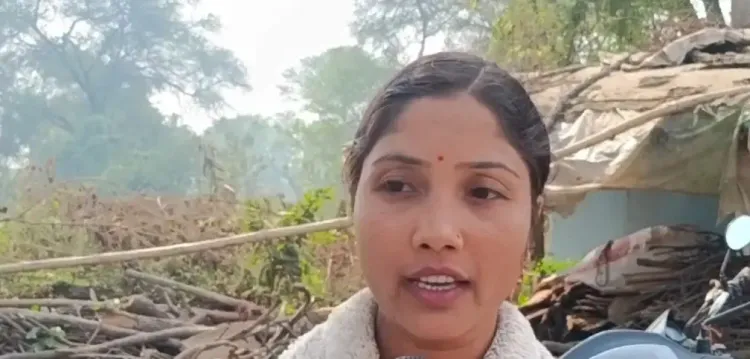
Narmada Nishad, a member of the Jai Maa Bhavani Self-Help Group, shared her story with IANS, detailing her path to financial autonomy.
Narmada began her journey by working on a sewing machine to earn a modest income.
She eventually transitioned to running a grocery shop, which improved her earnings. Gaining confidence, she invested her savings in brick-making, allowing her to significantly increase her income.
Through loans acquired from her Self-Help Group, Narmada expanded her business and now earns up to Rs 1.5 lakh annually. She has achieved self-reliance and is effectively supporting her family.
Another remarkable story is that of Leena Sahu from the Jai Maa Lakshmi Self-Help Group. By utilizing a loan from the group, she established a small fancy and grocery store at her home.
In addition to her store, she participates in agricultural activities and benefits from government programs such as Mahatari Vandan Yojana and Kisan Samman Nidhi. Through various income streams, Leena now earns nearly Rs 1.5 lakh per year and enjoys a secure and joyful life with her family as a Lakhpati Didi.
Phuleshwari Nishad of the Radha Rani Self-Help Group has also found success through farming. After obtaining a group loan, she began cultivating vegetables and paddy.
By growing green vegetables year-round and selling them at the local market, she has established a reliable income source, earning about Rs 1 lakh annually. Farming has become her main source of livelihood, enabling her to live a self-sufficient life.
Meet Jharna Sahu, the Cluster Coordinator.
In an interview with IANS, Sahu highlighted the increasing self-reliance among women involved in Self-Help Groups.
These women are embracing various livelihood options, including agriculture, small enterprises, and daily wage work, aided by loans. Coupled with government support programs like Mahatari Vandan Yojana, these income sources empower them to surpass the Rs 1 lakh annual income threshold, earning the title of Lakhpati Didis, she added.
Point of View
We recognize the significance of empowering rural women through initiatives like the Lakhpati Didi Scheme. These programs not only foster financial independence but also contribute to the overall development of communities. As these women step into their power, they pave the way for future generations, creating a ripple effect of change. We stand committed to highlighting such transformative stories that inspire and uplift.
NationPress
08/01/2026
Frequently Asked Questions
What is the Lakhpati Didi Scheme?
The Lakhpati Didi Scheme is a government initiative aimed at empowering rural women through skill development, financial support, and technical guidance, enabling them to achieve financial independence.
How can women benefit from Self-Help Groups?
Women can benefit from Self-Help Groups by accessing loans, receiving training, and gaining support to start small businesses or engage in agricultural activities, which help them earn a stable income.
What success stories have emerged from this scheme?
Many women, such as Narmada Nishad and Leena Sahu, have transformed their lives by starting businesses and engaging in farming, achieving annual incomes of over Rs 1 lakh.
What role do government programs play in this initiative?
Government programs like Mahatari Vandan Yojana and Kisan Samman Nidhi provide additional financial support to women in Self-Help Groups, enhancing their income potential.
Can this scheme be replicated in other regions?
Yes, the Lakhpati Didi Scheme serves as a model that can be adapted and replicated in other rural areas to promote women's empowerment and financial independence.