Hyundai Motor Group to invest $15.5 billion in India by 2032
Synopsis
Hyundai Motor Group has placed a $15.5 billion bet on India through 2032 — one of the largest single automotive investment pledges the country has received. Announced directly to PM Modi, the commitment spans manufacturing expansion, R&D, parts localisation and next-gen technology, and comes as Hyundai closes in on 10 million cumulative sales in India.
Key Takeaways
Hyundai Motor Group will invest $15.5 billion in India over seven years through 2032 .
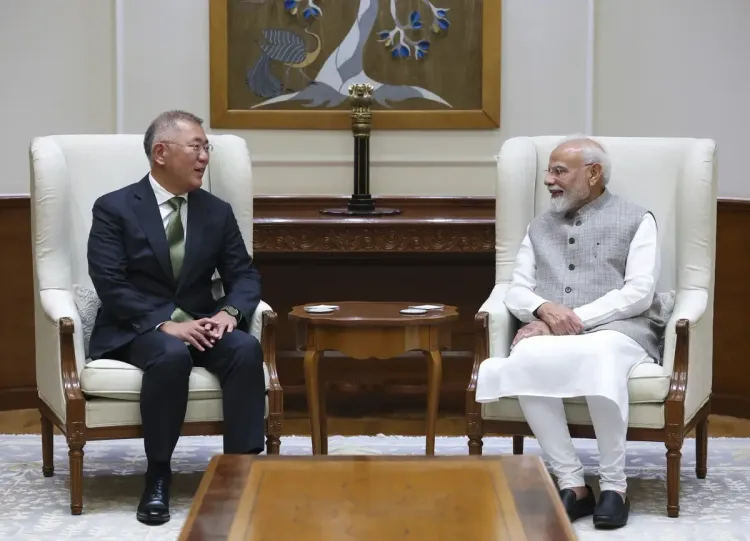
Executive Chair Euisun Chung announced the commitment during a meeting with PM Narendra Modi in New Delhi on 14 October 2026 .
Investment covers manufacturing capacity, R&D infrastructure, parts localisation, and future technologies.
Hyundai and Kia hold a combined 18.7 per cent share of India's passenger vehicle market, ranking second behind Maruti Suzuki.
Hyundai's cumulative India sales are on track to surpass 10 million vehicles by year-end, nearly 28 years after the 1998 Santro launch .
A dedicated investment entity in India will be set up to implement the plan.
Hyundai Motor Group has committed to investing $15.5 billion in India over the seven-year period through 2032, the South Korean automotive giant announced on Wednesday, 14 October 2026. The pledge underscores India's growing centrality to Hyundai's global expansion strategy as the country cements its position as the world's third-largest automobile market.
The Announcement and What It Covers
Group Executive Chair Euisun Chung unveiled the investment commitment during a meeting with Prime Minister Narendra Modi in New Delhi on Tuesday. 'India is a key strategic market for Hyundai Motor Group's future growth, expansion into emerging markets and next-generation automotive innovation. The investment will be made over seven years starting this year,' Chung said.
The funds are earmarked across four broad pillars: expanding manufacturing capacity, developing research and development (R&D) infrastructure, fostering local suppliers to increase parts localisation, and advancing future technologies. To coordinate the rollout, the group plans to establish a dedicated investment entity in India.
India's Strategic Weight in Global Auto Markets
With a population of 1.47 billion, India ranks as the world's third-largest automobile market, behind only China and the United States. The country's import tariff regime — where duties can reach 70 to 110 per cent — makes local production essential for any automaker seeking to compete on price, giving greenfield and capacity investments an outsized strategic value.
Hyundai Motor Co. currently operates two plants in Chennai and one in Pune, while its smaller affiliate Kia Corp. runs a plant in Anantapur. Together, the facilities carry a combined annual production capacity of 1.4 million vehicles, a figure expected to grow as the new investment is deployed.
Sales Milestones and Market Position
Hyundai and Kia sold a combined 852,164 vehicles in India last year, capturing a 18.7 per cent share of the passenger vehicle market and ranking second behind Maruti Suzuki India Ltd. The group's performance has been disproportionately driven by SUVs: Hyundai alone sold 398,937 SUVs last year, accounting for roughly 70 per cent of its total India sales.
Hyundai's cumulative vehicle sales in India are on course to cross the 10 million mark before the end of this year, according to data from the Society of Indian Automobile Manufacturers (SIAM). The company had sold 9.88 million vehicles in India through the third quarter of 2026, nearly three decades after it launched local production with the Santro minicar at its Chennai plant in 1998.
What Comes Next
The establishment of a dedicated India investment entity signals that Hyundai intends to treat this as a structured, multi-year programme rather than a series of ad hoc capital calls. Industry observers will watch for details on R&D centre locations, EV localisation timelines, and which tier-2 supplier clusters will benefit from the parts localisation push. This investment also arrives as global automakers accelerate their India pivot, intensifying competition in a market where Maruti Suzuki's dominance has long gone largely unchallenged.
Point of View
R&D, supplier development and next-gen tech together suggest Hyundai wants India to be a production and innovation hub, not merely a sales market. The timing, however, raises a question mainstream coverage glosses over: Hyundai and Kia are already number two in India, yet Maruti Suzuki's grip on the mass segment remains formidable. Whether this capital translates into genuine share gains or largely defends existing positions will be the real measure of the bet. India's high import tariffs make local investment a structural necessity, which means some portion of this figure reflects compliance economics as much as bullish conviction.
NationPress
14 Oct 2026
Frequently Asked Questions
How much is Hyundai Motor Group investing in India and over what period?
Hyundai Motor Group has committed to investing $15.5 billion in India over seven years, starting 2026 and running through 2032. The investment covers manufacturing expansion, R&D, parts localisation, and advanced technology development.
Where was the Hyundai investment announcement made?
Executive Chair Euisun Chung announced the investment during a meeting with Prime Minister Narendra Modi in New Delhi on 14 October 2026. The group confirmed the details the same day.
What is Hyundai's current market position in India?
Hyundai and its affiliate Kia sold a combined 852,164 vehicles in India last year, holding an 18.7 per cent share of the passenger vehicle market. They rank second behind Maruti Suzuki India Ltd.
What is the significance of the 10 million cumulative sales milestone?
Hyundai's cumulative vehicle sales in India are expected to cross 10 million by end-2026, nearly 28 years after the company began local production with the Santro at its Chennai plant in 1998. The company had sold 9.88 million vehicles through the third quarter of 2026, according to SIAM data.
Why do global automakers need to manufacture locally in India?
India's import tariffs on automobiles can reach between 70 and 110 per cent, making locally manufactured vehicles far more price-competitive than imports. This tariff structure effectively mandates local production for any automaker seeking a viable market position in India.