Shiv Sena (UBT) accuses Centre of institutionalising authoritarianism over Jantar Mantar ban
Synopsis
Uddhav Thackeray's Shiv Sena has turned the Delhi Police's Jantar Mantar ban into a full-throated assault on the Centre's democratic credentials — calling replacement venues a 'Jizya tax' on dissent, invoking the freedom struggle, and warning that governments that fear their own citizens have already begun their countdown.
Key Takeaways
Shiv Sena (UBT) accused the Centre of institutionalising authoritarianism in a Samaana editorial on 14 October 2026 .
Delhi Police stripped Jantar Mantar of its designated protest-venue status, redirecting demos to locations up to 20–21 km away.
Replacement venues like Ramlila Maidan cost upwards of ₹1.5 lakh per day and require months of advance booking.
The editorial labelled the financial burden a 'Jizya tax' on citizens exercising their constitutional right to peaceful assembly.
Congress leader Rahul Gandhi reportedly condemned the crackdown; legal challenges have reached the Delhi High Court .
Shiv Sena (Uddhav Balasaheb Thackeray) on Wednesday, 14 October 2026, launched a sharp attack against the Centre, accusing it of institutionalising authoritarianism and systematically suppressing public dissent. The criticism, published as an editorial in the party's mouthpiece 'Samaana', was triggered by the Delhi Police's decision to strip Jantar Mantar of its decades-long status as a designated protest venue in the capital.
What Changed at Jantar Mantar
Under the new police orders, demonstrations have been redirected to locations significantly farther from the seat of power — Ramlila Maidan (4 km away), CBD Ground in Shahdara (12 km away), and Burari Ground (20–21 km away). The Thackeray faction argued this is a calculated move to ensure that public agitation generates no political reverberations in Parliament or the broader national consciousness.
The Financial Barrier Argument
The Samaana editorial highlighted the commercialisation of democratic rights, pointing out that venues like Ramlila Maidan cost upwards of ₹1.5 lakh per day, require months of advance booking, and are frequently occupied by religious events or ruling-party programmes. Contrasting this with the accessible, fee-free character of Jantar Mantar, the editorial described the new financial burden as an exorbitant 'Jizya tax' levied on citizens who dare to voice opposition.
Historical and Constitutional Context
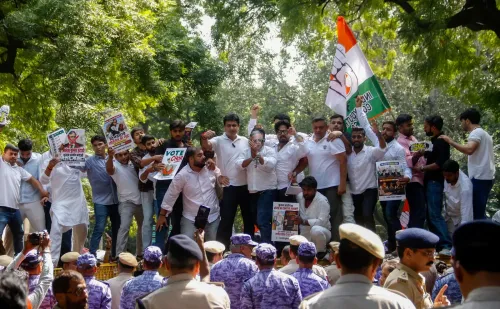
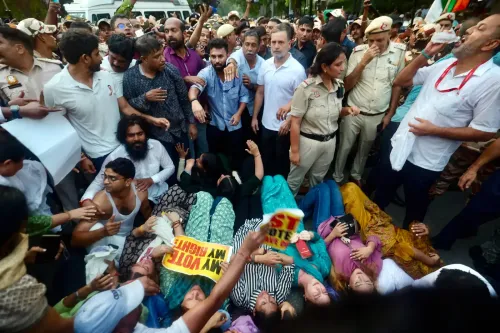
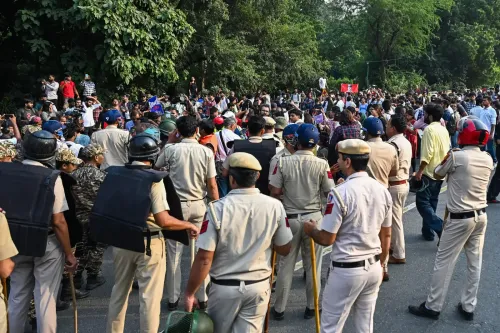
Drawing parallels to India's freedom struggle — where historic movements thrived around Chandni Chowk, Daryaganj, and near Parliament — the editorial stressed that peaceful assembly is a constitutionally protected right. Relocating protests beyond city limits, it argued, signals deep-seated administrative fear rather than genuine security concerns. The editorial also referenced heightened political friction surrounding demonstrations by groups demanding accountability over electoral integrity, which had triggered heavy security deployments and mass preventive detentions in New Delhi.
Opposition Response and Legal Challenges
The Thackeray faction noted that opposition leaders, including Congress leader Rahul Gandhi, have strongly condemned the crackdown. Legal challenges against the de-notification of Jantar Mantar have, according to the editorial, rapidly reached the Delhi High Court.
Samaana's Warning to the Centre
The editorial carried a stern warning: 'Jantar Mantar has become a living memorial of agitations. The BJP rule converted a symbol of democracy into a memorial. This memorial of Jantar Mantar will become the tomb of dictatorial tendencies. Naturally, Jantar Mantar will not stay quiet; the present rulers themselves will have to run away.'
The Uddhav Thackeray-led party further claimed that when a government begins to 'fear its own public, the countdown to its end has officially begun.' The Centre has not yet issued a formal response to the editorial's allegations.
Point of View
Priced at ₹1.5 lakh a day, achieves through logistics what a ban cannot achieve through law. The Thackeray camp's 'Jizya tax' framing is politically charged, but the underlying structural critique is harder to dismiss: when the cost of assembly exceeds most civil society budgets, the constitutional right becomes nominal. That legal challenges have already reached the Delhi High Court suggests this will not end as a purely political argument.
NationPress
14 Oct 2026
Frequently Asked Questions
Why has Shiv Sena (UBT) attacked the Centre over Jantar Mantar?
Shiv Sena (UBT) accused the Centre of institutionalising authoritarianism after Delhi Police stripped Jantar Mantar of its status as a designated protest venue. In a Samaana editorial on 14 October 2026, the party argued the move deliberately distances public agitation from the seat of power.
Where have protests been redirected after the Jantar Mantar ban?
Protests have been moved to Ramlila Maidan (4 km from Parliament), CBD Ground in Shahdara (12 km away), and Burari Ground (20–21 km away). The Thackeray faction argues these remote locations were chosen to minimise political visibility.
What is the 'Jizya tax' reference in the Samaana editorial?
The Samaana editorial used the term 'Jizya tax' to describe the steep financial cost imposed on protesters forced to book alternative venues. Ramlila Maidan reportedly costs upwards of ₹1.5 lakh per day and requires months of advance booking, compared to the free and accessible Jantar Mantar.
Has any legal challenge been filed against the Jantar Mantar de-notification?
Yes, according to the Samaana editorial, legal challenges against the de-notification of Jantar Mantar as a protest venue have been filed and have rapidly reached the Delhi High Court. The Centre has not publicly responded to the legal action.
What has the opposition said about the Jantar Mantar ban?
The Thackeray faction cited Congress leader Rahul Gandhi as among the opposition figures who have strongly condemned the crackdown at Jantar Mantar. The broader opposition has framed the move as an assault on constitutional freedoms of assembly and expression.