Jantar Mantar de-notified as protest site; Delhi Police tells HC three new venues named
Synopsis
Jantar Mantar is no longer Delhi's designated protest ground. Following a Supreme Court directive on 9 October, the Delhi Police has de-notified the iconic site and named Ramlila Ground, Burari Ground, and CBD Ground as replacements — a shift with significant implications for how opposition protests in the capital will be managed going forward.
Key Takeaways
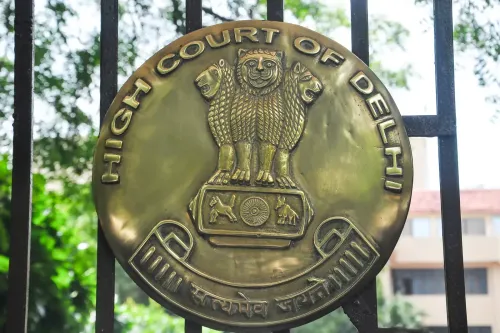
Delhi Police informed the Delhi High Court on 13 October 2026 that Jantar Mantar has been de-notified as a designated protest site.
Three replacement venues named: Ramlila Ground , Burari Ground , and CBD Ground in east Delhi.
The move follows a Supreme Court order dated 9 October by a Bench led by CJI Surya Kant , directing authorities to identify sites with basic amenities for peaceful protests.
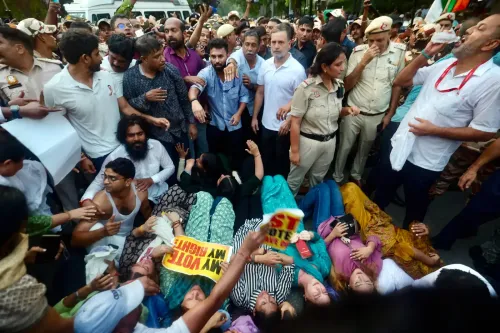
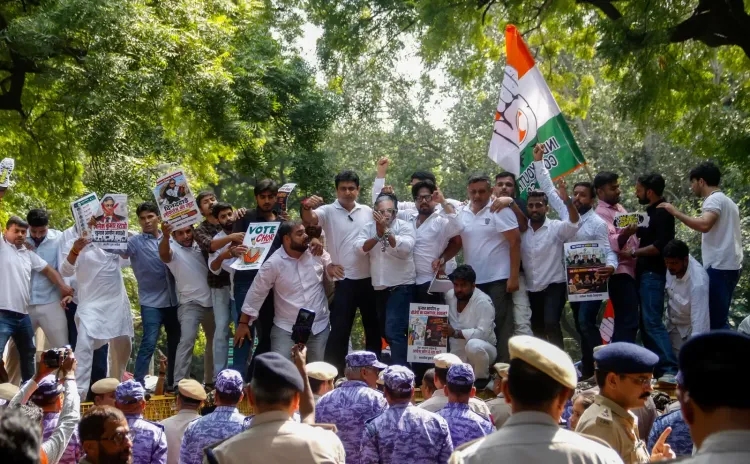
IYC President Uday Bhanu Chib had challenged the Delhi Police's refusal to grant permission for a protest against CEC Gyanesh Kumar at Jantar Mantar.
Justice Amit Mahajan issued notice on three prayers in the IYC petition, keeping the legal challenge partially alive.
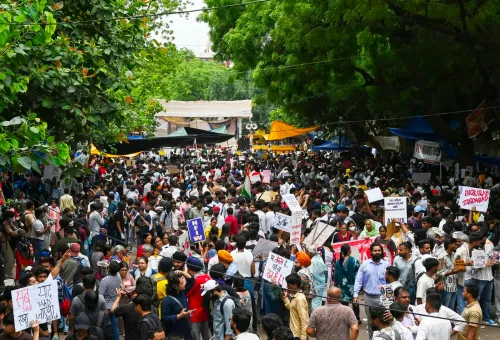
The original IYC protest — involving 100–150 people — was part of the opposition INDIA Bloc 's campaign against the Special Intensive Revision (SIR) of electoral rolls.
The Delhi Police on Tuesday, 13 October 2026, informed the Delhi High Court that Jantar Mantar has been de-notified as a designated protest site and that three alternative locations have been identified for public demonstrations — all in compliance with a recent Supreme Court directive on facilitating peaceful protests in the national capital.
What the Delhi Police Submitted
Additional Solicitor General (ASG) Chetan Sharma, representing the Delhi Police before a single-judge Bench of Justice Amit Mahajan, stated that the decision to identify alternative venues was taken strictly in line with the apex court's order passed last week. "The Supreme Court said appropriate sites need to be identified and designated and we have precisely done that," the Centre's law officer submitted.
The three newly designated protest sites are the Ramlila Ground, the Burari Ground, and the CBD Ground in east Delhi. ASG Sharma further argued that since Jantar Mantar had been de-notified, the petition under consideration had become infructuous.
The IYC Petition and Its Background
The submissions were made during the hearing of a plea filed by Indian Youth Congress (IYC) President Uday Bhanu Chib, challenging the Delhi Police's refusal to grant permission for a demonstration against Chief Election Commissioner (CEC) Gyanesh Kumar at Jantar Mantar. According to the plea, the IYC had applied on 25 September to hold a peaceful protest involving approximately 100–150 people, but the rejection was communicated on 1 October — the very date initially proposed for the demonstration.
The proposed protest was part of the broader opposition INDIA Bloc's campaign against the CEC over the controversy surrounding the Special Intensive Revision (SIR) of electoral rolls.
High Court Issues Notice on Three Prayers
Senior advocate Siddharth Luthra, appearing for Chib, contended that despite the de-notification of Jantar Mantar, other prayers raised in the petition remained maintainable and sought issuance of notice. The Delhi Police counsel opposed the request. After hearing both sides, Justice Mahajan issued notice on three of the prayers in the petition, keeping those questions alive for further adjudication.
The Supreme Court Order That Triggered the Move
The developments follow an order dated 9 October passed by a Bench of Chief Justice of India (CJI) Surya Kant along with Justices Joymalya Bagchi and V. Mohana. The Bench observed it was "high time" that basic amenities were provided to those participating in peaceful demonstrations, and directed competent authorities to identify and designate suitable alternative locations capable of accommodating necessary infrastructure.
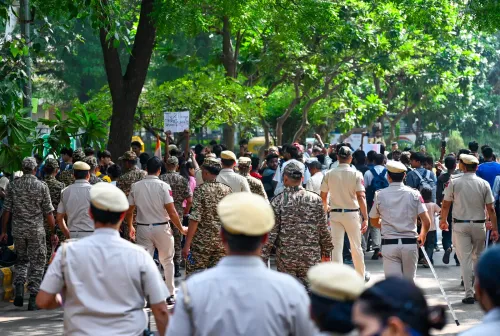
Notably, those observations arose while the Supreme Court was examining restrictions imposed on Metro and railway services in Delhi ahead of a proposed protest at Jantar Mantar — adding a civil-liberties dimension to what began as an administrative dispute. This is among the more significant judicial interventions on protest rights in the capital in recent years.
What Happens Next
With the Delhi High Court having issued notice on three outstanding prayers, the matter is expected to return for further hearings. The broader question — whether the police's refusal to grant permission for the original IYC demonstration was legally valid — remains to be examined. The adequacy and accessibility of the three newly designated sites will also likely face scrutiny, particularly from civil-society and opposition quarters.
Point of View
But the court has not yet addressed the prior question: why the original IYC permission was rejected in the first place. Until that accountability gap is filled, the new venue framework risks becoming a mechanism for managing protests rather than enabling them.
NationPress
13 Oct 2026
Frequently Asked Questions
Why has Jantar Mantar been de-notified as a protest site in Delhi?
Jantar Mantar has been de-notified as a designated protest site following a Supreme Court directive dated 9 October, which asked authorities to identify alternative locations equipped with basic amenities. The Delhi Police complied and named three new venues: Ramlila Ground, Burari Ground, and CBD Ground in east Delhi.
What are the new designated protest sites in Delhi?
The three newly designated protest venues in Delhi are the Ramlila Ground, the Burari Ground, and the CBD Ground located in east Delhi. These were identified by the Delhi Police in compliance with the Supreme Court's order.
What was the IYC petition about?
Indian Youth Congress President Uday Bhanu Chib filed a petition challenging the Delhi Police's refusal to grant permission for a protest against Chief Election Commissioner Gyanesh Kumar at Jantar Mantar. The IYC had applied on 25 September for a demonstration involving 100–150 people, but the rejection came on 1 October — the date of the proposed protest.
What did the Supreme Court say about protests in Delhi?
On 9 October, a Supreme Court Bench led by CJI Surya Kant observed it was 'high time' that basic amenities were provided to participants in peaceful protests. The court directed competent authorities to identify and designate suitable alternative locations capable of accommodating the necessary infrastructure.
Has the Delhi High Court dismissed the IYC petition?
No. While the Delhi Police argued the petition had become infructuous after Jantar Mantar's de-notification, Justice Amit Mahajan issued notice on three of the prayers raised in the petition, keeping those legal questions open for further hearings.