Jantar Mantar de-notified: Congress vows defiance, calls move anti-democratic
Synopsis
Jantar Mantar — the nerve centre of India's organised civil dissent for decades — has been stripped of its designated protest status by the Centre, replaced by three peripheral venues. Congress leaders are heading to the Supreme Court, while others say they will protest anywhere from Barakhamba Road to the Himalayas. The battle now shifts from the street to the courtroom.
Key Takeaways
Jantar Mantar has been formally de-notified as New Delhi's designated protest site, effective 12 October 2026 .
Three new venues — Ramlila Ground , Burari Ground , and CBD Ground (East Delhi) — have been designated as replacements.
The decision was taken on the recommendation of a Home Ministry committee, notified by Delhi Police .
Congress MP Manish Tewari said the collective Opposition would march to Barakhamba Road to submit a representation to the Supreme Court .
Multiple Congress leaders cited an ongoing demand for Gyanesh Kumar's resignation as the backdrop to the protest wave.
Haryana LoP Bhupinder Singh Hooda said the de-notification showed the government was 'scared' and wanted to suppress dissent.
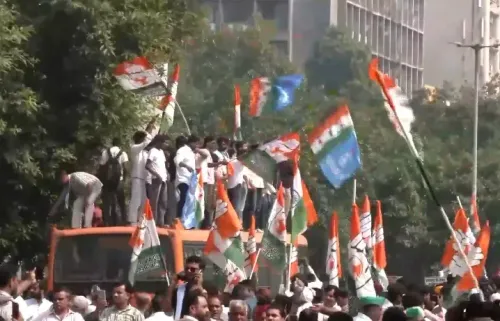
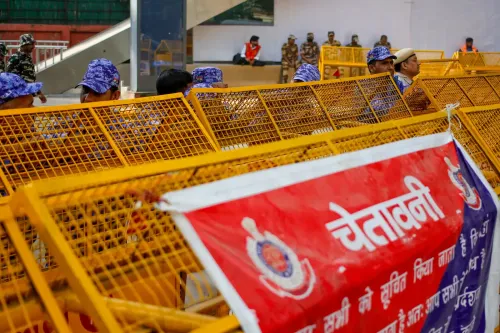
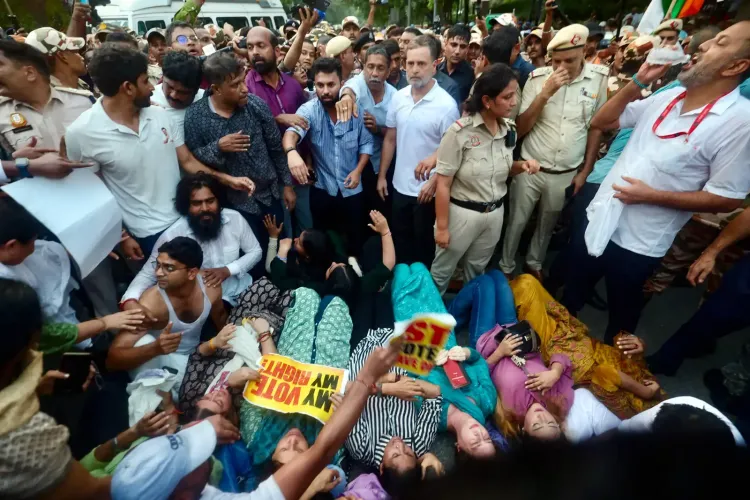
The Congress and other Opposition leaders on Monday, 12 October 2026, mounted a sharp pushback after Jantar Mantar was de-notified as New Delhi's designated protest site, declaring that while the government could change venues, it could not suppress the people's anger. The decision, taken on the recommendation of a Home Ministry committee, replaces Jantar Mantar with three new sites — Ramlila Ground, Burari Ground, and CBD Ground in East Delhi.
Opposition's immediate response
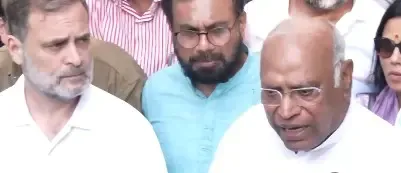
Congress MP Manish Tewari told reporters that the collective Opposition would march to Barakhamba Road to submit a representation to the Supreme Court. 'The norm is that protests and demonstrations take place at Boat Club. People come there. You may change the designated venues for demonstrations, but you cannot reduce people's anger,' he said.
All India Mahila Congress President Alka Lamba questioned the authority behind the move. 'How can they end it, and who has decided this? In a democracy, who decides when something will begin or end, where people can go and where they cannot? Democracy will decide this,' she said. Lamba added that the entire country remained firm on the demand for Gyanesh Kumar's resignation and that 'the entire land of India is free for people to raise their voices against injustice.'
Sharp remarks from Congress leaders
Congress leader Sandeep Dikshit adopted a sardonic tone, urging the government to find a protest venue 'outside the country' if it considered citizens unworthy of public space. Haryana Leader of Opposition Bhupinder Singh Hooda was more direct, saying the de-notification revealed that 'the government is scared' and wants to 'suppress the voice of the people.'
Congress MP Imran Masood said protesters would demonstrate 'on the top of the Himalayas' if needed, while Congress MP Charanjit Singh Channi warned that the government would 'gradually say you cannot come to Delhi, as if Delhi is their father's property.' Congress leader Digvijaya Singh offered a brief but unequivocal 'whatever the party says will happen.'
What the notification says
According to a Delhi Police circular, Jantar Mantar has been formally de-notified as a designated protest zone. The Home Ministry committee's recommendations guided the decision. Three alternate venues — Ramlila Ground, Burari Ground, and CBD Ground, East Delhi — have been officially designated in its place. No timeline has been specified for when these sites will become operational as protest venues.
Why Jantar Mantar mattered
Jantar Mantar, located in central New Delhi, has historically served as the primary outlet for organised civil dissent, hosting protests ranging from farmer agitations to anti-corruption movements. Its central location — within walking distance of Parliament and major government offices — gave demonstrations high visibility. Moving protests to the periphery, critics argue, dilutes their political impact and reduces public pressure on decision-makers. This is not the first time its status has been contested; the Supreme Court had earlier restricted overnight protests and loudspeaker use at the site citing residential disturbance.
What comes next
The Opposition's stated plan to approach the Supreme Court indicates that the legal challenge is imminent. Whether the court will examine the constitutional dimensions of the right to assemble — guaranteed under Article 19(1)(b) — remains to be seen. The episode is likely to escalate as the demand for Gyanesh Kumar's resignation, which multiple Congress leaders cited, remains unresolved.
Point of View
Critics would argue, that is the point. The Opposition's plan to challenge this in the Supreme Court is the right constitutional arena, but courts have historically balanced the right to assembly against public order concerns — meaning the outcome is far from certain. What is certain is that this controversy will become a rallying narrative for the Opposition heading into the next political cycle.
NationPress
12 Oct 2026
Frequently Asked Questions
Why was Jantar Mantar de-notified as a protest site?
Jantar Mantar was de-notified as Delhi's designated protest venue based on the recommendations of a Home Ministry committee, with Delhi Police issuing the formal notification. The government has not publicly detailed the specific reasons, though the move has been widely attributed to concerns over disruption in a central residential and commercial area.
Where can protesters now demonstrate in Delhi?
Three alternate venues — Ramlila Ground, Burari Ground, and CBD Ground in East Delhi — have been officially designated as replacement protest sites. All three are located further from the central government district compared to Jantar Mantar.
What is the Congress planning to do in response?
Congress MP Manish Tewari announced that the collective Opposition would march to Barakhamba Road to submit a representation to the Supreme Court, signalling an imminent legal challenge to the de-notification. Other leaders have pledged to continue protesting regardless of venue restrictions.
Who is Gyanesh Kumar and why is his resignation being demanded?
Gyanesh Kumar is an official whose resignation multiple Congress leaders cited as a key demand during their protests on Monday, 12 October 2026. The party linked the de-notification of Jantar Mantar to a broader attempt to suppress ongoing agitation around this demand, though no further detail was provided in the official statements.
Does the Constitution protect the right to protest in India?
Yes. Article 19(1)(b) of the Indian Constitution guarantees citizens the right to assemble peaceably and without arms. However, the right is subject to reasonable restrictions on grounds of public order and the sovereignty of India, meaning courts balance both interests when adjudicating on designated protest zones.