Mahua Moitra at Jantar Mantar, Targets Modi and Shah
Synopsis
TMC MP Mahua Moitra joined a protest at Jantar Mantar in New Delhi on 21 July 2026, publicly challenging Prime Minister Modi and Home Minister Shah, saying the two leaders are 'out of syllabus' when confronted by those who are not scared of them.
Key Takeaways
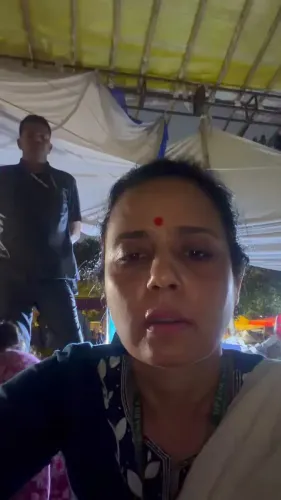
Mahua Moitra , TMC Lok Sabha MP from Krishnanagar , was present at Jantar Mantar , New Delhi, on 21 July 2026 .
She stated that Prime Minister Modi and Home Minister Shah do not know how to handle people who are unafraid of them.
She described the situation as 'out of syllabus' for the current government, framing opposition fearlessness as a challenge the BJP is unprepared for.
Jantar Mantar is the capital's principal designated protest site and has hosted major opposition demonstrations including the 2020–2021 farm-laws agitation .
The TMC has consistently used both parliamentary and street-level platforms to challenge what it calls central overreach by the BJP -led government.
Follow-up parliamentary interventions during the monsoon session are expected to watch for.
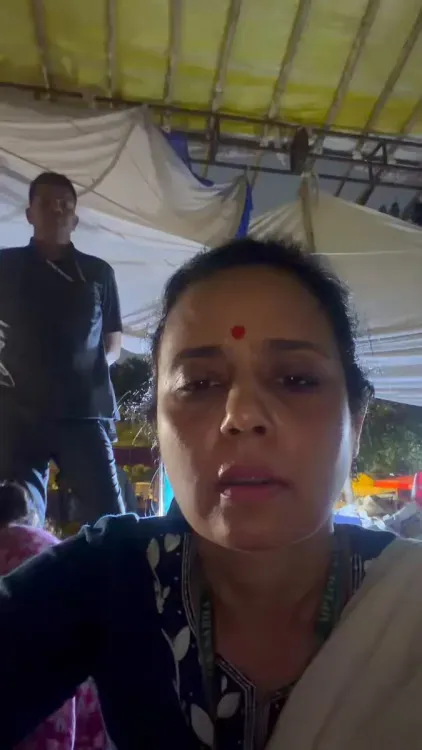
TMC MP Mahua Moitra on Tuesday, 21 July 2026, joined a demonstration at Jantar Mantar in New Delhi, using the occasion to sharply criticise Prime Minister Narendra Modi and Union Home Minister Amit Shah, saying the two leaders do not know how to deal with people who are unafraid of them.
Context
Posting from the protest site, Moitra wrote: 'Modi Shah don't know how to handle people who are not scared of them — out of syllabus for this government. Am at Jantar Mantar.' The statement positions the protest as an assertion of fearlessness against what the Trinamool Congress has long described as a culture of intimidation by the BJP-led central government.
Jantar Mantar, the eighteenth-century observatory on Parliament Street in central Delhi, has served as the capital's most prominent designated protest site for decades. Opposition parties, trade unions, farmers, and civil-society groups have all used the venue to stage demonstrations within earshot of Parliament.
Policy Backdrop
Indian opposition parties have repeatedly converged on Jantar Mantar to register dissent against the ruling dispensation. The site gained particular visibility during the 2020–2021 farm-laws agitation, when opposition MPs joined farmers at the venue in solidarity protests that supplemented the larger movement at Delhi's borders.
The TMC has consistently positioned itself as one of the most vocal critics of what it calls central overreach, especially on matters touching federal autonomy and the democratic rights of elected representatives. Moitra herself has been a prominent parliamentary voice for the party, known for detailed floor speeches on constitutional and governance questions.
Stakeholders and Impact
Moitra's presence at the demonstration signals continued street-level mobilisation by opposition MPs alongside their parliamentary work. Such dual-track activism — combining floor speeches with public protests — has become a defining feature of how regional opposition parties communicate dissent to a wider audience beyond the legislature.
The framing of the protest — that Modi and Shah are 'out of syllabus' when confronted by those who are not intimidated — is a rhetorical device aimed at energising opposition supporters and drawing attention to the demonstration. It also reflects the TMC's broader narrative that the government relies on fear rather than persuasion to manage political opponents.
What's Next
Attention will now turn to whether Tuesday's demonstration produces follow-up action inside Parliament, particularly given the ongoing monsoon session. Opposition coordination on the floor of the Lok Sabha and the Rajya Sabha often intensifies after public protests that generate media attention and signal unity among disparate parties.
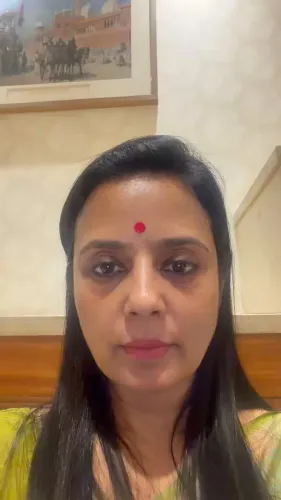
The West Bengal government and the broader TMC leadership may also respond at the state level, reinforcing the party's national narrative ahead of any forthcoming electoral cycles. Moitra's post, carrying a video, is likely to circulate widely and keep the protest's message in public discourse beyond the day of the demonstration.
Point of View
Designed to cast the government as institutionally incapable of responding to principled opposition rather than merely politically opposed to it. This kind of public demonstration by a sitting MP carries symbolic weight beyond its immediate audience, signalling to allied opposition parties that the TMC remains willing to take its fight outside Parliament. The broader arc here is one of sustained pressure politics ahead of what could be a consequential legislative and electoral calendar.
NationPress
20 Oct 2026
Frequently Asked Questions
Why did Mahua Moitra go to Jantar Mantar on 21 July 2026?
Mahua Moitra joined a protest at Jantar Mantar in New Delhi on 21 July 2026, publicly criticising Prime Minister Modi and Home Minister Shah. She stated that the two leaders do not know how to handle people who are not scared of them.
What did Mahua Moitra say about Modi and Shah?
Moitra said that Modi and Shah 'don't know how to handle people who are not scared of them' and described this as 'out of syllabus for this government,' suggesting the ruling dispensation relies on fear to manage opponents.
What is Jantar Mantar and why is it used for protests?
Jantar Mantar is an eighteenth-century observatory on Parliament Street in central New Delhi that has been designated as a protest site. Its proximity to Parliament makes it a symbolic and practical venue for opposition demonstrations, used by farmers, unions, and political parties alike.
Is Mahua Moitra a current MP?
Yes, Mahua Moitra is a sitting Lok Sabha MP representing the Krishnanagar constituency in West Bengal under the All India Trinamool Congress banner. She is known for her vocal criticism of the BJP-led central government.
What is the TMC's position on the Modi government?
The Trinamool Congress has consistently positioned itself as one of the most vocal critics of the BJP-led central government, particularly on issues of federal autonomy, democratic space, and what the party describes as institutional overreach from New Delhi.