IAEA flags safety improvements at South Korea's Shin-Kori No. 2 reactor in Busan
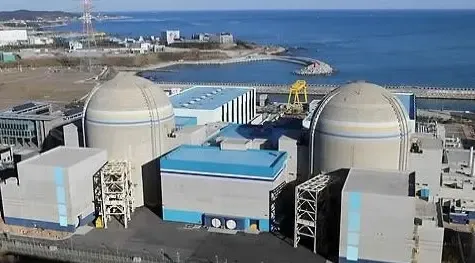
Synopsis
The IAEA has flagged operational safety gaps at South Korea's Shin-Kori No. 2 reactor in Busan — covering industrial safety, contamination control, and information transfer — while also praising the plant's virtual training tools and disaster monitoring systems. With a final report due within three months, the findings put a spotlight on the evolving rigour of international nuclear oversight as South Korea deepens its commitment to nuclear energy.
Key Takeaways
The IAEA recommended safety improvements at Shin-Kori No.
2 in Busan, South Korea following an OSART mission conducted from 26 October to 13 November 2026 .
Key recommendations cover industrial safety arrangements , operational procedures , and radioactive contamination control .
The agency stressed the importance of accurate transfer and use of operational information for effective reactor management.
Good practices identified include a virtual training system , an improved radioactive waste processing method , and a real-time integrated disaster monitoring system .
2 is a 1,000-megawatt pressurised water reactor operating since 2012 , run by Korea Hydro & Nuclear Power .
The IAEA's final report is expected to be submitted to South Korea within three months .
The International Atomic Energy Agency (IAEA) has recommended a series of operational safety improvements at the Shin-Kori No. 2 nuclear reactor in Busan, South Korea, following a formal review mission conducted between 26 October and 13 November 2026. The recommendations cover industrial safety arrangements, operational procedures, and radioactive contamination control at the facility located approximately 330 kilometres southeast of Seoul.
What the IAEA Review Found
The findings emerged from an IAEA Operational Safety Review Team (OSART) mission carried out at the request of the South Korean government. The review team identified three primary areas requiring attention: strengthening industrial safety arrangements, improving the conduct and control of operational activities, and reinforcing practices to minimise the risk of radioactive contamination spreading across the facility.
Notably, the agency placed particular emphasis on ensuring the accurate transfer and use of operational information — a foundational requirement for maintaining safe and effective reactor operations. The IAEA stressed that lapses in information handling can compound risks in high-stakes nuclear environments.
Positive Findings and Good Practices
Despite the corrective recommendations, the IAEA acknowledged that plant personnel demonstrated professionalism and a strong commitment to continuous safety improvement. The review team also identified several commendable practices already in use at the facility.
These included a virtual training system enabling field and control room operators to practise procedures together, an improved radioactive waste processing method, and an integrated disaster monitoring system that provides real-time warnings about external hazards — a capability that has gained heightened relevance globally since the Fukushima disaster.
What the IAEA and Plant Officials Said
Juraj Rovny, OSART leader and head of the IAEA's operational safety section, underscored the significance of the review's scope. 'Returning to the Kori site more than four decades later demonstrates the Republic of Korea's long-standing engagement with international peer review and its commitment to the continuous improvement of operational safety,' Rovny said.
Song Chang-Soo, Director General of Kori Nuclear Power Plant, said the mission's findings would help the plant further strengthen its safety culture. 'We remain firmly committed to making nuclear safety our highest priority,' he said.
About the Reactor
Shin-Kori No. 2 is a 1,000-megawatt pressurised water reactor that began commercial operations in 2012 and is operated by Korea Hydro & Nuclear Power. The plant's management has received a draft report and will have the opportunity to provide factual comments before the IAEA submits its final report to South Korea within three months.
Broader Context
South Korea operates one of the world's most nuclear-intensive power grids, with nuclear energy accounting for roughly a third of national electricity generation. This OSART mission reflects a broader global trend of heightened scrutiny on nuclear safety standards, particularly as ageing reactors face life-extension decisions and as countries revisit nuclear power as a low-carbon energy source. This is not the first IAEA review at the Kori site — the agency's return after more than four decades signals both the longevity of South Korea's nuclear programme and the evolving rigour of international oversight frameworks.
Point of View
While not emergency findings, touch on foundational operational disciplines: information accuracy and contamination control are baseline competencies, not edge-case concerns. With South Korea doubling down on nuclear as a cornerstone of its energy transition, any perception of safety complacency at an established plant carries outsized political and diplomatic risk. The three-month window for the final report will be a key test of whether the recommendations translate into binding corrective actions or remain advisory in practice.
NationPress
14 Nov 2026
Frequently Asked Questions
What did the IAEA recommend for South Korea's Shin-Kori No. 2 reactor?
The IAEA recommended that Shin-Kori No. 2 strengthen its industrial safety arrangements, improve the conduct and control of operational activities, and reinforce practices to minimise radioactive contamination risks. The agency also stressed the accurate transfer and use of operational information as a priority area.
When was the IAEA safety review of Shin-Kori No. 2 conducted?
The IAEA Operational Safety Review Team (OSART) mission was conducted from 26 October to 13 November 2026, at the request of the South Korean government. The review covered the Shin-Kori No. 2 reactor located in Busan, approximately 330 kilometres southeast of Seoul.
What is Shin-Kori No. 2 and who operates it?
Shin-Kori No. 2 is a 1,000-megawatt pressurised water reactor in Busan, South Korea, that began commercial operations in 2012. It is operated by Korea Hydro & Nuclear Power.
Did the IAEA find anything positive about the Shin-Kori plant?
Yes, the IAEA acknowledged the plant's strong safety culture and identified several good practices, including a virtual training system for operators, an improved radioactive waste processing method, and an integrated real-time disaster monitoring system for external hazards.
When will the IAEA's final report on the review be released?
The plant's management has received a draft report and may submit factual comments before the IAEA finalises and submits the report to South Korea within three months of the mission's conclusion.