India domestic air traffic hits 864 lakh in H1 2026, up 1.44% year-on-year
Synopsis
India's domestic skies carried 864 lakh passengers in the first half of 2026 — steady but slowing. IndiGo and Air India together hold over 90% of the market, while Akasa Air's 92.2% load factor in June quietly signals it may be punching above its weight. The real question for H2: can the sector reignite growth momentum after a mid-year dip?
Key Takeaways
Indian domestic airlines carried 864.04 lakh passengers in H1 2026 (January–June), up 1.44 per cent year-on-year.
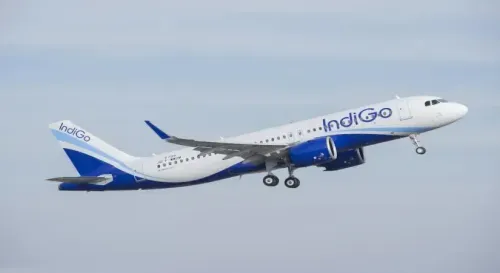
IndiGo led with 555.83 lakh passengers and a 64.3 per cent market share; the Air India Group was second at 25.7 per cent .
Together, IndiGo and the Air India Group handled more than 90 per cent of all domestic traffic in the period.
Passenger numbers dipped sequentially in June 2026 to 134.64 lakh , down 1.03 per cent from 136.04 lakh in May.
Akasa Air recorded the highest load factor in June at 92.2 per cent , ahead of SpiceJet ( 87.8% ), Air India Group ( 85.5% ), and IndiGo ( 85.1% ).
India's domestic aviation sector posted steady growth in the first half of 2026, with airlines collectively transporting 864.04 lakh passengers between January and June, a 1.44 per cent increase over the 851.74 lakh passengers carried during the same period in 2025, according to data released by the Ministry of Civil Aviation. The figures confirm continued expansion in air travel demand, even as monthly momentum showed signs of easing toward the mid-year mark.
Monthly Trend: June Dip Signals Moderation
After robust activity through the first five months, domestic airlines flew 134.64 lakh passengers in June 2026, down from 136.04 lakh in May — a sequential decline of 1.03 per cent. The moderation suggests some cooling of travel demand as the sector transitioned into the second half of the year. Analysts note that such month-on-month softness is not unusual heading into the post-summer period, when leisure travel typically tapers.
Market Share: IndiGo and Air India Dominate
IndiGo retained its commanding position as India's largest domestic carrier, flying 555.83 lakh passengers during the six-month period and holding a market share of 64.3 per cent. The Air India Group remained in second place, transporting 221.67 lakh passengers for a 25.7 per cent share. Together, the two groups accounted for more than 90 per cent of all domestic passenger traffic in H1 2026 — a concentration that underscores the duopoly-like structure of Indian aviation.
Among the remaining carriers, Akasa Air transported 47.42 lakh passengers, capturing a 5.5 per cent market share, while SpiceJet flew 28.10 lakh passengers, accounting for 3.3 per cent. Regional carriers continued to hold a marginal footprint: Star Air carried 5.03 lakh passengers (0.6 per cent), Alliance Air transported 3.47 lakh passengers (0.4 per cent), Fly91 flew 2.41 lakh passengers (0.3 per cent), and IndiaOne Air carried approximately 0.10 lakh passengers.
Load Factors: Akasa Leads Efficiency in June
Capacity utilisation data for June 2026 revealed notable variation across airlines. Akasa Air posted the highest passenger load factor at 92.2 per cent, meaning more than nine in every ten available seats were filled — a strong operational metric for the relatively young carrier. SpiceJet followed with a load factor of 87.8 per cent, while the Air India Group and IndiGo recorded 85.5 per cent and 85.1 per cent, respectively.
Regional carriers trailed the pack: Star Air reported a load factor of 75 per cent, Fly91 at 73.2 per cent, Alliance Air at 61.7 per cent, and IndiaOne Air at 59.3 per cent. The passenger load factor measures the proportion of available seats occupied by paying travellers and is a key indicator of airline profitability and route viability.
Outlook for H2 2026
The 1.44 per cent year-on-year growth in H1, while positive, is a moderation from the double-digit expansion rates seen in the post-pandemic rebound years. This comes amid rising operational costs, ongoing fleet constraints at some carriers, and the continued financial fragility of smaller airlines. Whether the sector can accelerate in the second half will depend on festive-season demand, fuel price trajectories, and the pace of new aircraft inductions by both legacy and low-cost carriers.
Point of View
That level of seat fill suggests strong demand on the routes it operates — and raises the question of whether it is capacity-constrained rather than demand-constrained. SpiceJet's continued presence at 3.3 per cent, despite its well-documented financial difficulties, remains the sector's unresolved risk — a grounding or sharp capacity cut would ripple through regional connectivity.
NationPress
20 Oct 2026
Frequently Asked Questions
How many passengers did Indian domestic airlines carry in H1 2026?
Indian domestic airlines carried 864.04 lakh passengers between January and June 2026, a year-on-year increase of 1.44 per cent over the 851.74 lakh passengers carried in the same period of 2025, according to Ministry of Civil Aviation data.
Which airline has the largest domestic market share in India in 2026?
IndiGo holds the largest domestic market share in India, commanding 64.3 per cent of the market with 555.83 lakh passengers carried in H1 2026. The Air India Group is second with a 25.7 per cent share.
Why did domestic passenger traffic fall in June 2026?
Domestic passenger numbers dipped to 134.64 lakh in June 2026, down 1.03 per cent sequentially from 136.04 lakh in May. The decline reflects typical post-summer moderation in leisure travel demand as the sector entered the second half of the year.
Which airline had the best load factor in June 2026?
Akasa Air recorded the highest passenger load factor in June 2026 at 92.2 per cent , meaning more than nine out of ten available seats were occupied. SpiceJet followed at 87.8 per cent, ahead of the Air India Group (85.5%) and IndiGo (85.1%).
How are regional carriers performing in India's domestic aviation market?
Regional carriers hold a small but present share of domestic traffic. Star Air carried 5.03 lakh passengers (0.6%), Alliance Air transported 3.47 lakh (0.4%), Fly91 flew 2.41 lakh (0.3%), and IndiaOne Air carried approximately 0.10 lakh passengers in H1 2026. Their load factors in June ranged between 59.3% and 75%, well below the major carriers.