Domestic air traffic falls 5% in July 2026; IndiGo holds 67% share
Synopsis
Indian domestic aviation logged a near-5% year-on-year passenger decline in July 2026 even as IndiGo cemented two-thirds market control. The starkest data point: SpiceJet's on-time performance collapsed to 34.5% — against IndiGo's 91.2% — laying bare the widening operational gulf between India's dominant carrier and its struggling rivals.
Key Takeaways
Domestic air passenger traffic fell nearly 5 per cent year-on-year in July 2026 , with airlines carrying around 1.2 crore passengers , per DGCA data.
IndiGo retained a 67.4 per cent market share, carrying 80.82 lakh passengers .
Air India Group held 24 per cent share ( 28.75 lakh passengers ); Akasa Air was third at 5.5 per cent ( 6.65 lakh passengers ).
SpiceJet recorded an on-time performance of just 34.5 per cent , against IndiGo's industry-best 91.2 per cent .
Overall cancellation rate stood at 0.62 per cent ; technical issues caused 39.9 per cent of cancellations.
Around 1.26 per cent of flights were delayed by more than two hours in July.
Domestic air passenger traffic declined nearly 5 per cent year-on-year in July 2026, with Indian airlines collectively transporting approximately 1.2 crore passengers during the month, according to data released by the Directorate General of Civil Aviation (DGCA). The drop signals a softening in post-pandemic travel demand even as the aviation sector had been on an extended growth run.
IndiGo Retains Dominant Market Position
IndiGo continued to command the domestic aviation market with a 67.4 per cent market share, carrying 80.82 lakh passengers in July — more than two-thirds of all domestic flyers. The airline's lead over its nearest rival remains substantial, consolidating a dominance that has defined Indian aviation for several years.
The Air India Group held its position as the second-largest domestic carrier group, accounting for a 24 per cent share and ferrying 28.75 lakh passengers during the month. Akasa Air ranked third with a 5.5 per cent market share, carrying 6.65 lakh passengers. SpiceJet trailed significantly at 1.6 per cent, with just 1.87 lakh passengers — a figure that underscores the carrier's ongoing operational challenges.
On-Time Performance: IndiGo and Akasa Lead, SpiceJet Lags
Airlines reported sharply divergent on-time performance figures for July. IndiGo recorded the highest on-time performance at 91.2 per cent, followed closely by Akasa Air at 90.8 per cent. Air India posted an on-time rate of 86.5 per cent.
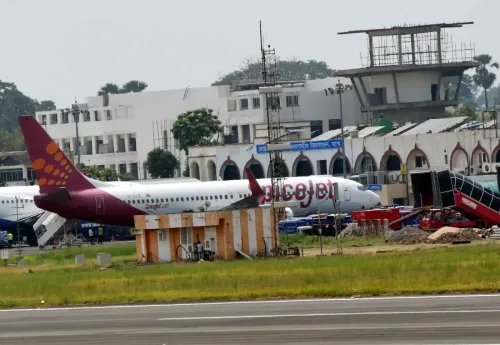
SpiceJet, by contrast, logged an on-time performance of just 34.5 per cent — less than half the industry average and dramatically below its peers. The DGCA's on-time assessment covered 10 major airports, including Bengaluru, Delhi, Hyderabad, Mumbai, Chennai, Kolkata, Ahmedabad, Cochin, Guwahati, and Lucknow. Under DGCA norms, a flight is classified as delayed if departure exceeds the scheduled time by more than 15 minutes.
Cancellations and Delays: Technical Faults Top the List
The overall cancellation rate among scheduled domestic carriers stood at 0.62 per cent in July. Technical issues were the primary cause, accounting for 39.9 per cent of all cancellations, followed by operational factors at 27.4 per cent and adverse weather at 22.7 per cent.
Separately, around 1.26 per cent of flights were delayed by more than two hours during the month — a metric regulators and consumer groups watch closely for passenger impact.
What the Numbers Signal for Indian Aviation
The 5 per cent year-on-year fall in July 2026 is notable given that the corresponding period in 2025 had already reflected a recovery phase. This comes amid broader concerns about airfare sensitivity, capacity rationalisation by some carriers, and the continuing turbulence at SpiceJet, whose market share has eroded sharply from its earlier highs. Notably, even with the overall traffic dip, IndiGo's absolute passenger numbers remained robust, suggesting the decline was concentrated among smaller carriers.
With the festive and winter travel season approaching, the industry will be closely watched to see whether July's dip proves a seasonal blip or the beginning of a more sustained demand correction.
Point of View
And the DGCA data makes that visible in stark relief. Meanwhile, IndiGo's 67.4 per cent share raises a different concern: a market this concentrated carries systemic risk if the dominant carrier faces any disruption. Indian aviation needs a credible second force, and neither Air India nor Akasa has yet scaled to fill that role.
NationPress
5 Oct 2026
Frequently Asked Questions
How much did domestic air passenger traffic fall in July 2026?
Domestic air passenger traffic declined nearly 5 per cent year-on-year in July 2026, with airlines carrying approximately 1.2 crore passengers during the month, according to DGCA data.
Which airline had the highest market share in July 2026?
IndiGo held the highest domestic market share at 67.4 per cent in July 2026, carrying 80.82 lakh passengers — more than two-thirds of all domestic flyers.
Why is SpiceJet's on-time performance so low?
SpiceJet recorded an on-time performance of just 34.5 per cent in July 2026, far below the industry average. The DGCA data does not specify the airline-level cause, but SpiceJet has faced persistent operational and financial challenges that have eroded its fleet reliability.
What were the main reasons for flight cancellations in July 2026?
Technical issues were the leading cause of cancellations at 39.9 per cent, followed by operational factors at 27.4 per cent and adverse weather at 22.7 per cent. The overall cancellation rate was 0.62 per cent.
Which airports were covered in the DGCA on-time performance assessment?
The DGCA assessed on-time performance across 10 major airports: Bengaluru, Delhi, Hyderabad, Mumbai, Chennai, Kolkata, Ahmedabad, Cochin, Guwahati, and Lucknow. A flight is considered delayed if it departs more than 15 minutes behind schedule.