Have India and Ethiopia Strengthened Their Ties After PM Modi’s Visit?
Synopsis
Prime Minister Narendra Modi's December 2025 visit to Ethiopia has marked a pivotal moment in India-Ethiopia relations, establishing a 'Strategic Partnership' and setting the stage for enhanced collaboration over the next decade. Discover how this partnership is reshaping trade, investment, and development cooperation.
Key Takeaways
PM Modi's visit strengthened bilateral ties.
Trade relations are valued at 550.19 million US dollars.
Key exports support Ethiopia's industrialization.
Indian investments exceed 5 billion US dollars.
Development cooperation is vital for strategic projects.
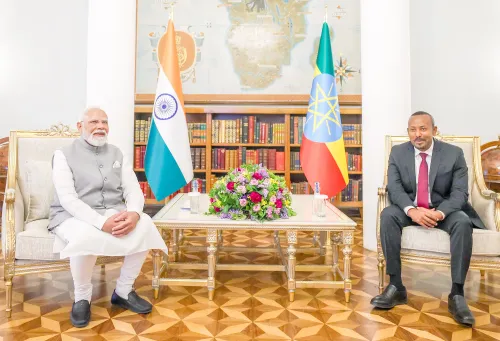
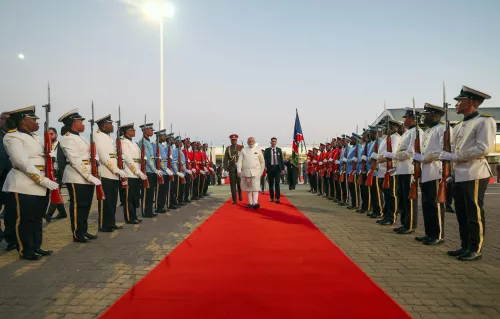
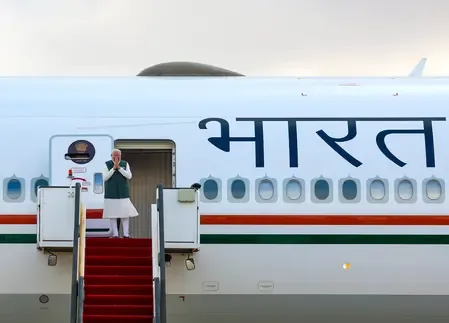
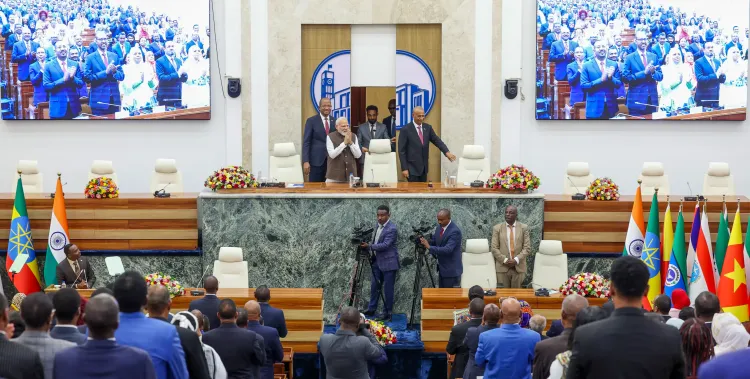
New Delhi, Jan 6 (NationPress) The visit of Prime Minister Narendra Modi to Ethiopia in December 2025 marked a significant diplomatic milestone, culminating in the elevation of bilateral relations to a 'Strategic Partnership'. This visit has set a clear roadmap for prioritized engagement over the next decade.
India–Ethiopia trade relations have matured into a multifaceted partnership, characterized by robust merchandise trade, substantial Indian investments in Ethiopian infrastructure and industries, and a strong framework for development cooperation rooted in South–South solidarity, as highlighted in an article from the Times of Oman.
Both nations regard each other as gateways to larger regions: India connects to the African Continental Free Trade Area, while Ethiopia serves as a bridge to the Indian Ocean and Asian markets, lending a strategic dimension to their commercial relations.
For the fiscal year 2024–25, Indian official statistics estimate bilateral trade at approximately 550.19 million US dollars, with India exporting goods worth 476.81 million US dollars and importing 73.38 million US dollars from Ethiopia. These figures emphasize India's significant footprint in the Ethiopian market and highlight the potential for increased Ethiopian exports to India.
India stands as one of Ethiopia’s top trading partners, reflecting the resilience of their economic ties.
Key Indian exports comprise pharmaceuticals, medical devices, iron and steel, machinery, vehicles and components, electrical goods, chemicals, plastics, and various consumer items, including textiles and food products. This diverse export portfolio supports Ethiopia’s industrialization goals and infrastructure development, simultaneously reinforcing India's position as a dependable supplier of affordable medicines and technology.
Although imports from Ethiopia are lower in value, they hold strategic importance and focus on agricultural and natural resource-based products. India sources pulses, oilseeds, spices, leather goods, flax yarn, and select mineral consignments from Ethiopia, thereby integrating Ethiopian producers into both Indian and global value chains.
Beyond trade, India has emerged as one of the largest foreign investors in Ethiopia. Assessments indicate that Indian firms rank among the top three foreign investors, with approved investments nearing 5 billion US dollars and land lease agreements covering over 600,000 hectares nationwide, particularly in commercial agriculture and related sectors.
In 2024 alone, at least 11 Indian companies invested in diverse sectors such as agriculture, automobiles, iron and steel, information technology, and textiles, which demonstrates continued investor confidence in Ethiopia’s long-term growth potential, despite short-term economic fluctuations. These investments have significantly contributed to job creation, export revenues, and technology transfer in Ethiopia’s industrial parks and special economic zones, aligning with Ethiopia’s ambition to become a regional manufacturing hub.
India’s development cooperation framework is also pivotal in shaping the trade and investment landscape, particularly through concessional Lines of Credit provided by the Export-Import Bank of India.
The article notes that Ethiopia is one of the largest African recipients of Indian Lines of Credit, with sanctioned amounts exceeding 1 billion US dollars that have financed crucial projects in sugar production, power transmission, railways, and industrial infrastructure.
Examples include the Finchaa and Wonji Shoa sugar factories, along with Phase I of the Tendaho sugar project, which were financed under an EXIM Bank line of credit of approximately 640 million US dollars, marking one of the largest single lines of credit extended by India globally.
Point of View
It is evident that the strengthening ties between India and Ethiopia underlines a significant shift in diplomatic relations. With both nations recognizing the mutual benefits of a strategic partnership, the collaboration promises to enhance economic growth and development in the region. This partnership reflects a broader trend of emerging economies working together to navigate global challenges, positioning themselves as influential players on the world stage.
NationPress
23 Sept 2026
Frequently Asked Questions
What was the significance of PM Modi's visit to Ethiopia?
PM Modi's visit marked a pivotal moment, upgrading India-Ethiopia relations to a 'Strategic Partnership' and setting a roadmap for future collaboration.
How much trade occurs between India and Ethiopia?
For 2024–25, bilateral trade is estimated at approximately 550.19 million US dollars, with India exporting 476.81 million US dollars and importing 73.38 million US dollars from Ethiopia.
What are key Indian exports to Ethiopia?
Key exports include pharmaceuticals, medical products, machinery, vehicles, electrical goods, chemicals, and consumer items.
How significant are Indian investments in Ethiopia?
Indian investments in Ethiopia are substantial, with approved investments nearing 5 billion US dollars and land leases covering over 600,000 hectares.
What role does development cooperation play in India-Ethiopia ties?
India's development cooperation, especially through Lines of Credit, plays a crucial role in financing strategic projects in Ethiopia.