Will the ‘Regional AI Impact Conference 2026’ in Lucknow Highlight AI Innovations in Uttar Pradesh?
Synopsis
The ‘Regional AI Impact Conference 2026’ in Lucknow is set to illuminate Uttar Pradesh's AI advancements. This event, a precursor to the 'IndiaAI Impact Summit 2026,' will showcase revolutionary AI applications in governance and healthcare, fostering collaboration among key stakeholders. Don’t miss this pivotal moment for AI in India!
Key Takeaways
Showcasing AI Innovations: The conference highlights AI advancements in governance and healthcare.
Collaboration: Encourages partnerships among governments, industry, and academia.
National Roadmap: Outcomes will influence future AI initiatives in India.
Global AI Landscape: Discussions will focus on the international implications of AI technology.
Empowerment: Aims to enhance workforce skills and capabilities in AI.
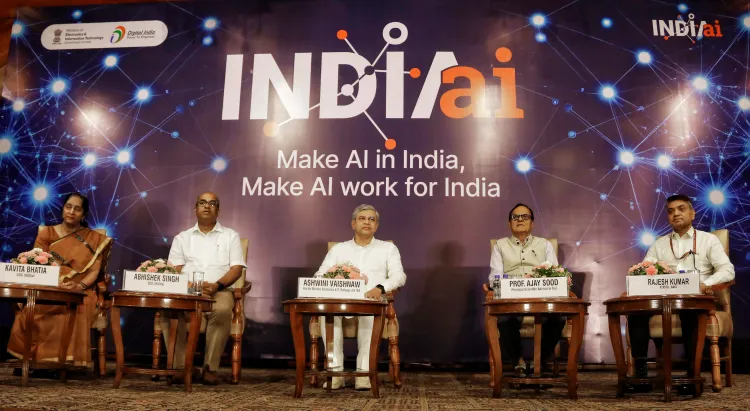
New Delhi, Jan 11 (NationPress) In a bid to highlight Uttar Pradesh's leadership in artificial intelligence, the 'Regional AI Impact Conference 2026' will be held in Lucknow on January 12-13. This event serves as a precursor to the upcoming 'IndiaAI Impact Summit 2026,' organized by IndiaAI in conjunction with the IT Ministry and the Uttar Pradesh government, as announced on Sunday.
This two-day conference aims to exhibit advanced applications of AI in governance and public service delivery, aligning state-level efforts with the goals of the IndiaAI Mission, according to a statement from the IT Ministry.
The 'Regional AI Impact Conference 2026' will capitalize on the state's existing digital governance momentum, healthcare innovations, and technology-driven public services, showcasing actual AI implementations in health systems, digital public infrastructure, and state-led initiatives. This will also encourage collaboration among governments, industry experts, academia, and startups within the IndiaAI framework.
As per the statement, the results from the IndiaAI Working Group Meeting, discussions at the conference, and related ecosystem engagements will contribute to the national roadmap for the 'IndiaAI Impact Summit 2026', scheduled for next month from February 16-20.
The Lucknow event is part of a national series of eight Regional AI Impact Conferences being held throughout the country.
The conference will include plenary sessions focused on the global AI landscape, AI-enhanced healthcare delivery, state-level readiness and capacity building, digital public infrastructure for health, AI-driven diagnostics, clinical innovation, and workforce empowerment. There will be startup showcases, hackathon results, and industry-led demonstrations aimed at turning policy intentions into real-world impacts on a population scale.
It will bring together senior policymakers, state and central government officials, global institutions, industry leaders, researchers, and innovators to discuss the responsible, inclusive, and scalable adoption of AI, particularly in healthcare systems, digital public infrastructure, economic growth, and social good, as stated officially.
Point of View
The 'Regional AI Impact Conference 2026' is a significant milestone for Uttar Pradesh, showcasing the state's commitment to adopting advanced technologies. It reflects a broader national strategy to harness AI for governance and public welfare, reinforcing the importance of collaborative efforts among various stakeholders in shaping India's technological future.
NationPress
20 Sept 2026
Frequently Asked Questions
What is the purpose of the Regional AI Impact Conference 2026?
The conference aims to showcase Uttar Pradesh's advancements in artificial intelligence, particularly in governance and public service delivery, while aligning with the goals of the IndiaAI Mission.
When and where will the conference take place?
The Regional AI Impact Conference 2026 will be held in Lucknow on January 12-13, 2026.
Who is organizing the conference?
The conference is being organized by IndiaAI in collaboration with the IT Ministry and the Uttar Pradesh government.
What topics will be discussed at the conference?
Topics will include AI applications in healthcare, digital public infrastructure, capacity building, and workforce empowerment, among others.
How will the outcomes of the conference influence future initiatives?
The conference outcomes will contribute to the national roadmap for the IndiaAI Impact Summit 2026, shaping future AI initiatives across the country.