How Will the Rajasthan Regional AI Impact Conference Boost the AI Ecosystem?
Synopsis
The Rajasthan Regional AI Impact Conference 2026 promises to revolutionize the AI landscape in the state with key announcements and partnerships aimed at fostering innovation and accelerating AI adoption. Join the conversation on how AI can transform governance and drive economic growth in this significant event!
Key Takeaways
Strengthening AI Ecosystem: The conference aims to fortify the state’s AI framework.
Innovative Collaborations: Signing of MoUs to foster partnerships.
Focus on Ethical AI: Discussions on responsible AI practices.
AI in Governance: Exploring how AI can enhance public service delivery.
Future of Employment: Addressing AI's impact on job markets and skills.
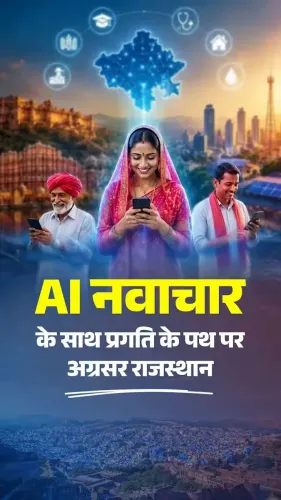
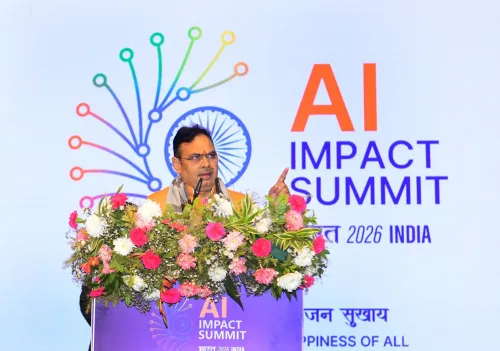
New Delhi, Jan 4 (NationPress) The Rajasthan Regional AI Impact Conference 2026, set for January 6, will showcase significant announcements and the signing of memoranda of understanding (MoUs) aimed at enhancing the state's AI ecosystem, driving innovation, and expediting the implementation of AI across key sectors, as revealed on Sunday.
This event is part of the lead-up to the India AI Impact Summit 2026 and will take place in Jaipur.
The conference will act as a pivotal regional platform to investigate how Artificial Intelligence can facilitate governance reform, stimulate economic growth, promote innovation, and support inclusive development, according to the IT Ministry.
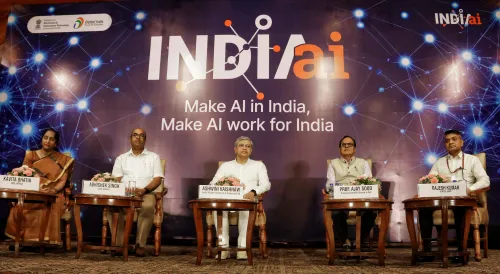
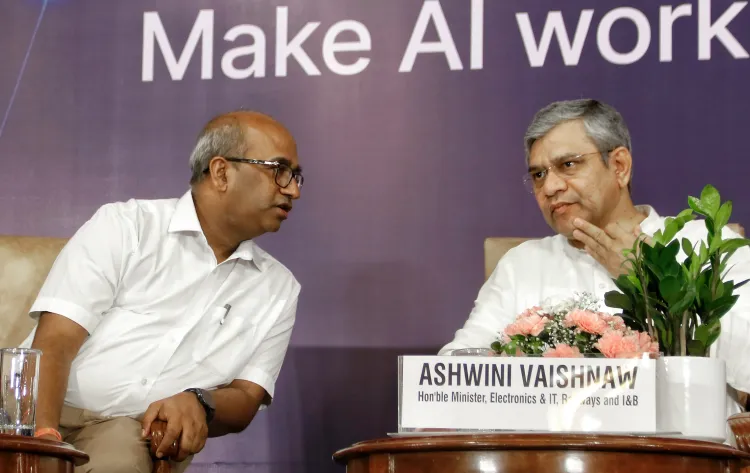
It will feature participation from high-ranking officials, including IT and Electronics Minister Ashwini Vaishnaw; Jitin Prasada, Minister of State for Electronics and IT; Bhajan Lal Sharma, Chief Minister of Rajasthan; and Rajyavardhan Rathore, Cabinet Minister for IT & Communication, Government of Rajasthan.
The agenda will encompass high-level discussions on AI for Public Service Delivery and Governance, Ethical and Responsible AI, AI and the Future of Employment and Skills, and the growth of Rajasthan’s AI startup and innovation landscape.
Discussions will also delve into advanced applications like Digital Twins and AI-driven infrastructure planning, addressing strategic inquiries about whether AI can enable India to progress from an outsourcing-based model to creating world-class intellectual property.
Moreover, experts will share insights on Global AI, National AI, and Regional AI strategies, with contributions from IIT Jodhpur emphasizing the role of institutions in crafting locally relevant yet globally applicable AI solutions, as stated by the IT Ministry.
Simultaneously, IndiaAI, in partnership with the Government of Assam and IIT Guwahati, will host the Human Capital Working Group Meeting on January 5-6, 2026, at the IIT Guwahati campus.
Anchored in the goal of treating AI as a public utility, this meeting will concentrate on devising inclusive, scalable, and responsible methods for AI-driven workforce transitions.
Discussions will particularly highlight education reform, gender-responsive AI strategies, and enhancing human capabilities in specific domains, ensuring that AI adoption elevates human potential rather than displaces it.
Point of View
The Rajasthan Regional AI Impact Conference represents a crucial step in positioning India as a leader in the global AI landscape. By fostering collaboration and innovation, initiatives like this can significantly impact both the local economy and the broader national agenda for technological advancement.
NationPress
19 Sept 2026
Frequently Asked Questions
What is the purpose of the Rajasthan Regional AI Impact Conference?
The conference aims to enhance the state's AI ecosystem, promote innovation, and accelerate AI adoption across key sectors.
Who will participate in the conference?
Key figures such as IT Minister Ashwini Vaishnaw, Chief Minister Bhajan Lal Sharma, and other government officials will be present.
What topics will be discussed at the conference?
Discussions will cover AI for public service, ethical AI, the future of employment, and the growth of Rajasthan's AI startup ecosystem.
When and where is the conference taking place?
The conference is scheduled for January 6, 2026, in Jaipur.
What is the significance of AI in governance?
AI has the potential to drive governance reform, improve public service delivery, and stimulate economic growth.