India passenger vehicle sales surge 34% in July on strong UV demand
Synopsis
India's auto sector posted one of its strongest July performances on record, with passenger vehicle wholesales up 34% and two-wheeler retail matching that pace. But the headline numbers mask a margin squeeze — commodity costs rose 10–13% in Q1 FY27 — and a potential El Niño cloud hanging over rural and tractor demand into 2026.
Key Takeaways
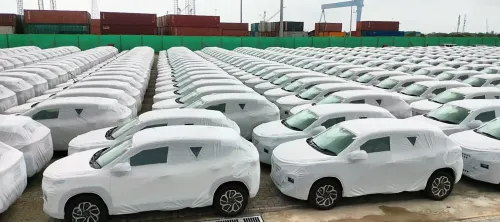
Passenger vehicle wholesale volumes rose 34 per cent year-on-year in July , with retail sales up 24 per cent .
Two-wheeler wholesale volumes grew approximately 15 per cent ; retail sales surged 34 per cent .
Commercial vehicle sales rose approximately 28 per cent year-on-year , partly driven by pre-price-hike replacement purchases.
Commodity cost indices rose 10–12 per cent for PVs and two-wheelers, and 13 per cent for CVs and electric two-wheelers in Q1 FY27 .
Electric two-wheelers reached 11.2 per cent of two-wheeler sales; electric four-wheelers hit 8 per cent penetration in July.
Below-average reservoir levels and a potential El Niño in 2026 pose a risk to rural demand and tractor sales.
India's passenger vehicle (PV) wholesale volumes jumped 34 per cent year-on-year in July, while retail sales climbed 24 per cent, as healthy consumer demand and improved inventory replenishment drove one of the auto sector's strongest monthly performances in recent memory, according to an analysis by HSBC India. The broader automobile industry held firm despite headwinds from rising commodity costs and global geopolitical uncertainty.
Passenger Vehicles and Two-Wheelers Lead the Charge
Utility vehicles continued to anchor passenger vehicle demand, sustaining a trend that has defined the segment for several quarters. In the two-wheeler segment, wholesale volumes rose approximately 15 per cent year-on-year, while retail sales surged 34 per cent — a gap that points to strong dealership offtake and improving supply chains. Automakers across categories benefited from sustained customer interest and better component availability.
Commercial Vehicles Get a Pre-Hike Boost
Commercial vehicle (CV) demand drew additional support from replacement purchases ahead of announced price hikes by original equipment manufacturers (OEMs). Overall CV sales volumes for leading companies rose approximately 28 per cent year-on-year. However, the HSBC India report cautioned that elevated commodity prices could continue to weigh on sector profitability in the near term.
Commodity Costs Squeeze Margins
Commodity cost indices for two-wheelers and passenger vehicles rose around 10–12 per cent in the first quarter of FY27, while indices for commercial vehicles and electric two-wheelers increased approximately 13 per cent. The report flagged that some margin pressure is expected to persist through the September quarter, following lower profitability reported by several automakers in the June quarter.
Electric Vehicles Gain Ground
Electric vehicle adoption remained on an upward trajectory. Electric two-wheelers accounted for 11.2 per cent of total two-wheeler sales in July, while electric four-wheelers recorded an 8 per cent penetration rate — a figure supported by persistently high fuel prices. This comes amid a broader national push toward EV adoption, with penetration rates rising steadily over the past year.
Rural Demand Faces Monsoon Uncertainty
Tractor and rural demand could face turbulence ahead. Although rainfall has improved in recent weeks, reservoir levels remain below the long-term average. The report noted that the possibility of an El Niño event in 2026 could introduce fresh uncertainty for rural consumption and tractor sales in the coming months — a risk that the industry will watch closely as the kharif season progresses.
Point of View
But the more telling number is the margin trajectory — commodity costs up 10–13 per cent in a single quarter is a structural squeeze, not a blip. Indian automakers have so far absorbed much of this through operating leverage, but that buffer is thinning. The EV penetration figures, while growing, also reveal a two-speed market: urban four-wheeler adoption at 8 per cent is still nascent, while two-wheeler EV share at 11.2 per cent shows where the real mass transition is happening. The El Niño caveat on rural demand is the most underreported risk in this data — tractor sales are a reliable leading indicator for rural income, and a bad monsoon year could unwind much of the Q1 FY27 optimism.
NationPress
20 Sept 2026
Frequently Asked Questions
How much did India's passenger vehicle sales grow in July?
India's passenger vehicle wholesale volumes rose 34 per cent year-on-year in July, while retail sales grew 24 per cent , driven by strong utility vehicle demand and improved inventory replenishment, according to an HSBC India analysis.
How are rising commodity costs affecting the auto sector?
Commodity cost indices for two-wheelers and passenger vehicles rose around 10–12 per cent in Q1 FY27, while those for commercial vehicles and electric two-wheelers increased approximately 13 per cent . Margin pressure is expected to persist through the September quarter after several automakers reported lower profitability in the June quarter.
What is the current EV penetration rate in India's auto market?
Electric two-wheelers accounted for 11.2 per cent of total two-wheeler sales in July, while electric four-wheelers recorded an 8 per cent penetration rate. Higher fuel prices have been a key driver of EV adoption.
Why did commercial vehicle sales rise in July?
Commercial vehicle sales rose approximately 28 per cent year-on-year , supported in part by replacement purchases made ahead of announced price hikes by original equipment manufacturers (OEMs).
What risks could affect India's auto demand in the coming months?
The primary risk flagged is a potential El Niño event in 2026 , which could dampen rural demand and tractor sales. Reservoir levels remain below the long-term average despite recent improvements in rainfall, adding to uncertainty for the rural segment.