Kishan Reddy: India auto sales hit record 2.59 mn units in July
Synopsis
India's automobile sector recorded its highest-ever July retail sales at 2.59 million units, up 26% year-on-year. Union Minister G. Kishan Reddy attributed the milestone to rural demand, affordability, and record EV adoption, underscoring the impact of PLI, FAME-II, and Make in India policies.
Key Takeaways
India registered 2.59 million vehicles in July 2026, the highest-ever for the month across all segments.
Overall retail sales grew 26% year-on-year , with two-wheelers up 28% and passenger vehicles up 19% .
Rural demand, improved affordability, and record EV adoption were cited as the primary growth drivers.
The PLI scheme for automobiles carries an outlay of Rs 26,058 crore to support domestic manufacturing and exports.
The FAME-II scheme (launched 2019) and Make in India (launched 2014) form the longer policy scaffolding behind the sector's expansion.
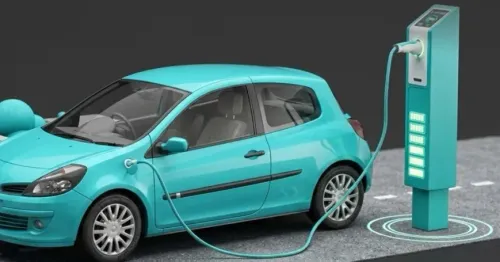
Sustained EV uptake aligns with India's national targets on reducing oil imports and meeting emissions commitments.
India's automobile sector just posted its best-ever July — 2.59 million vehicle registrations, a 26% year-on-year surge that spans every segment from two-wheelers to passenger cars. Union Coal and Mines Minister G. Kishan Reddy flagged the milestone on Monday, 10 August 2026, crediting the momentum to Prime Minister Narendra Modi's policy direction and a confluence of rural demand, affordability, and electric vehicle uptake.
The July numbers and what drove them
Two-wheeler sales led the charge with 28% growth, the segment most sensitive to rural income cycles and fuel costs. Passenger vehicle registrations climbed 19%, reflecting sustained appetite among urban and semi-urban buyers. Reddy pointed to 'robust rural demand, improved affordability, and a record of high EV adoption' as the three engines behind the print — a combination that signals broad-based momentum rather than a single-category spike.
Rural demand has been a recurring theme in India's post-pandemic auto recovery. Rising disposable incomes in smaller towns, better road infrastructure, and accessible financing have steadily pulled two-wheeler volumes higher, making the hinterland a bellwether for the sector's health.
Policy scaffolding: PLI, FAME, and Make in India
The numbers do not arrive in a vacuum. The Production Linked Incentive scheme for automobiles, approved in 2021 with an outlay of Rs 26,058 crore, was designed precisely to deepen local manufacturing capacity and sharpen India's export competitiveness. Alongside it, the FAME India scheme — launched in 2015 and expanded as FAME-II in 2019 — has been the primary lever for accelerating electric vehicle adoption, reducing oil import dependence, and nudging the fleet toward lower emissions. The Make in India campaign, which set the automobile sector as a flagship from its September 2014 launch, provided the longer arc within which both schemes operate.
Record EV registrations in July, if sustained, would align with India's stated targets on emissions and energy security — two policy goals that have grown more urgent as global oil markets remain volatile.
What the milestone signals for India's broader economy
Automobile retail sales are a high-frequency proxy for consumer confidence — when households stretch to buy a bike or a car, they are voting with their wallets on income stability and credit access. A 26% jump to 2.59 million units in a single month is the kind of data point that feeds directly into GDP consumption readings and manufacturing output indices. For a government that has staked significant political capital on the 'India growth story', July's auto print is a headline number it will carry into every economic conversation through the rest of the year.
The next test is whether August and September — months that historically benefit from the festive pre-season — can sustain or extend the pace. PLI disbursement timelines and any fresh EV incentives in the next Union Budget will determine how durable the structural tailwinds really are.
Point of View
Numbers-backed argument for its manufacturing and EV policy stack at a time when economic messaging is politically consequential. The 26% surge — broad across segments, not concentrated in one category — makes it harder to dismiss as a statistical blip. However, the research note flags these specific figures as unverified from independent sources, which means the political value of the data depends entirely on industry association corroboration. If subsequent monthly prints sustain the pace, the Modi government will have a compelling counter to any 'consumption slowdown' narrative heading into the next electoral cycle.
NationPress
24 Sept 2026
Frequently Asked Questions
What were India's automobile sales figures for July 2026?
According to Union Minister G. Kishan Reddy, India recorded 2.59 million vehicle registrations in July 2026, the highest-ever for the month, representing a 26% increase year-on-year across all vehicle segments.
Which vehicle segment grew the most in July 2026?
Two-wheelers recorded the highest growth at 28% year-on-year , driven largely by robust rural demand and improved affordability. Passenger vehicles grew 19% in the same period.
What government schemes support India's automobile sector?
Key schemes include the PLI scheme for automobiles (approved 2021, Rs 26,058 crore outlay), the FAME-II scheme for electric vehicles (2019), and the broader Make in India campaign launched in September 2014.
Why are two-wheeler sales important for India's economy?
Two-wheelers are the most accessible motorised vehicle for rural and semi-urban households, making their sales a direct indicator of rural income health, consumer confidence, and credit availability across smaller towns.
What is India's FAME scheme and how does it relate to EV growth?
The Faster Adoption and Manufacturing of Electric Vehicles (FAME) scheme, launched in 2015 and expanded as FAME-II in 2019, provides demand-side incentives for EV buyers and supply-side support for manufacturers, directly contributing to rising EV registrations.