Piyush Goyal: GI-Tagged Gulbarga Tur Dal Exported to Maldives
Synopsis
Union Commerce Minister Piyush Goyal announced that 1 metric tonne of GI-tagged Gulbarga Tur Dal from Karnataka has been exported to the Maldives, with farmers earning over 30% higher prices in international markets — a signal moment for India's GI-led agricultural export strategy.
Key Takeaways
1 metric tonne of GI-tagged Gulbarga Tur Dal from Kalaburagi, Karnataka has been exported to the Maldives .
Farmers are earning over 30% higher prices for their produce in international markets compared to domestic rates.
The Geographical Indication certification, under the GI Act of 1999 , underpins the premium pricing by authenticating the dal's regional origin and quality.
The shipment is part of India's broader strategy to export GI-tagged agricultural products and boost rural incomes.
The Maldives — import-dependent and geographically proximate — represents a natural early market for premium Indian farm produce.
A humble pulse from the red-soil plains of Kalaburagi, Karnataka has crossed the Indian Ocean — and carried with it a price premium that is rewriting income equations for the farmers who grew it. Union Commerce and Industry Minister Piyush Goyal announced on Thursday, September 24, 2026, that 1 metric tonne of GI-tagged Gulbarga Tur Dal has been exported to the Maldives, with growers earning over 30% higher prices for their produce in international markets.
Why a GI tag changes everything for Kalaburagi farmers
The Geographical Indication tag — backed by the Geographical Indications of Goods (Registration and Protection) Act, 1999 — is not just a label. It is a legal shield that ties a product's identity to its place of origin, signalling to buyers that what they are getting cannot be replicated elsewhere. For Gulbarga Tur Dal, grown in the Kalaburagi district of northern Karnataka and prized for its distinct taste and cooking quality, that tag has now translated directly into a premium at the point of export. A 30% price lift on a staple pulse is not a footnote — for smallholder farmers operating on thin margins, it is transformative.
India's GI-pulse push meets a familiar neighbour
The Maldives is a natural early market for India's premium agricultural exports — geographically close, diplomatically warm, and heavily import-dependent for food. This 1 MT shipment is deliberately small in scale but large in signal: it demonstrates that a certified regional pulse from Karnataka can clear the documentation, logistics, and taste-test hurdles of an international consignment. India has been systematically building export pipelines for GI-tagged farm produce — from Darjeeling tea to Alphonso mangoes — and the inclusion of a pulse variety from a drought-prone interior district marks a meaningful expansion of that playbook.
The farmer at the centre of the story
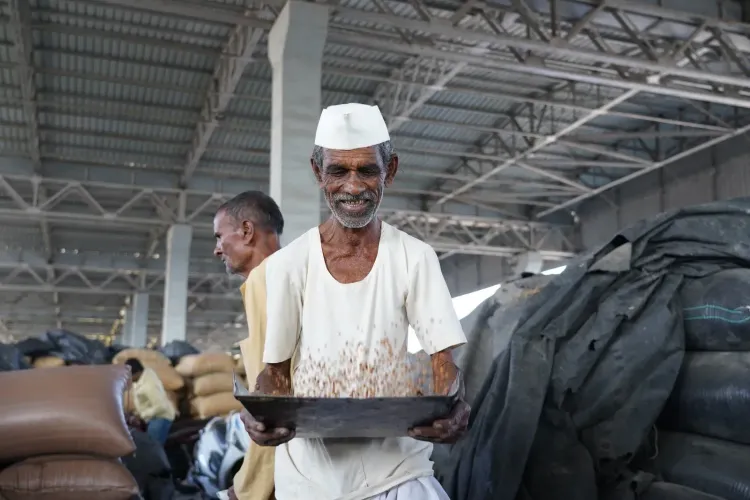
Minister Goyal's post pointedly credits 'the farmers who have made this possible with their hard work' — placing producer welfare, not trade volumes, at the headline of the announcement. It is a framing that matters: India's GI export strategy has often been narrated in terms of brand value and foreign exchange, but the on-ground test is whether the income gain flows back to the cultivator. If the 30% premium is sustained across follow-on shipments, the Kalaburagi belt — a region not historically associated with export agriculture — could emerge as a case study for replicating the model with other regional pulses.
Watch for follow-on shipments of Gulbarga Tur Dal and broader India-Maldives agricultural trade announcements as this corridor develops. A single metric tonne today; a template for tomorrow.
Point of View
Drought-belt crops like Kalaburagi's Tur Dal. Framing the story around farmer income gains rather than trade volume is a deliberate political choice, signalling that the Commerce Ministry wants GI success measured at the farm gate. The Maldives corridor, while small in tonnage, is strategically useful: it provides a low-friction proof of concept that can be cited when pitching similar models to larger markets. If the price premium holds across successive shipments, it will strengthen the case for extending GI export support to other pulse-growing belts across peninsular India.
NationPress
25 Sept 2026
Frequently Asked Questions
What is Gulbarga Tur Dal and why is it special?
Gulbarga Tur Dal is a premium pigeon-pea pulse grown in the Kalaburagi district of Karnataka, known for its exceptional taste and cooking quality. It carries a Geographical Indication tag, which certifies its regional origin and distinguishes it from generic Tur Dal varieties.
What is a GI tag and how does it help farmers?
A Geographical Indication tag, protected under India's GI Act of 1999, legally links a product to its place of origin. For farmers, it enables premium pricing in domestic and international markets because buyers pay more for an authenticated, origin-specific product.
How much of Gulbarga Tur Dal was exported to the Maldives?
1 metric tonne of GI-tagged Gulbarga Tur Dal was exported to the Maldives, as announced by Union Commerce Minister Piyush Goyal on September 24, 2026.
What price premium do Karnataka farmers get from this export?
According to Minister Piyush Goyal's announcement, farmers are receiving over 30% higher prices for Gulbarga Tur Dal in international markets compared to typical domestic rates.
Why is India exporting GI-tagged agricultural products?
India's GI export strategy aims to secure premium prices for regional farm produce, improve rural incomes, and build brand value for unique Indian products in global markets. Pulses, spices, fruits, and teas are among the key product categories being promoted under this approach.